

Confused by terms like FOB, CIF, or EXW in your supplier quotes? Misunderstanding these three-letter acronyms can lead to thousands of dollars in unexpected costs, frustrating shipment delays, and legal disputes that jeopardize your business when importing from China.
Incoterms are globally recognized rules defining the precise responsibilities of the seller and buyer for delivering goods. Choosing the right one is critical for managing your costs, risks, and logistics. It's the foundation for a predictable and profitable supply chain, from your supplier's factory to your final warehouse.
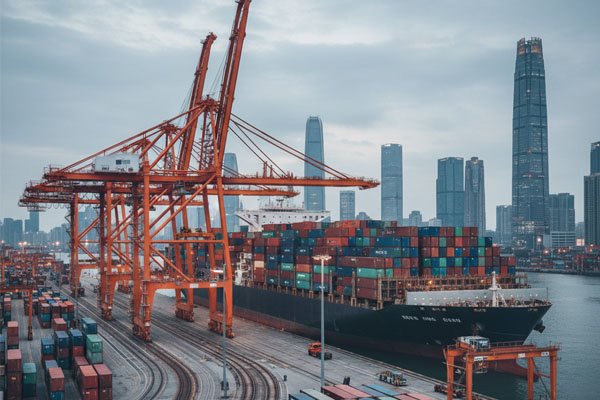
This might sound like dry, technical jargon, but getting this right is fundamental to successful sourcing. I have personally witnessed clients lose their entire profit margin on an order because of a simple Incoterm misunderstanding. In one case, a client who agreed to EXW terms was suddenly hit with a bill for trucking, China port fees, and export documentation that they never budgeted for, wiping out their profit before the goods even left China. These rules aren't just suggestions; they are legally binding terms that dictate who pays for what and, crucially, who bears the risk if something goes wrong. Understanding them is your first and best defense in protecting your investment. Let's break down what you need to know to make smart, cost-effective decisions for your business.
What Are the Most Common Incoterms in China and What Do They Mean?
Walking through the markets in Yiwu or visiting factories here in Yongkang, you'll hear suppliers quote prices using different terms. Are you just accepting the first term they offer? This can lead to you either overpaying or taking on logistical nightmares you're not equipped to handle.
The most common Incoterms you'll encounter are EXW (Ex Works), FOB (Free On Board), and CIF (Cost, Insurance, and Freight). While suppliers may push for EXW or CIF to their benefit, FOB generally offers the best balance of cost, control, and convenience for most overseas buyers.
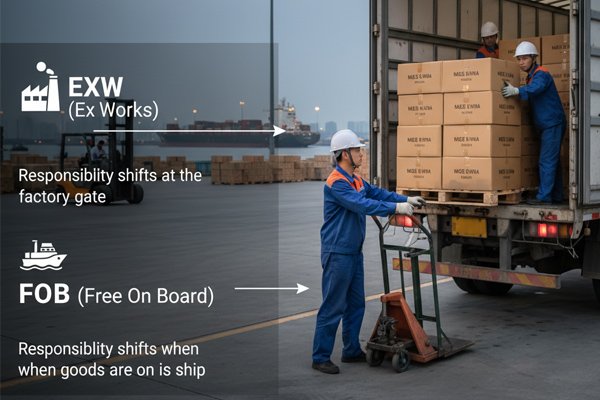
Every price you receive from a Chinese factory is tied to an Incoterm. It defines the exact geographical point where the risk and financial responsibility for your products transfer from your supplier to you. Getting this wrong is like building a house on a shaky foundation. I always insist that my clients at Auro Sourcing clarify and confirm the Incoterm in writing on the Purchase Order before any deposit is paid. Let's look at the key terms you'll see.
EXW (Ex Works): Maximum Buyer Risk
Under EXW terms, the supplier's price covers only the cost of manufacturing your goods and making them available for pickup at their factory. That's it. From the moment the goods are ready, everything else is your problem. This includes:
- Loading the goods onto a truck at the factory.
- Arranging and paying for inland transport to the port or airport.
- Handling and paying for all export customs declarations and fees in China.
- Paying all China-side port/terminal handling charges (THC).
- Arranging and paying for the international freight.
- Insurance, import customs, duties, and final delivery in your country.
For an overseas buyer, this is a logistical minefield. You'd need to coordinate with multiple Chinese entities—a trucking company, a customs broker, the port—all while navigating language and cultural barriers. It's why I strongly advise against EXW unless you have a trusted partner on the ground. This is where a sourcing agent like Auro Sourcing becomes indispensable. We can manage this entire process, consolidating goods from multiple EXW suppliers to build a full container, a strategy that can save significant money for experienced importers.
FOB (Free On Board): The Gold Standard for Most Buyers
FOB is the term I recommend for about 90% of our clients. With FOB, the supplier is responsible for all costs and risks until the goods are loaded "on board" the vessel at the designated Chinese port (e.g., "FOB Ningbo"). Their price includes manufacturing, inland transportation to the port, and all China-side export clearance and port fees.
Your responsibility begins once the cargo is on the ship. You are in charge of contracting and paying for the international freight (the "main leg" of the journey), cargo insurance, and all costs associated with importing and delivering the goods in your home country. This gives you the perfect balance:
- Control: You choose your own freight forwarder, giving you control over shipping costs, transit times, and service levels.
- Transparency: You get a separate, clear quote for international shipping, so you know exactly what you're paying for.
- Simplicity: The supplier handles all the complex and opaque local logistics within China, which they are experts at.
CIF (Cost, Insurance, and Freight): The Illusion of Convenience
CIF sounds tempting. The supplier arranges and pays for everything to get the goods to your destination port (e.g., "CIF Los Angeles"). The price includes the goods, insurance, and international freight. However, this convenience is an illusion. The supplier is choosing the cheapest possible freight and insurance, not the best. The insurance coverage is typically minimal (and claims are difficult), and the "cheap" freight comes with a nasty surprise: exorbitantly high arrival fees at your destination port. The supplier's forwarder and their agent in your country will charge you inflated fees for document turnover, terminal handling, and other "services," often costing far more than you saved on the freight. You have no control and no recourse. Avoid CIF.
How Do Incoterms Directly Affect Your Product's Final Cost?
You received two quotes: one for $5.00/unit EXW and another for $5.50/unit FOB. Which is the better deal? Simply looking at the unit price is a classic mistake that can lead to a much higher final landed cost than you anticipated.
Incoterms directly dictate which logistics and shipping costs are included in your supplier's price. An EXW price is the lowest, but excludes all shipping costs, while an FOB price includes all costs to get the goods onto a ship in China, making it easier to calculate your total landed cost.
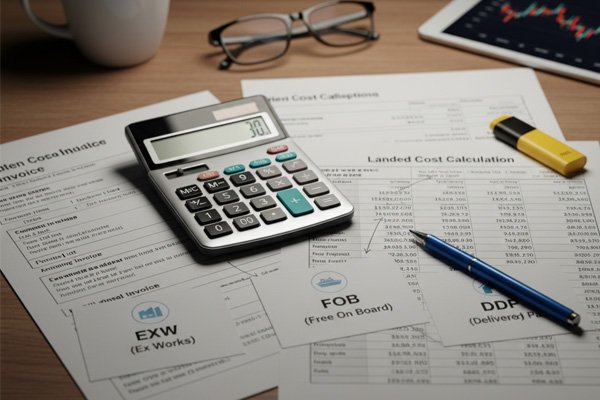
The "landed cost" is the total cost of a product once it has arrived at your warehouse door. It includes the product price plus all shipping, customs, and tax expenses. Your goal is to minimize this total landed cost, not just the supplier's unit price. Each Incoterm represents a different piece of this puzzle. As your sourcing agent, my job is to help you see the full picture. I often create a simple spreadsheet for clients to compare quotes and visualize how the final cost changes based on the Incoterm.
Breaking Down the Landed Cost
Let's look at the cost components and who pays for them under different terms. This breakdown is crucial for accurate budgeting.
| Cost Component | EXW (Paid by Buyer) | FOB (Paid by Seller) | FOB (Paid by Buyer) |
|---|---|---|---|
| Product Manufacturing Cost | Included in Price | Included in Price | - |
| Export Packaging | Included in Price | Included in Price | - |
| Loading at Factory | You Pay | Included in Price | - |
| Inland Freight to Port | You Pay | Included in Price | - |
| Export Customs & Port Fees | You Pay | Included in Price | - |
| International Freight | - | - | You Pay |
| Cargo Insurance | - | - | You Pay |
| Arrival Port Fees | - | - | You Pay |
| Import Customs & Duties | - | - | You Pay |
| Final Delivery | - | - | You Pay |
As you can see, the $5.00 EXW price looks cheaper, but you must immediately add the cost of local Chinese logistics (trucking, customs, port fees), which can be hundreds or even thousands of dollars. The $5.50 FOB price already has those costs baked in. By getting an FOB quote, you isolate the international shipping portion, which you can then quote with your own trusted freight forwarder. This gives you a clear, predictable path to calculating your true landed cost.
How Does Your Sourcing Agent Help You Choose the Right Incoterm?
Are you just accepting the Incoterm your supplier offers? This could mean you're overpaying for shipping or taking on risks you don't understand, directly impacting your product's landed cost and profitability. This is a strategic decision, not an administrative one.
A good China sourcing agent acts as your strategic advisor, analyzing your order volume, budget, and risk tolerance to recommend the best Incoterm. We turn supplier quotes into actionable data, helping you choose a term like FOB that gives you control while we manage the on-the-ground execution.
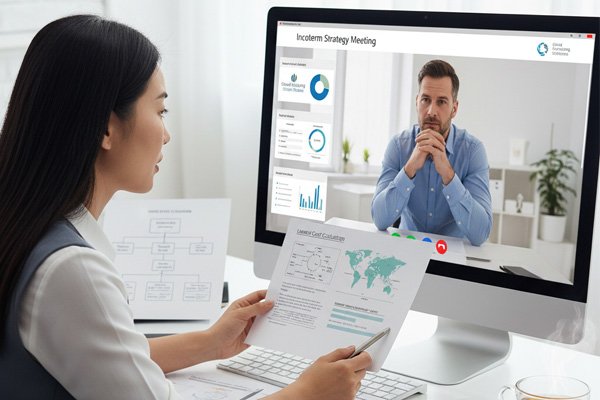
My role at Auro Sourcing goes far beyond just finding a factory. I function as a project manager and risk mitigator for my clients. Choosing the right Incoterm is one of the most critical decisions we make together at the start of a project. When a new client, say an Amazon seller, comes to us, we don't just jump into sourcing. We first have a strategic consultation to understand their business. What are their target landed costs? What is their experience level with importing? What are their timeline requirements? The answers to these questions dictate our Incoterm strategy.
Our Step-by-Step Incoterm Consultation Process
Helping you choose the right Incoterm is a methodical process. It’s about aligning the logistics with your business goals.
- Understand Your Business Model: An FBA seller needs predictability and hassle-free delivery. A large wholesaler needs maximum cost efficiency and may be willing to take on more logistical management. We first understand what success looks like for you.
- Analyze the Specific Order: We look at the volume, weight, and nature of your products. Are you shipping a full container load (FCL) or less-than-container-load (LCL)? Are the goods from one factory or multiple?
- Compare Supplier Quotes: We always ask suppliers to quote both EXW and FOB prices. This allows us to analyze the difference. We can quickly determine if the factory's FOB "markup" is reasonable or if it would be cheaper for us to manage the local logistics on your behalf from an EXW price.
- Recommend and Execute: Based on the data, we provide a clear recommendation. For most clients, this is FOB. We then work with your chosen freight forwarder (or recommend one of our trusted partners) and coordinate everything with the supplier, ensuring a smooth handover at the port.
What About DDP and Its Hidden Risks?
Heard about DDP and think it's the easiest way to import from China? The promise is simple: one price for everything, delivered to your door. But this "all-in-one" solution often hides inflated costs, gives you zero control, and exposes you to significant compliance risks.
DDP (Delivered Duty Paid) means the supplier handles all shipping, customs, and taxes to your final destination. While it offers maximum convenience, it is highly risky. You lose all control and visibility over your shipment and often pay non-transparent, inflated fees for freight and duties.

I receive this question weekly, especially from new importers, startups, and crowdfunding creators. The idea of getting a single, all-inclusive price to your warehouse or an Amazon FBA center is incredibly seductive. However, in my 13+ years of experience, I've seen DDP cause more financial pain and anxiety than any other term. The core issue is a complete loss of control and transparency. When your supplier arranges DDP shipping, their incentive is not to provide you with good service; it's to find the absolute cheapest shipping method possible to maximize their own profit.
The True Dangers of DDP Shipping
This "cheap" DDP service often involves:
- Slow, Untraceable Routes: Your cargo may be sent on a winding, multi-stop journey that takes weeks longer than standard shipping. You will have no valid tracking number and no one to contact for updates.
- Customs Compliance Risks: The DDP operator may undervalue your goods on the customs declaration to pay less duty. While this seems like a savings, you, the importer of record, are legally responsible for this declaration. A customs audit could lead to severe fines and penalties.
- Lack of Documentation: You often won't receive a proper commercial invoice or bill of lading in your name. This is a serious issue, as you have no official proof of import for tax or accounting purposes (e.g., proving Cost of Goods Sold).
- Inflated, Hidden Costs: The supplier bundles the product cost, shipping, insurance, duties, and a very healthy profit margin into one opaque price. You will never know if you are paying $1,000 or $3,000 for the freight and duties component. It's almost always more expensive than arranging it yourself.
In short, you are paying a premium to be kept in the dark. Instead, we can offer a "DDP-style" service where Auro Sourcing manages the entire process for you, but with full transparency. We bill you for each component separately—product, freight, duties—so you maintain control and see exactly where your money is going.
Conclusion
Mastering Incoterms like FOB, EXW, and DDP isn't just academic; it's a fundamental business skill for controlling costs, mitigating risks, and ensuring your products are delivered profitably from China.
Ready to build a more predictable and cost-effective supply chain? Send us your product requirements, and let our team at Auro Sourcing help you craft the perfect Incoterm and logistics strategy.