

China is the largest manufacturing center in the world. The last report estimates China to have contributed up to 27.7 percent of the overall world manufacturing. Companies in different parts of the world are sourcing their products from China in order to save on expenses, have a huge capacity of production capacity, and grow within a short period. Amazon sellers, eCommerce brands, wholesalers, and own-label corporations order from Chinese sellers.
Should you outsource a China sourcing agent or should you do the sourcing process yourself? This decision has an impact on cost, quality, speed, and risk. Knowing these two options will help you make better decisions and prevent making the mistakes that are costly. Let’s explain in detail the pros and cons of hiring a China sourcing agent vs DIY sourcing.
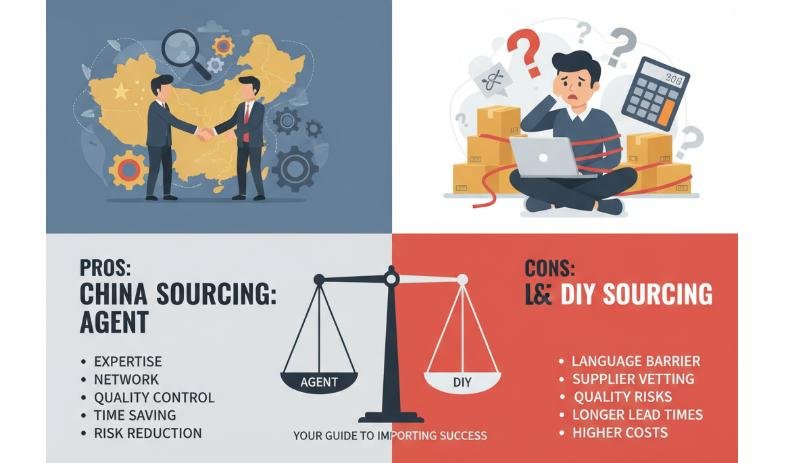
What is the Meaning of Sourcing Product From China?
China sourcing is the act of identifying manufacturers/ suppliers in China and buying goods/ products from them. It involves supplier research, price negotiation, sample approval, production monitoring, quality control, and shipping coordination.
Language barriers, cultural differences, and distance make the whole process complicated. In this regard, customers tend to make decisions on two sourcing options, which include the involvement of a sourcing agent or doing everything themselves.
What Is a China Sourcing Agent?
A China sourcing agent is a Chinese company that assists foreign buyers in sourcing products. They serve as the buyer's local agent and handle communication with suppliers.
The sourcing agents help in the selection of suppliers, verification of factories, price negotiation, sample coordination, production follow-ups, quality checks, and the head of logistics. Some agents do customs documentation and shipping.
They primarily aim at mitigating risk and simplifying the sourcing process.
What Is DIY Sourcing?
DIY or direct sourcing refers to the situation when a buyer handles the whole sourcing process on their own. The buyer will find suppliers on sites like Alibaba, Made-in-China, or Global Sources. They deal straight with the factories, negotiate the prices, organize samples, check quality, and shipment.
The DIY sourcing offers absolute power to the purchaser, yet puts absolute responsibility on the purchaser. Any error has a direct impact on the cost, schedule, and quality of products.
Advantages of Hiring a China Sourcing Agent
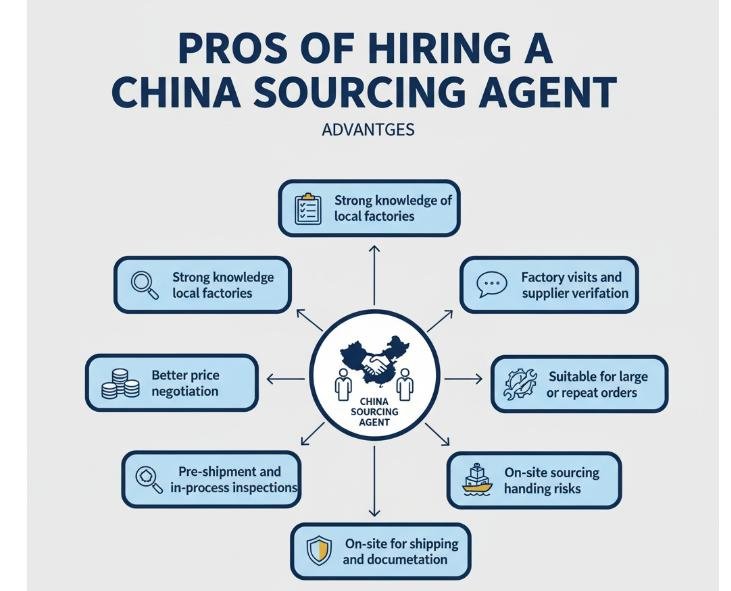
There are numerous benefits of employing a sourcing agent, particularly for buyers who are either inexperienced or not familiar with the local conditions.
Local Industry Knowledge
A sourcing agent is familiar with Chinese manufacturing. They are also aware of the cities and the provinces that specialize in particular products. As an illustration, they are aware of the locations where electronics, textiles, furniture, or plastic products are usually manufactured. The knowledge assists the buyer in avoiding inappropriate suppliers.
Supplier Supplies and Factory Inspections
A large number of online listings are those of trading firms that claim to be manufacturers. A sourcing agent has the opportunity to pay visits to factories. They confirm business licenses, production equipment, the capacity of workers, and certifications. This move minimizes the chances of fraud and fraudulent relations.
Better Price Negotiation
Chinese suppliers usually charge more to foreign customers. A sourcing agent knows the price models and bargaining skills in the area. They understand how to negotiate in terms of volume of orders, materials, and complexity of production. The agent is able to get a better price in most instances that can cover their service fee.
Effective Communication and Language
Minor misinterpretations in the specifications of products can cause serious problems in quality. A sourcing agent is a Mandarin speaker who is knowledgeable about business culture. They communicate the requirements in a comprehensible manner and make sure that the factories adhere to instructions. This minimizes mistakes and wastage of time in production.
Quality Control and Inspections
The issue of quality is prevalent in abroad sourcing. Buyers can be given faulty or wrong products without inspections. Sourcing agents do pre-production checks, in-process checks, and final checks before shipment. They check materials, dimensions, packaging, and labeling. This is done to guard buyers against expensive errors.
Time Efficiency
Sourcing is time-consuming and labor-intensive. Consumers have to deal with e-mails, samples, revisions, and production timetables. A sourcing agent deals with routine operations. This enables the buyers to concentrate on marketing, customer service, and business development.
Faster Problem Resolution
Good suppliers also face production problems. Timelines can be derailed due to delays, shortages of materials, or quality issues. A domestic sourcing agent will be able to go to the factory and fix issues in a short time. Emails are not enough to find a solution as quickly as face-to-face communication allows.
Shipment and Logistics Support
Agents help in freight forwarding, the choice of shipping method, and export documentation. They recommend terms of shipping, i.e., EXW, FOB, or DDP. Such support minimizes errors in shipping and unexpected expenses.
Disadvantages of Hiring a China Sourcing Agent
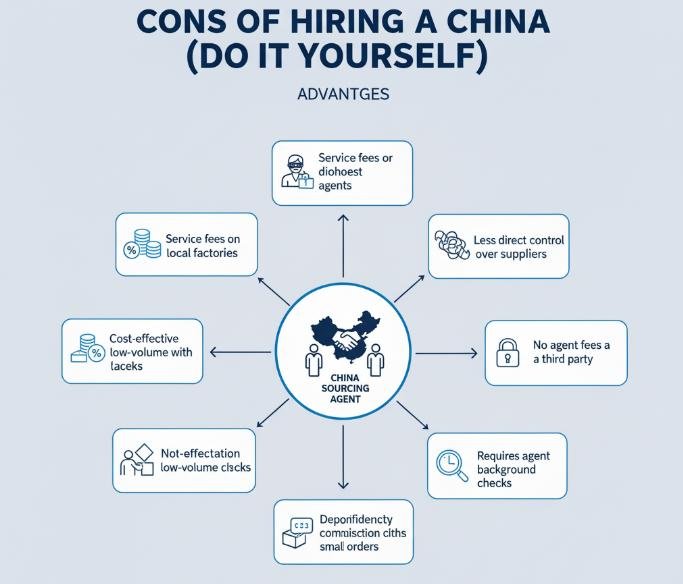
Though this has its benefits, there are also disadvantages to a sourcing agent.
Additional Service Costs
The sourcing agents are fee or commission-based. These expenditures escalate the overall sourcing cost. The incremental cost can not be viable in the case of small or one-time orders. The limited budget buyers might find it hard to cover agent fees.
Possibility of Unscrupulous Agents
Sourcing agents are not all ethical. Factories have some agents who are being offered a hidden commission. Some of them pressurize suppliers who bid them high. A poor agent can make the prices higher or lower the quality.
Reduced Direct Control
In the case of an agent, buyers depend on the agent to get updated and communicate. When the agent does not maintain accuracy in reporting issues, buyers do not see them. Direct sourcing is more transparent.
Dependency on Third Parties
Dependence can be developed on an over-dependence on a sourcing agent. In case the agent gets out of service or starts to offer other conditions, sourcing processes will be affected. The buyers are supposed to record and have backup plans.
Confidentiality Risks
There is trust in sharing designs, pricing plans, or supplier information. Ineffective agents can pass confidential data. This risk is minimized by the use of contracts and non-disclosure agreements.
Advantages of DIY Sourcing
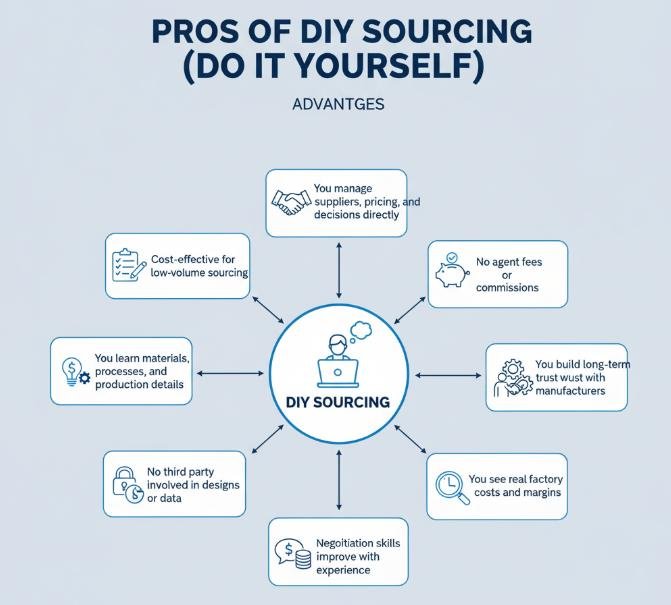
DIY sourcing is also attractive to consumers, who attach significance to control and cost.
Complete Managerial Control of Supplier Relationship
DIY sourcing enables buyers to deal with factories directly. Managing negotiations, production, and quality expectations is handled by buyers themselves. This is a face-to-face strategy to establish good long-term relationships.
Lower Upfront Costs
Do-It-Yourself sourcing eliminates commission and agent fees. This saves on start-up expenses, which is beneficial to startups and small businesses. In the case of simple products, DIY sourcing could be cost-efficient.
Transparency in Pricing
Quotes from factories are seen directly by buyers. They are aware of the cost elements of materials, labor, and packaging. Such disclosure assists in pricing strategies and margin planning.
Malleability in Decision-Making
DIY customers make fast decisions without having to wait to get intermediaries. This is useful in changing specifications or schedules.
Disadvantages of DIY Sourcing
The issue of DIY sourcing is also problematic.
High Risk of Scams and Fraud
There are scammed suppliers and fraudulent postings on the online sourcing sites. New customers find it difficult to find actual factories. Frauds usually lead to loss of deposits or low-quality products.
Communication Barriers
Misunderstandings occur because of language differences. The differences between time zones also delay response and problem-solving. Defects in production and delays are caused by miscommunication.
Little Negotiation Strength
Factories can sell more to foreign buyers who are not familiar with. They can insist on increased minimum order quantities. In the absence of local knowledge, it becomes hard to negotiate.
Limitations in Quality Control
It is hard to inspect the factories remotely. Most DIY customers do not bother with inspection because of price or even access. This exposes them to the danger of having defective goods.
Time-Intensive Process
Sourcing on own involves follow-ups. Buyers handle samples, amendments, payments, and deliveries. This amount of work does not focus on sales and business growth.
Logistics and Customs Problems
Shipment, freight, and entry bylaws bewilder the majority of purchasers. Errors cause wastage of time and additional expenses. Do-it-yourself consumers have to study logistics, or they can make mistakes.
Comparison of Costs: Sourcing Agent and DIY
The cost comparison is not limited to agent fees. By recruiting an agent, upfront costs are paid at the expense of long-term risks. Lower prices, reduced defects, and logistics are also likely to save in the long run. In-house sourcing reduces the direct expenses but escalates the indirect risks. Failure of quality, delays, and shipments that are rejected or rejected can cost than the agent fees. In simple, low-risk items, DIY sourcing can be less expensive. In the case of tricky or large volume orders, agents tend to be more valuable.
When is the Right Time to Hire a China Sourcing Agent?
It is logical to recruit a sourcing agent in case buyers are inexperienced about importing and not familiar with the local market. Reputation and consistency brands tend to use agents in order to defend the quality of their products.
When DIY Sourcing Is the Improved Choice?
DIY sourcing is appropriate for complex buyers who comprehend Chinese production. It is suitable for small test orders and the standard products. DIY sourcing is most advantageous to buyers who have time and experience in sourcing.
Hybrid Sourcing Approach
Numerous corporations use a combination of the two approaches. They begin with a sourcing agent and proceed to DIY sourcing progressively, as they become more experienced. There are buyers who only rely on the agent to do the inspection or negotiations. Some are in charge of the suppliers directly, but engage agents to do audits. This mixed strategy is a compromise between cost, control, and risk.
Final Thoughts
When it comes to deciding between a China sourcing agent and DIY sourcing, it is determined by experience, budget, and risk-taking. Both of the options have advantages and limitations. The sourcing agents minimize risk, conserve time, and enhance quality control. The benefits of DIY sourcing are control, transparency, and reduced initial cost. Effective sourcing involves planning, checking the suppliers, and setting expectations. With this knowledge of the advantages and disadvantages, businesses are able to select the sourcing approach that will enable them to grow and remain stable in the long term.