

Companies in all regions of the globe rely on Chinese factories to manufacture electronics, clothes, furniture, machinery, household goods, etc. Approximately 30% of global manufacturing. Chinese manufacturers offer scale, speed, skilled labor, and competitive pricing. These advantages make it the first choice for many global buyers.
When companies start sourcing from China, they often encounter three significant terms: OEM, ODM, and OBM. These are the words used in supplier profiles, quotes, contracts, and trade negotiations. Most buyers, however, do not know well what these terms entail. Some buyers believe that they are interchangeable. Still others believe that they merely tell the size or level of quality of the factory.
OEM, ODM, and OBM portray very different models of manufacturing and branding. These models define who designs the product, who owns the intellectual property, who controls the brand, and who manages the market. Let’s try to understand the difference between OEM, ODM, and OBM.
Why Understanding OEM, ODM, and OBM Is Important?
The right model of manufacturing influences all aspects of your business. It impacts the quality of products, the costs of production, profitability, and scalability in the long term. Making a bad decision may restrict future development or make you switch suppliers in the future.
A lot of startups go into China sourcing without understanding these differences. Some believe that printing a logo automatically gives them product ownership. Others assume that factories will protect their designs without legal agreements. Such misunderstandings usually lead to duplication of the products, price pressure, or loss of control in the market.
When you clearly understand OEM, ODM, and OBM, you gain real control over your sourcing strategy. You can plan product development better. You are able to negotiate prices and terms with a lot of confidence. Above all, you will be able to make manufacturing choices that match your business vision in the long term.
What OEM, ODM, and OBM Mean?
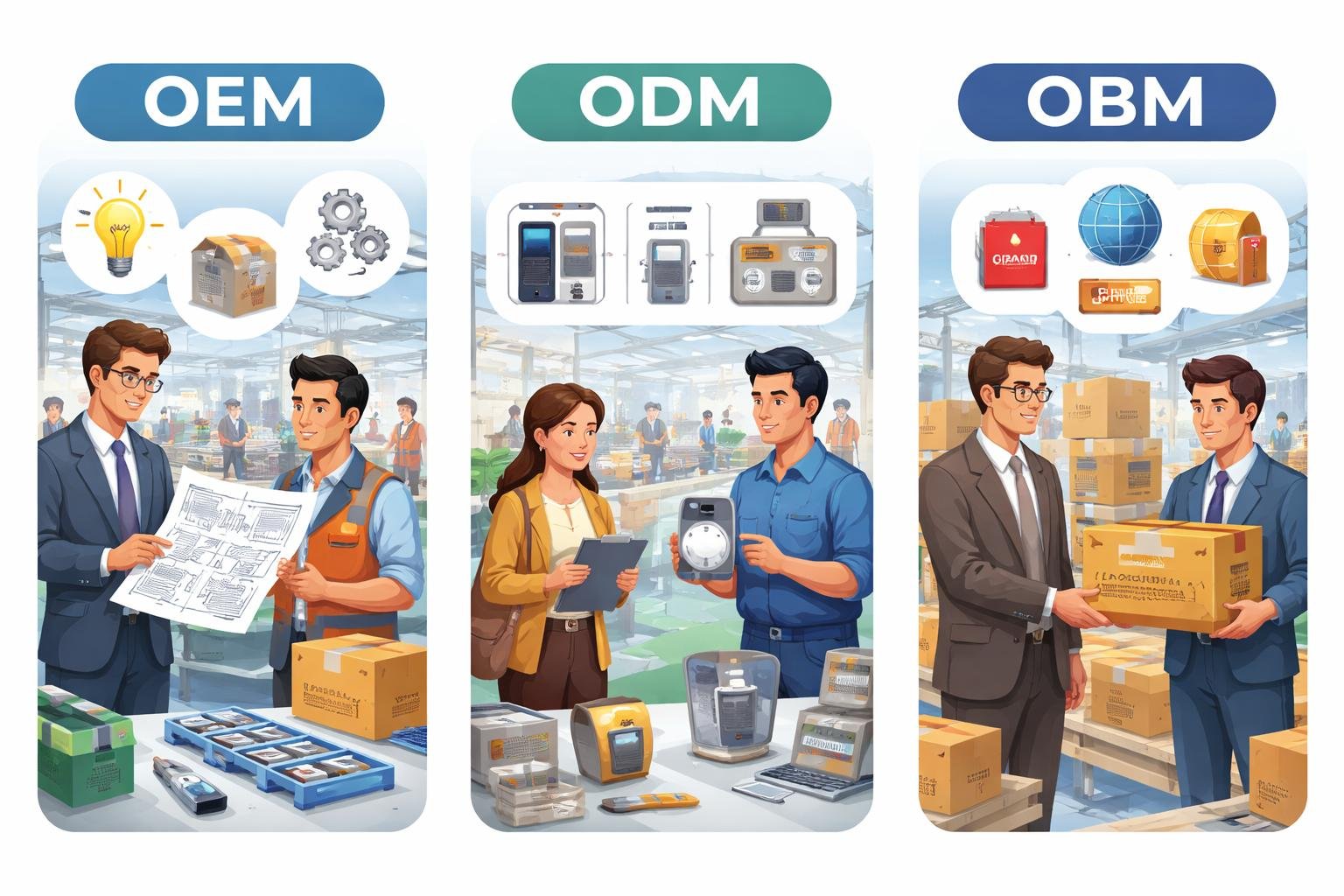
Before comparing the models, you should know what each of the terms means and what it reflects.
- OEM is an abbreviated form of Original Equipment Manufacturer.
- ODM refers to Original Design Manufacturer.
- OBM is Original Brand Manufacturer.
These terms describe different levels of involvement in product design, manufacturing, and branding. They also decide the owner of the intellectual property, as well as the market control of the product. The differences may seem smaller, but they have far-reaching implications on cost, risk, and brand ownership.
OEM Manufacturing in China Explained
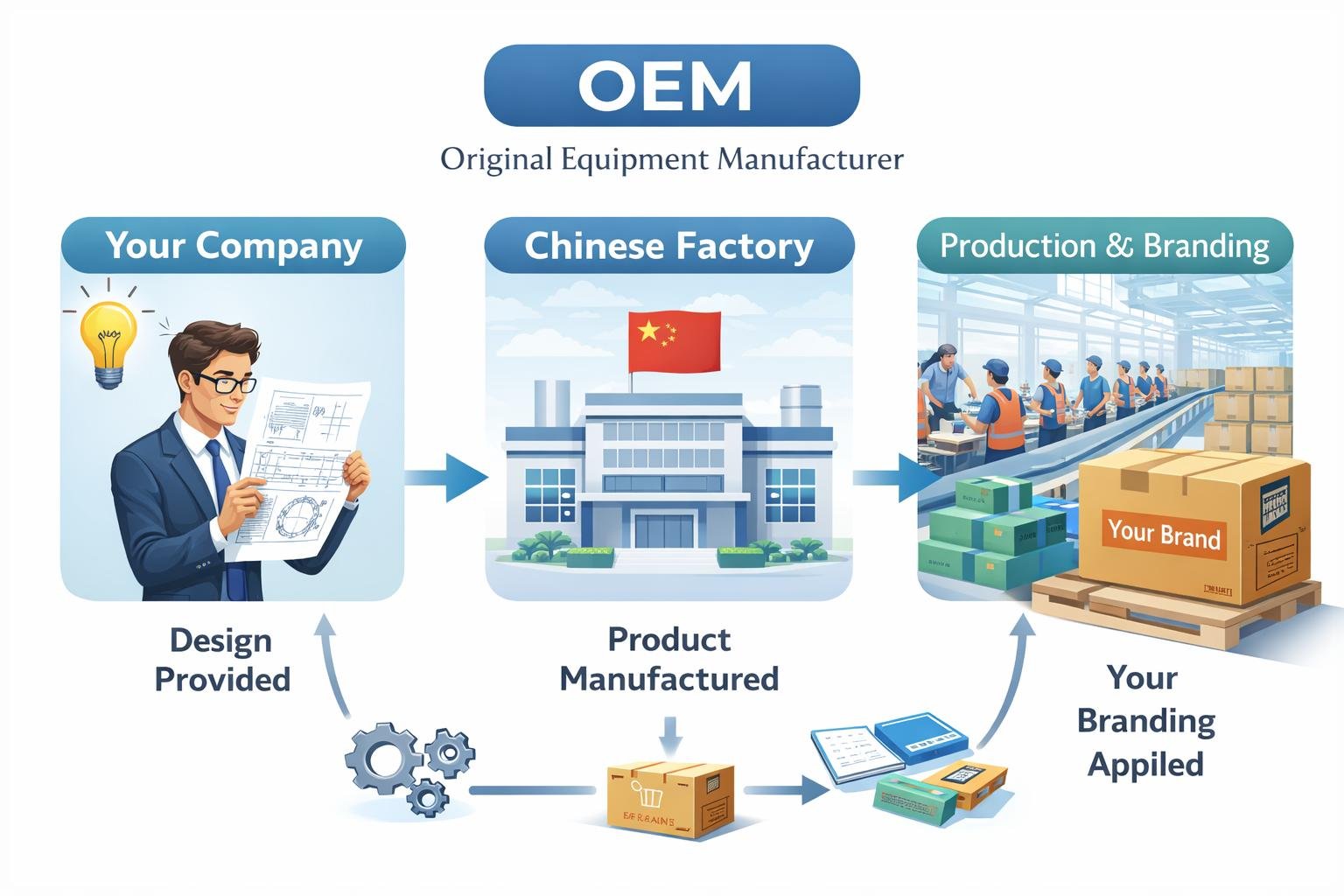
What Is OEM?
OEM production implies that you will design the product, and the Chinese factory will produce the product according to your specifications. The design does not belong to the factory. It does not own the brand. It does not sell the product to other buyers under the same design.
In an OEM deal, you are the owner of the product. You can determine the appearance of the product, the functionality, and the branding. The factory works as your production partner and is interested in efficiency and quality of production.
How OEM Manufacturing Works in China?
The OEM process normally begins with a product idea. You explore the market and determine the needs of the customers. Then come up with the concept of the product, technical drawings, materials list, and performance standards.
You then contact to Chinese factories, share your specifications. The factory analyzes your needs and checks its viability. It gives a quotation that consists of unit price, tooling cost, mold cost, and lead time.
When you have agreed on terms, the factory makes samples. You test these samples on quality, performance, and compliance. Once approved, the factory starts producing in bulk. The final products are labelled with your branding, packaging, and labeling.
The factory specializes in production during the process. You control design, positioning, and channels of sale.
Features of OEM Manufacturing
You are the owner of the product design and the related intellectual property. You choose materials, size, functions, colors, and performance standards. The factory manufactures the product to the precise specifications that you have ordered.
OEM products usually appear different in the market. They are not typical catalog products. This distinctiveness enables the brands to stand out and not to compete directly in terms of prices.
Advantages of OEM Manufacturing
OEM production is highly beneficial to the short-term, objective-oriented companies. Benefits include:
- OEM provides ultimate product design control. You determine everything, such as materials, features. This control will assist you in satisfying the needs of certain customers and business rules.
- OEM helps in good brand building. Your brand is unique with your product. The same design cannot be sold by a competitor legally. This monopoly boosts brand awareness and loyalty.
- OEM helps in increasing profit margins, as well. Differentiating products decreases intra-industry rivalry. Customers often accept higher prices for differentiated products with clear value.
Disadvantages of OEM Manufacturing
OEM manufacturing also comes with challenges:
- OEM is more expensive to invest in. You have to incur costs on designing, molds, tooling, and testing until you sell any products. Such expenses augment financial risk, particularly for start-ups.
- OEM also takes a longer time to develop. The design of products, prototyping, modifications, and compliance tests are time-consuming. This can delay market entry.
- OEM requires technical skills. You have to deal with design accuracy, production standards, safety standards, and certifications. Inexperience may be a costly affair.
Who Should Choose OEM Manufacturing?
OEM is perfect for well-established brands and growing businesses that have definite product plans. The greatest beneficiaries are companies that have their own designers or engineering staff. Companies with in-house designers or engineering teams benefit the most. Businesses that want full control over branding and customer experience often prefer OEM. OEM is the best option if you want to create a distinctive brand and grow in the long term.
Example:
A fitness brand designs a unique smart water bottle with special sensors. It sends the design and specifications to a factory in China. The factory manufactures the bottles, but only the brand sells them under its own name.
ODM Manufacturing in China Explained
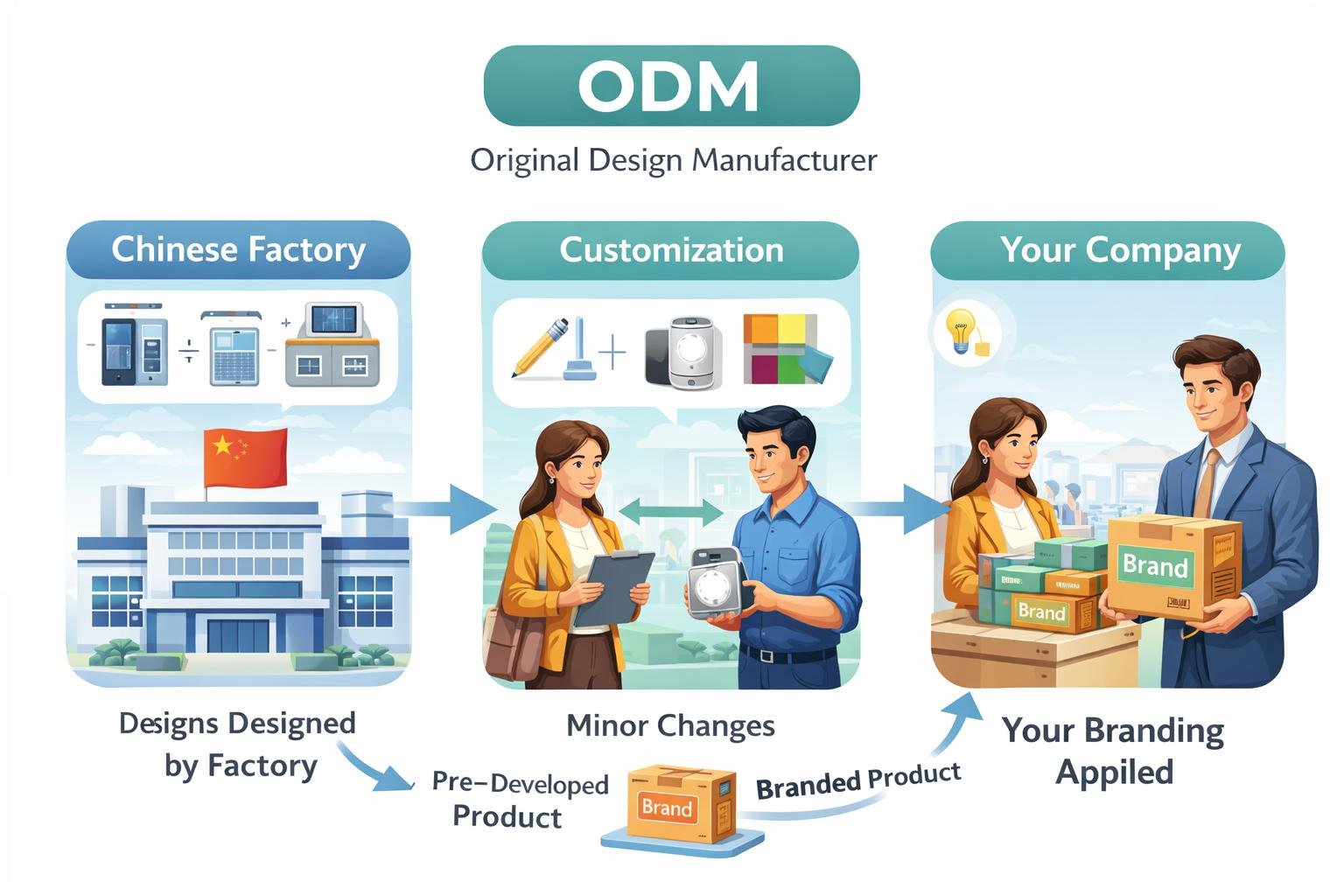
What Is ODM?
ODM production implies that the factory produces the product, and you market it under your brand. The product is already in the market, or the factory creates it in-house, depending on the trend in the market.
You choose a product model from the list of the factory. You can ask to change items color, surface finish, accessories, or packaging. You apply your logo and brand name then. ODM is speedy, simple, and cost-effective.
How ODM Manufacturing Works in China?
The ODM process starts with factory-developed designs. Chinese factories have a heavy investment in research and development. They research the international trends and develop products that will attract the international market.
You review samples and choose a model that fits your needs. You may request limited customization. The factory produces the product and ships it with your branding.
The factory owns the core design and technology. You focus on marketing, distribution, and sales.
Features of ODM Manufacturing
ODM manufacturing has distinct traits. The product design and intellectual property are done by the factory. The number of customization options is limited. Branding is permitted, but modifications to the design are limited.
ODM products tend to resemble various brands. There can be several buyers who can sell products of the same product, but with different logos.
Advantages of ODM Manufacturing
ODM has a low development price. Design and tooling costs are avoided.
- ODM allows rapid market penetration. Products already exist, so production starts quickly.
- It reduces technical risk. The product design has often been tested and improved through previous orders.
- ODM offers a low-cost introduction to manufacturing in case of startups and new sellers.
Disadvantages of ODM Manufacturing
ODM has its obvious drawbacks as well.
- ODM provides low uniqueness. Your product can have a resemblance to a competing product.
- Create intellectual property threats. The factories can sell the same design to several buyers.
- Price competition is a common phenomenon with ODM. With similar products, price is the primary differentiator, and this reduces margins.
Who Should Choose ODM Manufacturing?
ODM fits startups, e-commerce sellers, and small businesses. It is effective with Amazon, Shopify, and brands owned by the company. ODM is also adopted by other companies that are trying out new product categories.
ODM is a clever option in case speed, low cost, and flexibility are more important than exclusivity.
Example:
An Amazon seller wants to sell wireless earbuds. A Chinese factory already has a ready-made earbud design. The seller chooses the model, adds a logo and custom packaging, and sells it under their brand.
OBM Manufacturing in China Explained
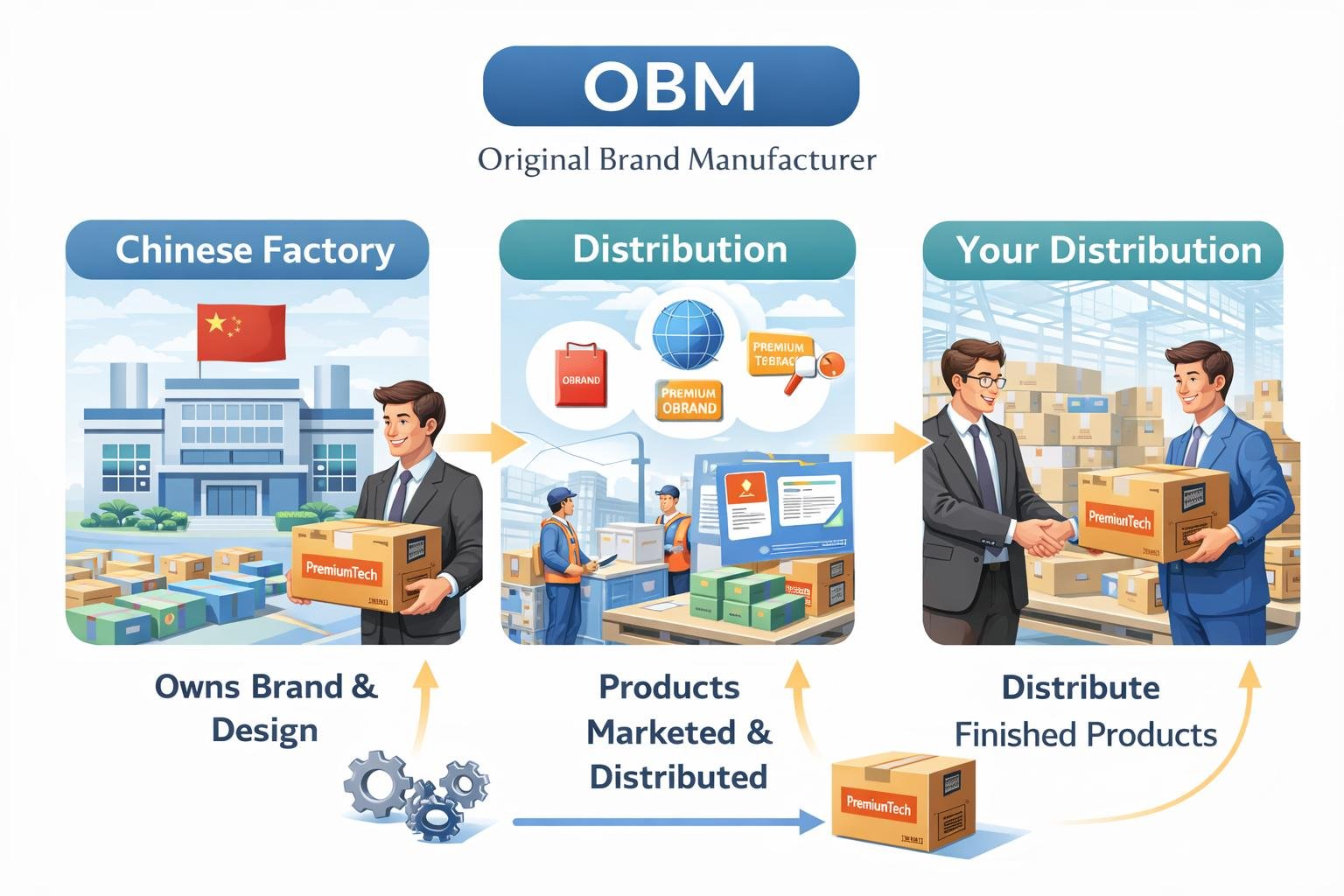
What Is OBM?
OBM manufacturing means the factory owns the brand and the product design. The Chinese company develops, manufactures, markets, and sells products under its own brand name.
You are either a distributor, reseller, or importer. You have no control over the product design and brand strategy. OBM is typical of large Chinese companies that desire international brands.
How OBM Manufacturing Works in China?
In an OBM model, the factory creates a complete product line. It invests in branding, marketing, and reputation. You purchase finished branded products and resell them in your market.
Some OBM suppliers offer regional distribution agreements. Others sell freely to multiple buyers across different regions.
Key Features of OBM Manufacturing
OBM production possesses obvious characteristics. The factory is the owner of the brand, design, and intellectual property. You are not able to alter the product. Branding is totally controlled by the factory.
The suppliers of OBM have a way of dictating prices, marketing policies, and sales platforms.
Advantages of OBM Manufacturing
- The manufacturing process requires no product development cost. You can start selling immediately.
- OBM products often maintain consistent quality. Factories protect their brand reputation.
- Offer low-risk and fast sourcing. Products are market-ready and tested.
Disadvantages of OBM Manufacturing
- Limit your brand control. You are not able to construct your identity.
- Reduce your profit margins. Brand owners make a bigger proportion.
- OBM increases competition. The distributors of the same brand are numerous.
Who Should Choose OBM Manufacturing?
OBM suits distributors, wholesalers, and offline retailers. Businesses focused on volume sales rather than brand building benefit the most.
Example:
In OBM, the factory owns the product and the brand. You act as a distributor or reseller and sell the factory’s branded products. This model requires the least effort but gives you the least control.
Comparing OEM, ODM, and OBM in China Manufacturing
Ownership and Control
OEM puts the customers in complete control. ODM is a joint ownership between the factory and the buyer. OBM puts all the controls in the hands of the factory.
In OEM, it is your design, brand, and market. ODM is where the brand belongs to you, but not the design. In OBM, you have charge over your channel of sales.
Cost Structure
OEM is the most expensive in the short run but more valuable in the long run. ODM is of average cost and higher returns. OBM will start at the lowest cost with smaller margins.
Time to Market
ODM and OBM permit quick penetration of markets. OEM takes a longer period to develop.
Risk Level
OEM is prone to design risk and compliance risk. The manufacturing process has IP and competition risks. OBM has dependency and margin risks.
Why China Excels in All Three Models?
China supports OEM, ODM, and OBM better than most countries. It has complete supply chains, skilled engineers, and flexible factories.
The Chinese manufacturers can easily adjust to the demands of the buyers. The ability to alternate between OEM and ODM can be used by many factories, depending on the needs of the project.
How to Choose the Right Model for Your Business?
Choosing the right manufacturing model starts with clear business goals. You must first decide what you want to achieve in the market.
- Select OEM when you want to build a differentiated brand. OEM works best if you want full control. This model suits businesses that plan long-term growth.
- Select ODM when speed and low cost matter most. ODM allows you to launch products quickly because the factory already owns the design.
- Select OBM when you want quick distribution with minimal effort. OBM suits distributors and wholesalers.
Legal and IP Protection in China Manufacturing
Legal and intellectual property protection is important when working with Chinese manufacturers. Many buyers may say verbal agreements or emails are enough. In reality, written and legally structured contracts are essential.
Chinese courts rely heavily on written agreements. You must clearly define who owns product designs, molds, tooling, and intellectual property. If ownership is not stated in writing, the factory may legally claim rights over these assets. Always specify that molds and tooling are your property. Clear ownership clauses help prevent unauthorized production and resale.
Trademark registration in China is equally important. China follows a first-to-file system, not a first-to-use system. This means that whoever registers the trademark first owns it in China, even if you already use the brand in another country. Register your trademark in China before production begins. Do not rely on foreign trademark registrations, as they offer no legal protection inside China.
Strong legal agreements reduce risk and protect your business. Use proper NNN agreements (Non-Disclosure, Non-Use, and Non-Circumvention) instead of standard NDAs. NNN agreements are more effective in China and focus on preventing the misuse of your designs and business information.
Future Trends in OEM, ODM, and OBM
The Chinese manufacturing environment also keeps changing. Most Chinese manufacturers are moving towards OBM designs to earn more profit margins and grow their global brands. They no longer just produce under spending on their branding, marketing, and distribution channels.
The ODM products are becoming innovative and technologically advanced. Factories spend a lot of money on research and development in order to appeal to international consumers. ODM is no longer constrained to mere products. It has now incorporated smart devices, environmental friendliness, and better functionality.
In the case of OEM purchasers, the expectations are increasing. Strict compliance, sustainability, and automation have grown to be the standard requirements. Consumers have now insisted on sourcing that is ethical, environmentally friendly, and certified production processes. Those factories that do not match these expectations may lose international clients.
Final Conclusion
It is important to understand the difference between OEM, ODM, and OBM to enable businesses to make better sourcing choices. The models have a different purpose. OEM has control and long-term brand value. ODM is faster and more flexible. OBM is easy and risk-averse.
There is no single best model. The correct decision will be based on what you want to achieve, what you have, and how you plan the market. Under proper application, Chinese manufacturing is an engine of business growth.