

International shipping is a complicated process. Businesses use different international Commercial Terms (Incoterms) to define responsibilities. One of them is FOB or Free on Board. Ocean freight has extensive use of FOB. It specifies who handles the goods and covers the costs at every step of the shipping process. It’s important to understand the process before choosing ocean freight. So that you can avoid losses. In this article, we will explain why FOB is so popular and when to avoid it.
What is FOB Shipping?
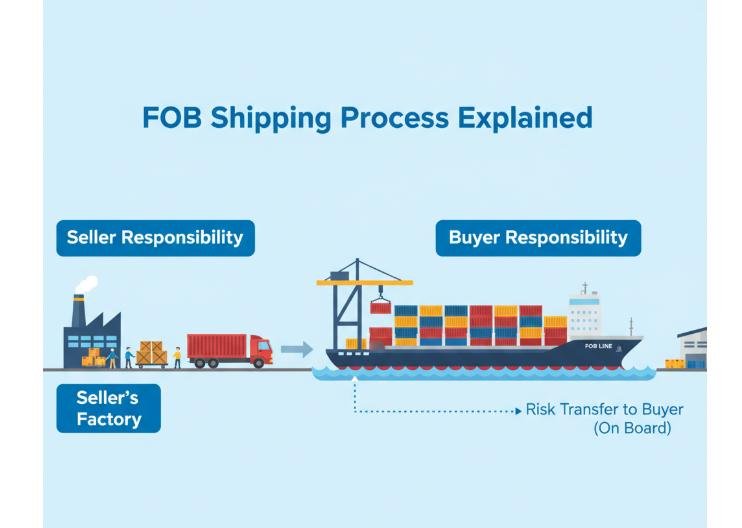
FOB, or Free on Board, is an Incoterm that has been established by the International Chamber of Commerce. It specifies the way in which the international trade liabilities and accountabilities are shared between the buyer and the seller. Under FOB, the seller is in charge of the goods until the time they are loaded onto the ship. After loading the goods on board, the risk and responsibility are transferred to the buyer.
FOB is primarily applied in ocean freight. This helps to avoid conflicts over who covers the shipping, insurance, or deals with goods at each point.
If an organisation in the USA purchases electronics in China with FOB terms, production, packaging, and loading on the ship will be done by the Chinese supplier. After the electronics are shipped to the vessel, it will be up to the American buyer to take care of the shipment, insurance, and delivery to their warehouse.
How Does FOB Shipping Work?
FOB shipping may seem complicated, but if you break it down into different steps, things become easy to understand:
Seller Prepares the Goods The seller prepares the goods by manufacturing or packing them. They do the clearance of export customs and prepare the shipment to be shipped to the port.
Transport to Port The seller clears the transport to the port of origin.
Shipment Once the goods are loaded onto the ship, the seller loads the goods onto the Vessel. This is the critical point. As soon as the goods are loaded, the risk passes to the buyers.
Buyer Takes Over The buyer arranges ocean freight and insurance from the port of shipment to the destination. The purchaser also does the unloading in the port of destination, customs clearance, and any duty levied on imports.
The whole FOB process specifies responsibilities clearly. It also enables the buyers and sellers to make better plans in terms of costs.
Example
Consider a small company that will import furniture in the USA in FOB terms. The Chinese supplier makes sure that the furniture is delivered to the port in a secure way. They load it onto the ship. Henceforth, the cost of shipping, ocean freight, and insurance is charged by the small business in the USA. If something happens during the ocean voyage, the buyer must handle the claim.
What are The Advantages of FOB Shipping to Buyers and Sellers?
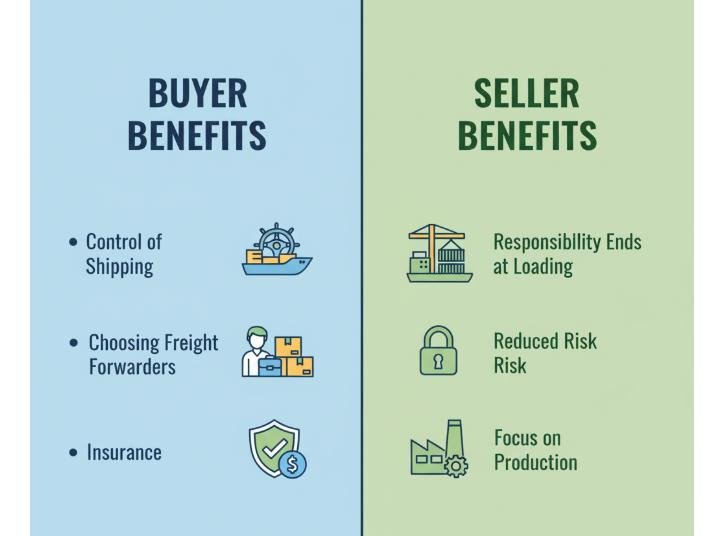
There are benefits of FOB to both buyers and sellers.
Benefits for Buyers:
- Buyers can dictate the shipping expenses once goods have been loaded
- They can select their desired freight forwarder and insurers
- It offers an overview and visibility of the shipping process
- Customers can enter into freight negotiations big time with the carriers
Benefits for Sellers:
- Sellers are only responsible for goods until they are loaded on the ship
- They face lower transportation risks
- Sellers are not required to deal with international freight or insurance
- They can concentrate on production and domestic delivery
The reason why FOB is popular is that it establishes a fair and transparent allocation of roles. It is internationally known, and it minimizes legal conflicts in international trade.
When to Avoid FOB for Ocean Freight?
The FOB is not applicable everywhere. Some examples of cases in which FOB should be avoided include:
- New to Shipping: New international shipping buyers might lack knowledge on how to handle freight or insurance. FOB can expose them to risks that they are not ready to face.
- Complex Shipping Routes: FOB is most effective for a simple ocean route. Other Incoterms can be safer in case of multi-leg shipments or complex shipments.
- Valuable or Costly Goods: When the goods are delicate or extremely costly, customers might like the seller to cover insurance until their delivery.
- Buyer Cannot Control Freight: Sometimes a buyer is deprived of access to trusted shipping agents or insurance providers. In these situations, FOB can be a problem.
- Emergency Delivery Requirements: In case the time of delivery is a major issue, CIF or DDP can be used to release a smoother transit process because the seller controls more of the shipping process.
Other Incoterms might be more appropriate in such cases, such as CIF (Cost, Insurance, Freight) or DDP (Delivered Duty Paid). These are terms that give additional security and minimize it for the buyer.
FOB vs Other Incoterms
FOB is just one of many shipping terms. Comparing it with other Incoterms can help buyers and sellers make better decisions.
| Incoterm | Seller Responsibility | Buyer Responsibility | Risk Transfer | Use Case |
|---|---|---|---|---|
| FOB (Free on Board) | Up to loading on the vessel | From vessel loading to destination | Once goods are on board | Standard ocean freight, buyers with experience |
| CIF (Cost, Insurance, Freight) | Up to destination port including freight & insurance | Unloading and import duties | Once goods arrive at the destination port | Safer for buyers new to shipping, high-value goods |
| EXW (Ex Works) | Goods available at the seller’s warehouse | All transport, insurance, customs, and duties | At the seller’s warehouse | Buyers want full control of shipping |
| DDP (Delivered Duty Paid) | All transport, insurance, customs, and duties | Receives goods at the destination | Upon delivery | Convenient for buyers, minimal risk, and hassle |
This table shows that FOB gives buyers more control over the shipment but also more responsibility. CIF and DDP reduce the buyer’s risk because the seller handles more of the process. EXW gives the buyer maximum control but requires them to manage almost everything.
Final Words
FOB is widely used as it is a simple method for shipping desired items. Sellers handle goods until they are loaded on the ship, and buyers take over from that point. When they are aware of their roles, it is good for both of them.
Nevertheless, FOB is not always the best. Other conditions, such as CIF or DDP, can be used with new purchasers, delicate products, or complicated deliveries. The correct selection of Incoterm allows shipping without many problems.