

Sourcing products from China can be a game-changer for your business, offering unparalleled access to a vast manufacturing network, technological innovation, and highly competitive pricing. For entrepreneurs and established businesses alike, it represents a direct path to higher profit margins and product line expansion. However, for beginners, the process can seem daunting, filled with complexities from navigating language barriers to ensuring quality control from thousands of miles away. This comprehensive guide breaks down the journey into seven manageable steps, providing a detailed roadmap to help you navigate the world of international sourcing with confidence and build a successful and sustainable supply chain.
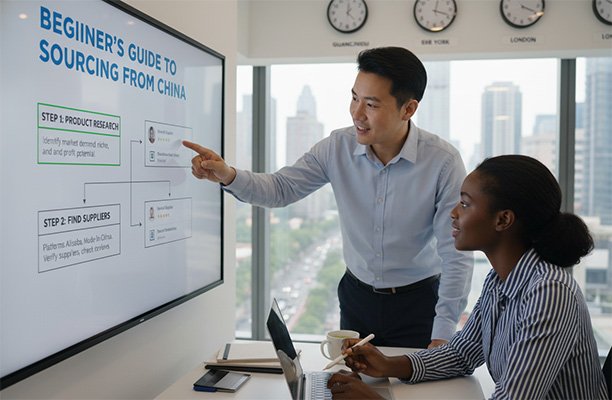
Step 1: In-depth Product Research and Validation
Before you even think about suppliers, your primary focus must be on the product itself. A fantastic supplier cannot save a product that nobody wants to buy. A successful sourcing strategy starts with a product that has proven market demand and a clear path to profitability.
- Identify a Profitable Niche: Don't try to sell everything to everyone. Focus on a specific niche or solving a particular problem for a defined audience. Use tools like Google Trends to spot rising interest, Jungle Scout or Helium 10 to analyze Amazon market data, and social media platforms like Pinterest and TikTok to see what products are capturing public attention. Look for products with high demand but low saturation.
- Conduct Deep Competitor Analysis: Who are your main competitors? Don't just look at their prices. Order their products to assess their quality, packaging, and customer experience firsthand. Read their customer reviews, especially the 1, 2, and 3-star ratings. These negative reviews are a goldmine of information, revealing product flaws, customer pain points, and gaps in the market that you can fill with an improved version.
- Validate Market Demand: Before committing to a large inventory investment, validate your idea with real-world data. This could involve creating a simple "coming soon" landing page to collect email sign-ups, running a small targeted Facebook or Google ad campaign to gauge click-through rates and interest, or surveying potential customers in online forums. The goal is to get tangible proof that people are not just interested in, but willing to pay for, your product.
- Define Detailed Product Specifications: Create a comprehensive "Product Spec Sheet." This document should include everything: materials (e.g., 304 stainless steel, 100% organic cotton), dimensions, weight, colors (use Pantone codes for accuracy), technical drawings or CAD files if applicable, and labeling and packaging requirements. A detailed spec sheet minimizes misunderstandings with your supplier and is crucial for quality control.
Step 2: Finding Reliable Suppliers
Once you have a validated product idea and a detailed spec sheet, it's time to find a manufacturing partner. This is arguably the most critical step, as the quality of your supplier will directly impact the quality of your product, your brand's reputation, and your bottom line.
- Utilize Online B2B Marketplaces: The most popular platforms are Alibaba, Made-in-China.com, and Global Sources. These websites are vast directories connecting you with thousands of manufacturers. Learn to use their filters effectively. You can filter by supplier type (manufacturer vs. trading company), years in business, and certifications.
- Go Beyond the Marketplaces: Consider other avenues. Trade shows like the Canton Fair in Guangzhou offer an invaluable opportunity to meet suppliers face-to-face and see their products in person. You can also work with a sourcing agent or company, like Aurosourcing, who has an established network of vetted factories and can manage the process for you.
- Thoroughly Vet Potential Suppliers: Don't just pick the one with the lowest price. Create a shortlist of 5-10 potential suppliers and vet them meticulously. Look for these key indicators of reliability:
- Gold Supplier / Verified Supplier: This indicates the supplier has paid for a premium membership and has undergone some level of third-party verification, adding a layer of credibility.
- Years in Business: A longer history (e.g., 5+ years) often suggests more experience, stability, and a track record of fulfilling orders.
- Reviews and Ratings: Check feedback from other international buyers. Look for patterns in complaints or praise.
- Communication: How quickly and professionally do they respond? Are their answers clear and detailed? Good communication is essential for a smooth long-term partnership.
- Ask for Documentation: Request copies of their business license, quality certifications (like ISO 9001), and any relevant product test reports. A legitimate manufacturer will have these readily available.

Step 3: Initial Contact and Request for Quotation (RFQ)
Your first communication sets the tone for your entire business relationship. It should be clear, professional, and concise. Create a template for your Request for Quotation (RFQ) that includes your detailed Product Spec Sheet to ensure you receive accurate and comparable quotes.
Your RFQ should include:
- Detailed Product Specifications: Attach the spec sheet you created in Step 1. This is the single most important part of your RFQ.
- Packaging Requirements: Be specific. Detail the inner retail packaging (e.g., custom-printed box with foam insert) and the outer master carton requirements (e.g., 5-ply corrugated, max weight of 15kg).
- Order Quantity: Provide your estimated order volume, and ask for tiered pricing (e.g., for 500, 1000, and 5000 units). This shows you are planning for growth and helps you understand their pricing structure.
- Target Price: While optional, giving a realistic target price can help filter out suppliers who are far outside your budget.
- Key Questions: Ask about their sample costs and lead times, production lead times, and payment terms.
- Company Introduction: Briefly introduce your business and your goals to build credibility and show that you are a serious buyer.
Step 4: Ordering Samples and Verifying Quality
Never, under any circumstances, place a bulk order without first receiving and thoroughly inspecting a physical sample. This is a non-negotiable step to ensure the final product meets your quality standards and matches your specifications exactly.
When you receive the sample, evaluate it meticulously against your spec sheet. Create a checklist to ensure you cover every detail. Check the materials, build quality, dimensions, colors, functionality, and overall look and feel. Test it rigorously. If it’s an electronic device, use it for several days. If it's a piece of clothing, wash it. If the sample isn't 100% perfect, provide clear, constructive feedback to the supplier, complete with photos and annotations pointing out the required revisions. It's far better to spend extra time and money getting the sample perfect than to be stuck with thousands of units of a flawed product.
The sample evaluation process can be complex and requires a keen eye for detail. To ensure nothing is missed and to have an expert on your side communicating with the factory, contact the Aurosourcing Team for a professional consultation.
Step 5: Negotiation and Placing Your First Order
Once you are completely satisfied with the sample from your chosen supplier, you can move on to negotiating the terms of your bulk order. Remember that everything is negotiable.
- Price: While the price per unit is important, don't let it be the only factor. A slightly higher price from a highly reliable supplier with excellent communication and consistent quality is a much better long-term investment than a rock-bottom price from an unreliable one.
- Minimum Order Quantity (MOQ): This is the smallest quantity a factory is willing to produce. If their MOQ is higher than you're comfortable with for a first order, try to negotiate it down. You can explain it's a trial order and that you plan to place larger orders in the future.
- Payment Terms: The industry standard for new buyers is a 30% upfront deposit to cover raw materials, with the remaining 70% due upon completion of production and before shipping. Avoid paying 100% upfront, as this removes your leverage if any quality issues arise. As your relationship develops, you may be able to negotiate more favorable terms.
- The Purchase Order (PO): Formalize everything you've agreed upon in a detailed Purchase Order. This document is your legal contract. It should reiterate all product specifications, pricing, packaging details, production timeline, and payment terms. Ensure it is signed and stamped by both parties before you send any payment.
Step 6: Production and Quality Control (QC)
Once you've paid the deposit, production begins. However, your job isn't done. Proactive monitoring and quality control during this phase are essential to prevent costly mistakes.
Stay in regular communication with your supplier. Ask for updates, photos, and videos of the manufacturing process at key stages. For larger or more complex orders, it is highly recommended to hire a third-party inspection service in China. These companies act as your eyes and ears on the ground and can conduct several types of inspections:
- Pre-production inspection: Verifying that the correct raw materials and components are being used before mass production starts.
- During-production inspection (DPI or DUPRO): Checking the products on the assembly line to catch any systemic issues early, saving time and money.
- Pre-shipment inspection (PSI): A final, random inspection of a sample of the finished goods (usually based on AQL standards) to verify quality, quantity, and packaging before you pay the final 70% balance.
Step 7: Logistics and Shipping
Getting your products from the factory in China to your warehouse or distribution center is the final major step. This process involves freight, customs, duties, and taxes.
- Choose a Shipping Method:
- Air Freight: Much faster (typically 5-10 days) but significantly more expensive. It's best for small, lightweight, high-value items or when you need inventory urgently.
- Sea Freight: Much slower (typically 30-40 days or more) but far more cost-effective for larger, heavier shipments. This is the standard choice for most importers.
- Work with a Freight Forwarder: For beginners, working with a freight forwarder is almost essential. A freight forwarder is a logistics expert that manages the entire shipping process for you. They will book space on a plane or ship, handle all the required documentation (like the Bill of Lading and Commercial Invoice), manage customs clearance in both countries, and arrange for final delivery to your door.
- Understand Landed Cost: You must calculate your "landed cost" – the total cost of the product delivered to your door. This includes the factory price, shipping costs, insurance, customs duties, and taxes. Understanding your true landed cost is critical for accurately pricing your product and ensuring profitability.
Managing international logistics can be a major headache. If you need a seamless and cost-effective shipping solution, the Aurosourcing Team can handle all your logistics needs from start to finish.
Conclusion
Sourcing products from China is a structured process that, when executed correctly, can unlock immense potential and competitive advantages for your business. By diligently following these seven steps—from thorough product research and meticulous supplier vetting to proactive quality control and strategic logistics planning—you can effectively mitigate risks and build a resilient and profitable supply chain. The journey requires diligence, patience, and a commitment to continuous learning, but the rewards of bringing a successful product to market are well worth the effort.