

Sourcing small appliances seems profitable. But a single missed safety certificate can get your shipment seized at customs. I help clients navigate this complex landscape to avoid costly mistakes.
Sourcing small appliances requires verifying market-specific safety certifications like CE for Europe or UL/ETL for North America. A reliable China sourcing agent checks certificate authenticity, confirms factory compliance, and can arrange third-party lab tests to ensure your product is safe, legal, and ready for sale.
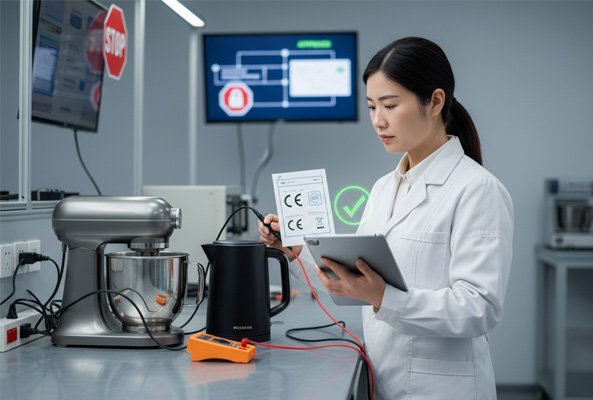
Getting safety compliance right isn't just about following rules; it's about protecting your business, your customers, and your brand's reputation. A small oversight here can lead to huge financial losses, legal trouble, and a complete halt to your sales. But once you understand the system, you can source with confidence. Let's break down exactly what you need to look for and how a local partner on the ground in China makes all the difference.
Which Key Certifications Do You Need for Your Target Market?
Different markets have entirely different rules. Guessing which safety logo to put on your product is a huge risk that can lead to customs rejecting your entire container.
For the European Union, you need the CE mark, which often requires LVD and EMC testing reports. For the USA, UL or ETL marks are the gold standard for safety. Other key markets have their own requirements, like PSE for Japan or SAA for Australia.
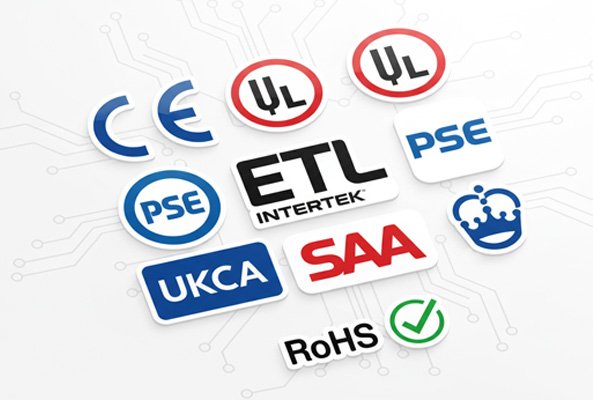
Understanding which certification applies to your product in your specific sales region is the first and most critical step. Suppliers may claim their product is "certified," but their certificate might be for a different market or an older version of the product. As your purchasing agent, my job is to verify that the documentation matches your exact needs. This isn't just a box-ticking exercise; it's fundamental to your product's success.
Here is a breakdown of the most common certifications importers need:
Key Certifications by Region
| Region | Primary Certifications | What It Covers |
|---|---|---|
| USA | UL (Underwriters Laboratories) / ETL (Intertek) | Electrical safety, fire risk, and shock hazards. Both are Nationally Recognized Testing Labs (NRTLs). |
| Canada | CSA (Canadian Standards Association) | Similar to UL/ETL, often tested for concurrently (e.g., cUL or cETL marks). |
| European Union (EU) | CE (Conformité Européenne) | A declaration that the product meets EU standards. Key directives include the Low Voltage Directive (LVD), Electromagnetic Compatibility (EMC), and RoHS. |
| United Kingdom | UKCA (UK Conformity Assessed) | The new UK equivalent of the CE mark, required for goods placed on the market in Great Britain. |
| Australia/New Zealand | SAA / RCM | Electrical safety approvals. The Regulatory Compliance Mark (RCM) shows compliance. |
| Japan | PSE (Product Safety Electrical Appliance & Material) | Mandatory safety and EMC standard for most electrical products sold in Japan. |
It's also crucial to understand directives like RoHS (Restriction of Hazardous Substances) and WEEE (Waste Electrical and Electronic Equipment), which apply in the EU and other regions. RoHS restricts the use of specific hazardous materials, and WEEE outlines requirements for recycling. A good supplier in Yongkang or Zhejiang should have experience with these standards, but it always requires verification.
How Can a Sourcing Agent Verify Supplier Certifications and Compliance?
A supplier sends you a PDF certificate that looks official. Is it real? Is it for the exact product you're buying? Doubts like these can stall your entire project.
A professional China sourcing agent verifies certifications by checking the certificate number on the issuing body's official online database (e.g., TÜV, Intertek, UL). We cross-reference the product model, factory name, and expiration date to ensure the document is authentic, current, and applies specifically to your item.
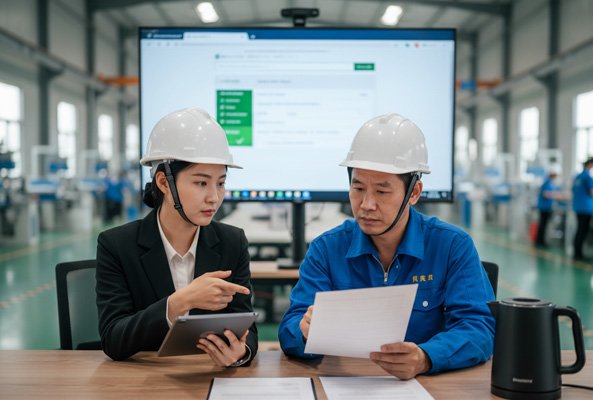
Verification is a multi-step process that goes far beyond simply receiving a file from a supplier. Unfortunately, forged or irrelevant certificates are common. A supplier might provide a certificate for a similar model, or one that expired years ago. This is where having someone on the ground becomes invaluable.
Here’s the process I follow for my clients:
- Request a High-Resolution Copy: I ask the factory for a clear copy of the full test report and the certificate. A blurry image is a red flag.
- Identify the Issuing Laboratory: I find the name of the testing lab on the document, such as SGS, TÜV Rheinland, Intertek, or UL.
- Check the Online Database: Every major lab has a public database to verify certificate numbers. I enter the number and check that the details match:
- Company Name: Does it match the factory I'm dealing with, or is it a trading company?
- Product Model Number: Is it for the exact product we are sourcing?
- Standards Listed: Do the tested standards meet the requirements for the client's target market?
- Date of Issue/Expiry: Is the certificate still valid?
- On-Site Factory Audit: For larger projects, I visit the factory here in Yongkang. A certificate proves a sample passed a test once. A factory audit confirms that the factory has the quality control systems in place to produce every unit to that same standard. This physical check is something you can't do from overseas.
This due diligence protects you from landing a container of non-compliant, unsellable goods.
What Are the Biggest Risks of Sourcing Non-Compliant Appliances?
You find a very cheap supplier. The price is incredible, but they're vague about safety documents. Cutting this corner might seem tempting, but it can destroy your business overnight.
The risks of non-compliance are severe: customs can seize and destroy your entire shipment. Marketplaces like Amazon can delist your product and suspend your seller account. Worst of all, a safety failure could cause a fire or injury, leading to lawsuits and irreparable brand damage.
I have seen businesses lose their entire investment because they skipped this step. The initial savings from a cheaper, non-compliant supplier are nothing compared to the potential costs. Let's look at these risks more closely.
1. Customs Seizure and Destruction
Customs agencies in the US, EU, and other major markets are actively screening imports for compliance. If your shipment is flagged for an inspection and you cannot provide valid certification documents, they have the authority to refuse entry. This means your goods are stuck. You'll be responsible for paying storage fees at the port, and eventually, you may have to pay for the goods to be shipped back to China or, more likely, destroyed. You lose the cost of the goods, the shipping cost, and any chance of revenue.
2. Marketplace Suspension
Platforms like Amazon have very strict compliance requirements. They will proactively ask for documents like a Children's Product Certificate (CPC) or test reports for specific standards (e.g., UL 60335 for a kitchen appliance). If a customer complains about a safety issue or Amazon's system flags your listing, you must provide proof of compliance immediately. Failure to do so results in your listing being removed and can lead to a full account suspension. Getting reinstated is difficult, time-consuming, and not guaranteed.
3. Legal Liability and Brand Damage
This is the most serious risk. If your non-compliant small appliance overheats, causes a fire, or injures a customer, you are legally liable. This can lead to devastating lawsuits that can bankrupt a small or medium-sized business. Beyond the financial cost, the damage to your brand's reputation can be permanent. News of a dangerous product spreads quickly online, destroying customer trust that you may never be able to rebuild. Proper certification is your first and most important line of defense.
Conclusion
Sourcing small appliances is profitable, but safety and compliance are non-negotiable. Verifying certifications is your key to market access, brand protection, and long-term success.
Ready to source small appliances from China with confidence? Send Aurosourcing your product requirements, and let's ensure your next shipment is safe, compliant, and profitable.