

Worried your chosen factory isn't what they claim? A bad supplier choice costs time and money. A proper factory audit is the key to verifying capabilities and preventing disasters.
To conduct a factory audit, use a detailed checklist to assess production capacity, quality control systems, and social compliance. For on-site audits, visit the factory in person. For remote audits, use live video calls and document verification. A China sourcing agent can execute both effectively.
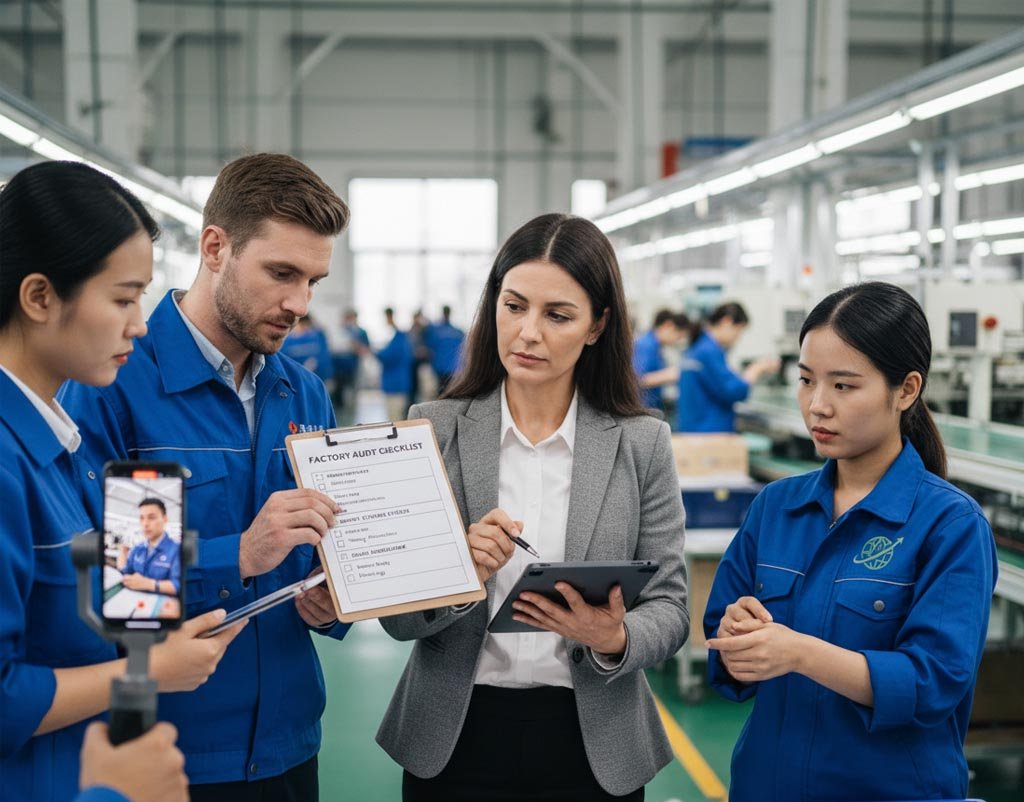
Verifying a factory's claims is one of the most critical steps in sourcing. It’s what separates professional importers from amateurs who rely on luck. Over my 13+ years in this business, I've seen firsthand how a single on-site visit can prevent catastrophic production failures. An audit isn't just about ticking boxes; it's about building confidence that your partner can deliver on their promises of cost, quality, and lead time. But a successful audit is more than just a visit; it's about knowing exactly what to look for and what questions to ask. Let's break down the essential components you need to check.
What should a comprehensive factory audit checklist include?
Arriving at a factory without a plan is a recipe for failure. You could get lost in a guided tour that only shows you the good parts and miss major red flags. A structured factory audit checklist ensures you cover all critical areas systematically.
A good factory audit checklist covers: 1) Factory Profile & Legality (business licenses), 2) Quality Management Systems (QMS), 3) Production Capabilities (machinery, capacity), 4) R&D, and 5) Social Compliance. This framework helps you objectively assess risk and reliability.

A well-designed checklist is your roadmap to a successful audit. When my team at Auro Sourcing visits a factory here in Yongkang, we don't just walk around. We execute a precise, multi-point inspection process. This isn't something you can improvise. It needs to be methodical to ensure you get a complete picture of the supplier's real capabilities, not just the story they want to tell you.
Breaking Down the Audit Checklist
The checklist should be organized into clear sections. For us, this always begins with the basics: verifying their business license to confirm they are a legitimate manufacturer and not just a trading company. We check their export license and any certifications they claim to have, like ISO 9001. Then, we move to the heart of the operation.
Key Areas to Investigate
| Audit Section | What We Look For | Why It Matters |
|---|---|---|
| Production Capacity | Number and condition of machines, number of workers, production line layout, daily/monthly output figures. | Ensures they can handle your order volume without causing bottlenecks or subcontracting without your permission. |
| Quality Management | IQC (Incoming Quality Control) for raw materials, IPQC (In-Process Quality Control) on the line, FQC (Final Quality Control) stations, and a dedicated QC team. | This is the most critical area. A weak QMS is the #1 cause of quality fade and defects. |
| Warehouse & Inventory | How raw materials and finished goods are stored. Is it organized and clean, or chaotic and dirty? | Poor warehouse management can lead to damaged materials, incorrect components being used, and shipping delays. |
| Social Compliance | Working conditions, safety equipment usage, worker dormitories (if applicable). | While not directly tied to product quality, it reflects on the factory's management ethics and stability. Unhappy workers lead to high turnover and inconsistent quality. |
I once audited a potential supplier for an e-commerce client. Their Alibaba page showed a modern, bustling factory. But our on-site audit revealed that half the machines were offline and covered in dust. Their claimed capacity was pure fiction. A checklist-driven audit exposed the reality behind the marketing, saving our client thousands.
When is a remote audit a good substitute for an on-site visit?
Flying to China for every potential supplier isn't always feasible, especially for startups or those sourcing a new category. But skipping verification entirely is a huge risk. Remote audits offer a powerful, cost-effective compromise for initial screenings and specific situations.
A remote audit is suitable for preliminary supplier screening, verifying basic documents, or for follow-up checks with a trusted, long-term partner. However, for a new, high-value supplier, an on-site audit is still the gold standard for comprehensive risk assessment.
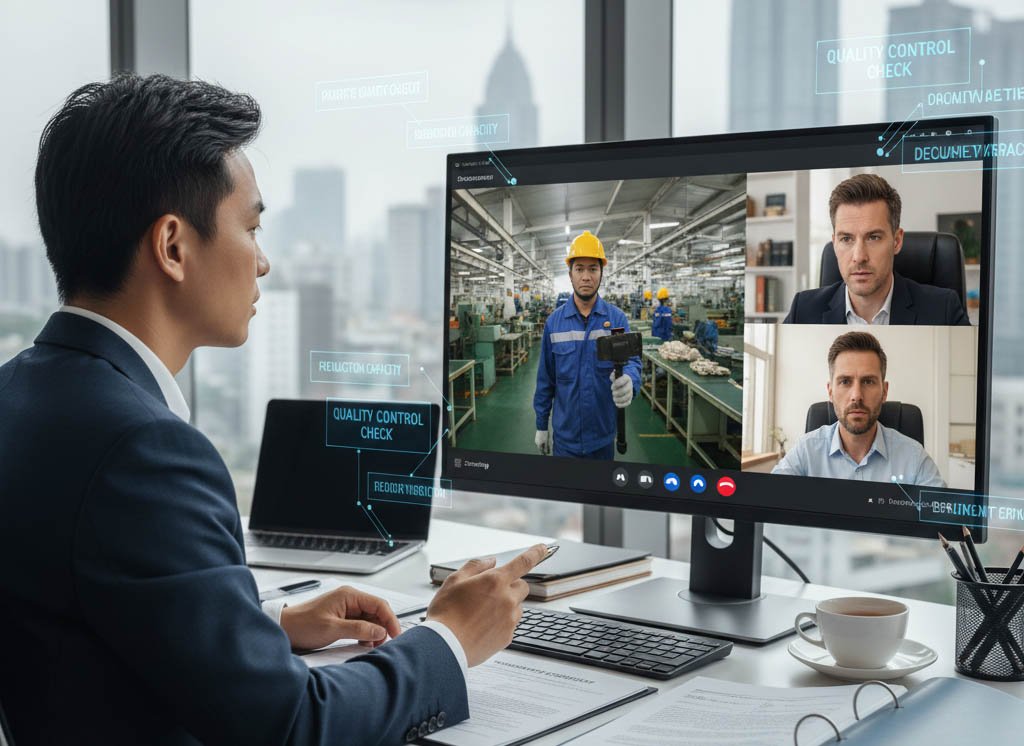
The pandemic forced many of us to get very good at remote verification. Using tools like WeChat or Zoom, we can accomplish a surprising amount without booking a flight. For many of our clients, especially Amazon sellers who need to vet multiple suppliers quickly, a remote audit is a fantastic first step. It allows us to filter out the weak candidates efficiently before committing the resources for a full on-site inspection of the top contenders.
The Power of Remote Verification
A remote audit, when done correctly, is more than just a casual video chat. We schedule a formal time and request a specific factory representative to be our guide. We ask them to start outside the factory gates to verify the location and name on the building. Then, we direct them through the facility following the flow of production: from the raw material warehouse, to the production lines, to the QC station, and finally to the finished goods warehouse. We ask them to show us specific documents live on camera, like their business license or a recent material inspection report. The key is that it must be a live, unedited video call that we direct.
Knowing the Limitations
While powerful, a remote audit has clear limits. You can't feel the quality of a raw material, hear the unusual rattle of a poorly maintained machine, or sense the morale of the workers. The factory controls the camera, so they can conveniently skip over messy or problematic areas. It is an excellent tool for initial screening, but it can't fully replace the depth of an in-person visit.
| Aspect | Remote Audit (Virtual) | On-Site Audit (Physical) |
|---|---|---|
| Cost | Low (no travel) | High (flights, hotel, time) |
| Speed | Fast (can be done in hours) | Slow (requires days of travel) |
| Scope | Good for screening, document verification | Comprehensive, deep dive into all operations |
| Spontaneity | Low (factory controls the camera) | High (can inspect any area, talk to anyone) |
| Ideal For | Vetting a long list of suppliers, follow-ups with known partners | Final selection of a new, critical supplier |
For a new, high-stakes product launch, I always advise my clients to invest in an on-site audit for the final one or two factories. The cost is a small insurance policy against a multi-thousand-dollar production disaster.
How does a China sourcing agent streamline the factory audit process?
Auditing a factory in China is tough without local expertise, especially if you don't speak Mandarin. Language barriers and cultural nuances can hide critical issues, and you might not know what "good" looks like in a specific industry. A professional China sourcing agent eliminates these risks.
A China sourcing agent like Auro Sourcing streamlines audits by handling everything: scheduling, executing a professional checklist, translation, and local transport. Based in Yongkang, we know the manufacturing ecosystem and can spot red flags that foreign buyers might miss, saving you time and money.
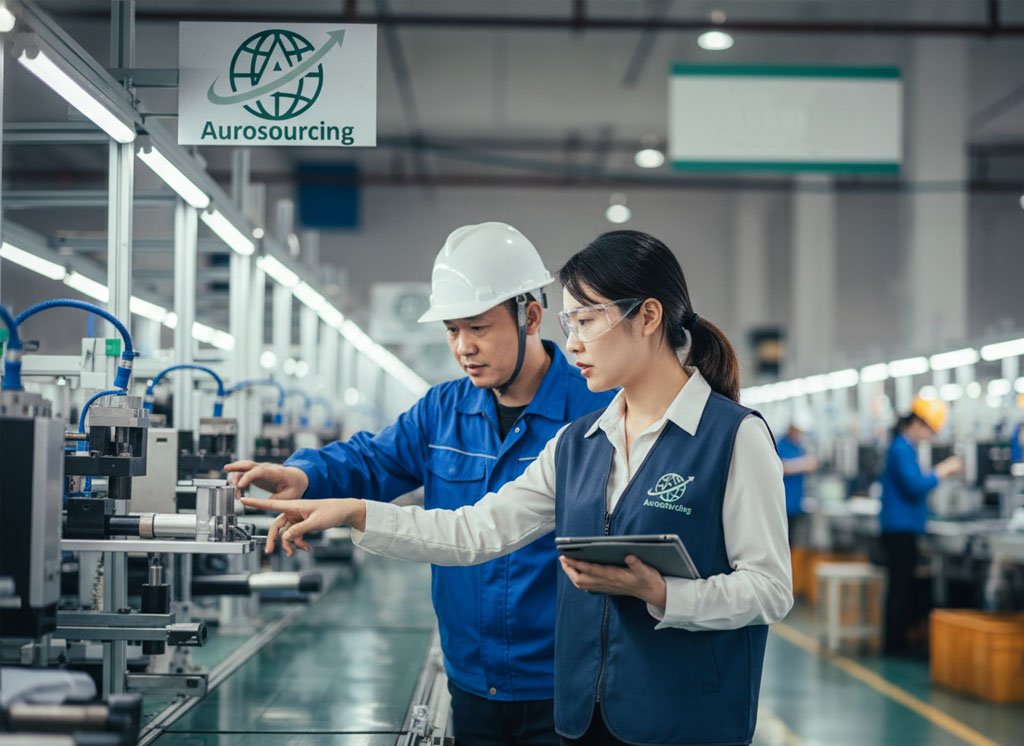
Think of a sourcing agent as your expert on the ground. When you hire us, you're not just getting a translator; you're getting over a decade of experience focused on hardware, drinkware, and fitness products right here in Yongkang, the manufacturing hub for these categories. We don't just follow a checklist; we understand the context behind each item. This local knowledge is something you can't get from a third-party inspection company based in another province.
Beyond Translation: The Value of Local Context
A good purchasing agent understands the local industry. For example, when we audit a vacuum flask factory in Yongkang, we know exactly which welding and polishing techniques indicate high quality and which are signs of cutting corners. We know the reputable raw material suppliers in the region, so we can ask pointed questions about their supply chain. This deep, localized knowledge is our greatest asset. I once saved an importer client from a bad deal because I recognized the factory manager—he had a reputation for subcontracting orders to lower-quality workshops without telling clients. You won't find that information on a website.
Our On-Site Audit Process
For our clients, the process is simple. You give us the factory details, and we handle the rest.
- Scheduling & Prep: We contact the factory to schedule the audit, communicating our requirements clearly in Mandarin.
- On-Site Execution: One of our project managers travels to the factory and performs the full audit using our proprietary checklist. We take extensive photos and videos of everything—machinery, production lines, warehouses, and product samples.
- Reporting: We compile all findings into a detailed PDF report, including our objective assessment and a clear recommendation: "Proceed with caution," "Recommended for sampling," or "Do not proceed."
This service gives importers, e-commerce sellers, and even startup founders the confidence of an on-site visit without the cost and complexity of doing it themselves. It lets you focus on growing your business while we handle the crucial groundwork of securing a reliable supply chain.
Conclusion
Factory audits are your best defense against bad suppliers. A structured process is key. Let our team in Yongkang be your trusted partner for on-site verification and sourcing.