

Sourcing from China offers huge opportunities, but the risk of scams or poor quality is real. A bad supplier can sink your business before it even starts.
To verify a Chinese supplier, you must conduct a multi-stage investigation. Start by checking their business license and online credentials. Next, assess their technical communication and evaluate product samples. Finally, confirm their capabilities with an on-site factory audit, the most reliable verification method.
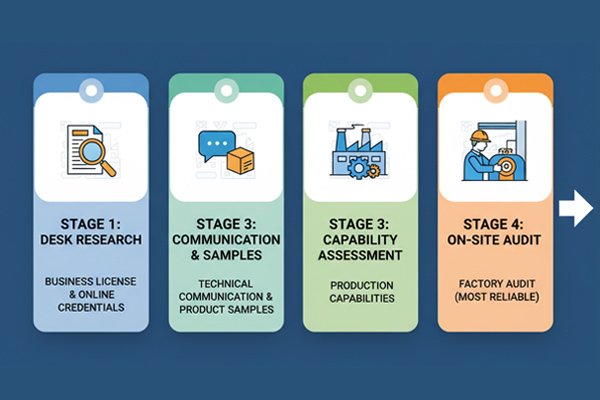
Finding a potential partner on a B2B platform is the easy part. The real work is figuring out if you can trust them with your capital, your product quality, and your brand's reputation. This process can feel intimidating, especially from thousands of miles away. But it doesn't have to be. As a sourcing agent based in Yongkang, the "Hardware Capital of China," for over 13 years, my team and I at Auro Sourcing have developed a straightforward checklist to vet potential factories. Let's walk through the exact steps I use, so you can build confidence and make safer sourcing decisions for your business.
What basic company information should you check first?
You've found a supplier with a great-looking website and attractive prices. But how do you know if they are a legitimate factory or just a trading company with a good web designer?
First, request their business license to verify their legal name, address, and official business scope. Cross-reference these details with their B2B profiles, website, and any claimed certifications. Inconsistencies are a major red flag that requires immediate clarification.
This initial paperwork check is your first line of defense. It’s a low-effort, high-impact way to filter out the most obvious mismatches and low-level scammers. Before we even begin a deep negotiation for our clients, my team at Auro Sourcing makes this our mandatory first step. A professional and legitimate company will never hesitate to provide these documents. If they delay or make excuses, we often move on immediately. It’s a simple test of transparency.
Decoding the Business License
The most important document is the Business License. You need to ask for a clear, current copy. Don't just glance at the company name. Look closely at these key fields:
- Business Scope: This is critical. If you see terms like "manufacturing," "production," or "processing," they are legally registered as a manufacturer. If the scope is limited to "trading," "wholesale," "retail," or "import/export," you are likely dealing with a trading company. This isn't necessarily bad—some trading companies are excellent—but you need to know exactly who you're working with from the start.
- Registered Address: Does the address point to an industrial zone or a downtown office building? A factory address should be in an area known for manufacturing, not a commercial city center. A quick search on a map can reveal a lot.
- Registered Capital: While not a definitive measure of strength, a very low registered capital (e.g., under 100,000 RMB) for a company claiming to be a large factory can be a warning sign.
Validating Certifications and Online Footprint
Next, play detective online. A supplier's digital presence must be consistent.
- Certifications: If they claim to have ISO 9001 (for quality management) or BSCI (for social compliance), ask for the full certificate, not just a logo on their website. These documents have registration numbers and issuing bodies. A quick email or online search with the issuing body can confirm if the certificate is valid and belongs to the company you're vetting.
- B2B Platforms: Does the company name, address, and "founding year" on their Alibaba, Made-in-China, or Global Sources profile match the business license? A common red flag I see is a supplier claiming "20 years of experience" when their business was only registered two years ago. This usually means the sales manager has 20 years of experience, not the company itself. These simple cross-checks are invaluable for building an accurate picture of the supplier.
How can you assess a supplier's production capabilities remotely?
The supplier's documents seem to check out, which is a good start. But can they actually manufacture your product to the quality standards you and your customers expect?
Assess their capabilities by evaluating their communication responsiveness and technical depth. Requesting product samples is critical to judge their quality firsthand. Also, ask for a virtual factory tour over a live video call to see their production lines and management.
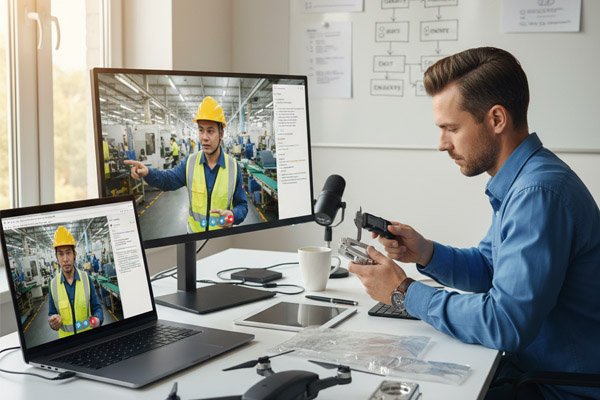
Before you spend a single dollar on an airplane ticket or place a large test order, you can learn an immense amount from your desk. How a supplier communicates and the quality of the samples they provide are strong indicators of their overall professionalism and production standards. This phase is about testing their expertise and seeing tangible proof of their work before you commit further.
The Communication and Technical Test
A professional supplier will have competent sales representatives backed by a knowledgeable engineering team. Pay attention to more than just their English proficiency.
- Technical Depth: Ask specific questions about materials, production processes, or tolerances. A sales rep from a real factory should be able to get you precise answers quickly. If their answers are consistently vague ("don't worry, quality is good"), it's a warning sign.
- Proactive Problem-Solving: The best suppliers I work with act like partners. They don't just say "yes" to everything. They might review your design and suggest a modification to improve manufacturability (DFM) or reduce cost. This proactiveness shows they have deep experience in their field and are invested in a successful outcome, not just a quick sale.
Sample Evaluation and Virtual Tours
A product sample is your first piece of physical evidence. For custom products, investing in an OEM sample is non-negotiable. It's a direct test of their ability to execute your vision. When the sample arrives, perform a thorough inspection. Does it function correctly? Are the materials, colors, and finishes exactly as specified? At Auro Sourcing, we often have samples sent to our Yongkang warehouse first. We perform an initial check against the client's spec sheet, saving them weeks of time and expensive international shipping costs if the sample is clearly wrong.
In today's world, a live video call for a virtual factory tour is a standard request. Ask them to walk you through the facility. You want to see the raw material storage area, the production lines in operation, the quality control station, and the finished goods warehouse. It's a powerful, low-cost way to get a feel for their scale and organization.
Why is an on-site audit the ultimate verification step?
You've done your remote checks, and the samples look good. But a nagging doubt remains. Is the factory as organized as they appeared on video? Are they really making your product in-house?
An on-site audit is crucial because it verifies everything you've been told. It allows a professional to physically inspect the factory’s scale, machinery, quality systems, and working conditions. It is the single most effective way to prevent scams and confirm production reliability.
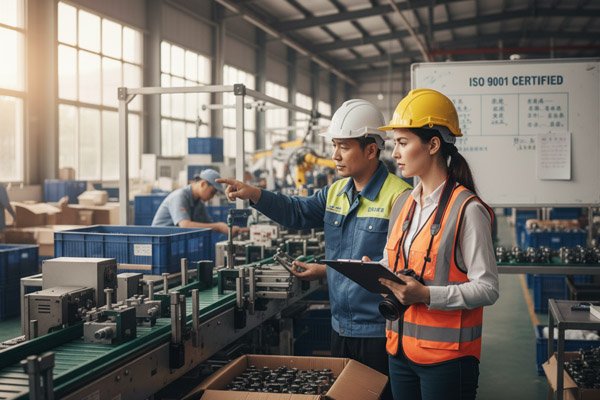
Nothing beats having eyes on the ground. A factory audit transforms assumptions into facts. While flying to China yourself is an option, it's expensive and time-consuming. This is where a local China sourcing agent provides immense value. We can be your representative, conducting a thorough, professional audit for a fraction of the cost of a trip.
My Experience: The Story of the "Phantom Factory"
I remember a client, an e-commerce seller launching a new line of high-end fitness equipment. He was about to place a $50,000 order with a supplier he found online. Their website was beautiful, their communication was flawless, and the samples were decent. But a nagging feeling led me to visit the factory address they provided in Yongkang before he wired the deposit. The address led me not to a sprawling factory complex, but to a small, cluttered office on the third floor of a commercial building. After some pressing questions, the "manager" admitted they were a trading company that planned to subcontract the entire order to a cheaper, unknown workshop. My on-site visit saved the client from a potential disaster of poor quality, delays, and a complete lack of control.
The Comprehensive Factory Audit Checklist
A professional audit is more than a quick walkthrough. It's a systematic inspection. Here’s what we look for:
| Audit Area | What We Check | Why It Matters |
|---|---|---|
| Factory Profile & Legitimacy | Match business license to physical location, check ownership structure, observe factory size and condition. | Confirms they are who they say they are and not a shell company or a tiny workshop. |
| Production Capacity | Number of workers, active production lines, key machinery (type, age, condition), and output per day. | Verifies they can actually handle your order volume and meet deadlines without excessive overtime or subcontracting. |
| Quality Management System | IQC (raw materials), IPQC (in-process), OQC (final product) processes; number of dedicated QC staff; availability of testing equipment. | Shows their commitment to quality and their ability to catch defects early, rather than at the final inspection. |
| R&D and Engineering | Size and experience of the engineering team, CAD software used, prototyping capabilities, and process for handling new product development. | Crucial for custom products. It confirms their ability to understand and execute complex technical specifications. |
| Social Compliance | General working conditions, safety measures (e.g., fire exits, machine guards), worker dormitories, and evidence of no child labor. | Protects your brand's reputation and ensures you are sourcing ethically, which is increasingly important to consumers. |
This in-person verification provides the concrete evidence and peace of mind you need to entrust a supplier with your business.
Is one-time verification enough to guarantee quality?
You’ve done all the hard work, verified your supplier, and placed your first order. Now you can relax, right? Unfortunately, the verification process doesn't end there.
No, a one-time audit isn't enough. You must implement ongoing quality control, including pre-production, in-line, and final pre-shipment inspections. This is vital to manage the risk of "quality fade" and ensure every batch meets your standards.

One of the biggest frustrations for importers is a phenomenon I call "quality fade." This is where the first order is perfect, but the quality of subsequent orders slowly declines. The supplier might start using slightly cheaper materials or cutting corners in the QC process to increase their margin. Verification is not a one-time event; it's the start of a managed relationship.
Implementing an Ongoing QC Plan
The only way to combat quality fade is to have a consistent inspection plan for every order. This is a core part of the service we provide as a sourcing agent. The plan should include several key stages:
- Pre-Production Inspection (PPI): Before mass production begins, we can send an agent to the factory to check that the raw materials and components are correct and match the approved samples. This prevents major issues from the very start.
- During Production Inspection (DPI or DUPRO): When about 20-30% of the order is complete, an inspector goes to the factory to check products coming off the line. This catches systemic issues early, allowing for corrections before the entire batch is finished, saving time and money.
- Pre-Shipment Inspection (PSI): This is the final and most critical check. When 100% of the order is produced and at least 80% is packed, we perform a final random inspection based on AQL (Acceptable Quality Limit) standards. We check quantity, packaging, labeling, and product specifications to ensure everything is correct before you make the final payment.
This continuous loop of inspection and feedback keeps the factory accountable and ensures your quality standards are maintained order after order. It transforms the relationship from a simple transaction to a managed partnership where your interests are protected on the ground.
Conclusion
Verifying a Chinese supplier is a systematic process of peeling back layers. From initial document checks to ongoing quality control, each step builds confidence and reduces risk. This checklist is your roadmap, but having a local purchasing agent like Auro Sourcing on the ground in China is your ultimate assurance.
Ready to find and verify a reliable manufacturing partner for your product? Send us your project details, and let's build your supply chain with confidence.