

Sourcing fun and profitable toys is one thing; navigating safety compliance is another. A single failed test can result in rejected shipments, legal issues, and a damaged brand reputation.
To source toys from China safely, you must identify your target market's mandatory standards (e.g., ASTM F963 for the US, EN 71 for the EU), ensure your factory can provide valid test reports, and correctly apply age grading. A China sourcing agent is essential for managing this process.
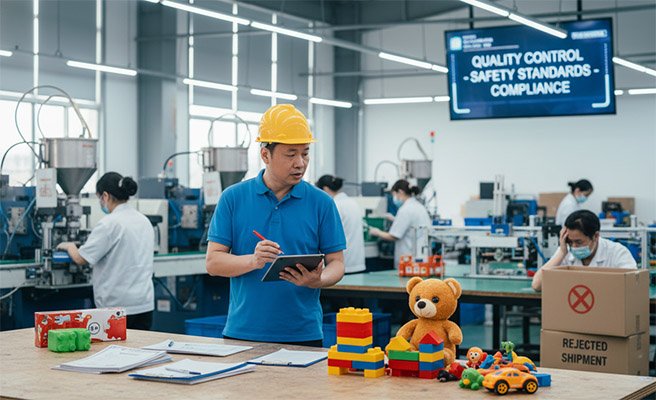
Navigating the world of toy safety can feel like a minefield for importers. The regulations are complex, non-negotiable, and vary significantly from one country to the next. As a sourcing agent based in Zhejiang for over a decade, I've seen firsthand how a lack of preparation in this area can derail an otherwise promising product launch. The key isn't just to find a factory that makes toys, but to partner with one that understands and consistently meets international safety standards. In this post, I'll break down the core concepts of toy safety testing and age grading to help you make informed decisions and protect your business.
What Are The Key Safety Standards for Toys?
You found a great toy supplier, but they're quoting different codes like ASTM and EN 71. Choosing the wrong standard for your market can get your entire shipment blocked at customs.
The two main toy safety standards are ASTM F963 for the United States and the EN 71 series for the European Union. Other major markets, like Australia and Canada, have their own specific regulations. You must confirm the required standard for your specific country of sale.
Understanding which standard applies to you is the first and most critical step. A supplier might claim their product is "safe" or "certified," but that's meaningless without context. Certified for which market? Based on which standard? A toy that passes US standards might fail EU standards, and vice-versa. At Auro Sourcing, this is one of the first questions we ask a client: "Where are you selling?" The answer dictates our entire supplier vetting and quality control strategy. It's not just a piece of paper; it’s the legal key to entering your target market.
Understanding ASTM F963 (for the USA)
In the United States, the governing standard is ASTM F963. The Consumer Product Safety Improvement Act (CPSIA) of 2008 made compliance with this standard mandatory for all toys sold in the country. It's a comprehensive document covering a wide range of potential hazards. When I work with clients targeting the US market, we focus on ensuring the factory understands these key areas:
| Hazard Category | What It Covers | Why It Matters |
|---|---|---|
| Mechanical Hazards | Sharp points, sharp edges, small parts (choking), projectiles. | Prevents physical injuries like cuts, punctures, and choking. |
| Chemical Content | Limits on heavy elements like lead and mercury, plus restrictions on certain phthalates (chemicals in plastic). | Protects children from toxic substance exposure. |
| Flammability | How quickly a material burns if exposed to a flame. | Prevents toys from posing a serious fire risk. |
| Electrical Safety | Requirements for battery-operated toys to prevent shocks or burns. | Ensures toys with electronic components are safe. |
We always require a Children's Product Certificate (CPC) from the supplier, which certifies that the toy complies with all applicable CPSC rules, including ASTM F963.
For clients selling in the European Union, the magic letters are "CE." A CE mark on a toy signifies that it meets the EU's health, safety, and environmental protection standards. The primary standard underpinning this for toys is the EN 71 series. Unlike ASTM F963, which is one large document, EN 71 is broken into multiple parts.
- EN 71-1: Mechanical and physical properties (similar to ASTM's mechanical checks).
- EN 71-2: Flammability.
- EN 71-3: Specification for migration of certain elements (a very strict chemical test).
When we source for EU clients, our purchasing agents verify not only the CE mark but also the underlying Declaration of Conformity and the specific EN 71 test reports. We check that the tests cover all relevant parts of the standard, as a simple "EN 71 passed" claim is not enough.
How Does Age Grading Affect Toy Design and Testing?
You labeled your toy "For Ages 3+" to avoid strict tests. But regulators can re-classify it for a younger age, forcing a recall and costly redesign. Understand age grading before production.
Age grading determines which specific safety tests apply. Toys for children under 3 years old face the most stringent rules, especially regarding small parts that pose a choking hazard. Incorrect grading can lead to non-compliance, recalls, and serious legal liability.
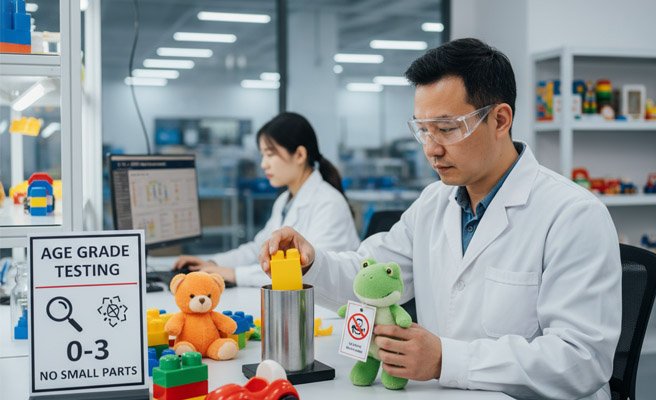
Age grading isn't a marketing decision; it's a safety classification based on the developmental abilities of children at different ages. A manufacturer can't simply put "Not for children under 3" on a baby rattle to avoid small parts testing. The grading must be appropriate for the toy's intended use and appeal. I often have to explain to startup founders that their target age group dictates the toy's design, not the other way around. Changing a toy from "3+" to "0-3" can mean swapping plastic eyes for embroidered ones or redesigning a component to be larger.
The Critical "Under 3" Rule
The most significant difference in testing is for toys intended for children under 36 months. The primary concern here is choking. Regulators use a tool called a Small Parts Test Fixture, a cylinder with specific dimensions. The rule is simple: if a toy, or any piece that breaks off it, can fit entirely within this cylinder, it is considered a "small part" and is a choking hazard. Any toy intended for this age group cannot contain small parts.
During our pre-production and in-process quality control inspections, our team in Yongkang often performs this test on-site at the factory. We use our own test cylinders and perform "torque and tension" tests, trying to pull off components like wheels, eyes, and buttons to see if they create a small part. This simple, hands-on check can catch a major design flaw before thousands of units are produced.
Factors for Determining an Accurate Age Grade
Deciding the right age grade is a structured process based on four key criteria:
- Physical Skills: Does the toy require fine motor control, balance, or strength that a younger child wouldn't have? (e.g., threading beads vs. stacking large blocks).
- Cognitive Abilities: Does the toy involve understanding complex rules, strategy, or abstract concepts? (e.g., a chess set vs. a shape sorter).
- Play Interest & Behavior: What age group would naturally be drawn to this type of toy? A simple wooden car appeals to toddlers, while a detailed model kit appeals to older kids.
- The Manufacturer's Stated Intent: While important, this is always subject to review by safety commissions. If your toy is clearly designed for a toddler, you can't just label it "8+".
As a sourcing agent, I guide my clients through this logic to ensure their chosen age grade is defensible and aligns with the product's features.
How Do I Verify a Supplier's Safety Claims and Test Reports?
A supplier sends you a professional-looking test report. But it could be fake, expired, or for a different product, putting your business at extreme risk. You must learn to verify every claim.
Never take a supplier's test report at face value. Always check the report date, product description, and testing lab credentials. The only truly safe method is to commission your own test from a reputable third-party lab for your specific production batch.

In my years as a purchasing agent in Zhejiang, I've seen every kind of "test report" imaginable. Some are perfect. Others are cleverly edited PDFs. Some are real but for a completely different product made two years ago. Relying on a supplier-provided document without independent verification is one of the biggest gambles an importer can take. The certificate you present to customs or Amazon must be authentic, current, and directly applicable to the exact product you are importing. Your business, not the supplier's, is on the line.
Red Flags on a Supplier's Test Report
When a supplier sends us a report, we immediately look for these warning signs:
- Old Date: The report is more than a year or two old. Standards can change, and material batches differ. A new test is needed.
- Vague Product Description: It says "Plastic Toy Car" but your product is a specific model number with unique colors and features. The report must match your SKU precisely.
- Wrong Applicant: The applicant on the report is a different trading company or factory. This means the report isn't for the factory you're actually working with.
- Unknown Lab: The report is from a lab you've never heard of. We only trust reports from internationally accredited labs like SGS, Intertek, TÜV, or Bureau Veritas.
- Incomplete Tests: The report only shows a test for EN 71-3 (chemicals) but not EN 71-1 (mechanical), or it's missing other required sections.
Our Verification Process at Auro Sourcing
Our job as your sourcing agent is to eliminate these risks. Here is the three-step process we follow:
- Initial Scrutiny: We review the supplier's report for all the red flags listed above.
- Direct Verification: We contact the testing lab listed on the report, using the unique report number, to confirm its authenticity. This simple step uncovers many fraudulent documents.
- Commissioning a New Test: For any new product or new client, we strongly recommend commissioning a brand-new test. We coordinate with a lab like SGS or Intertek to pull random samples from your mass production run and have them tested under your company name. This gives you an undeniable, legally-sound document that proves your specific batch is compliant. This is the gold standard for due diligence.
This process gives you full control and legal ownership of your product's compliance, which is invaluable if regulators ever come asking questions.
Conclusion
Sourcing toys requires strict attention to safety standards and age grading. A reliable China sourcing agent manages this compliance, protecting your business and ensuring your products are safe for children.