

Struggling with unreliable kitchenware suppliers and inconsistent quality? These problems can quickly eat into your profits and damage your brand's reputation, turning a promising venture into a constant headache.
Sourcing kitchenware from China gives you access to incredible cost efficiency, vast product variety, and deep manufacturing expertise. The key is using a structured system for planning, supplier verification, and quality control. This turns sourcing from a gamble into a reliable, scalable part of your business.
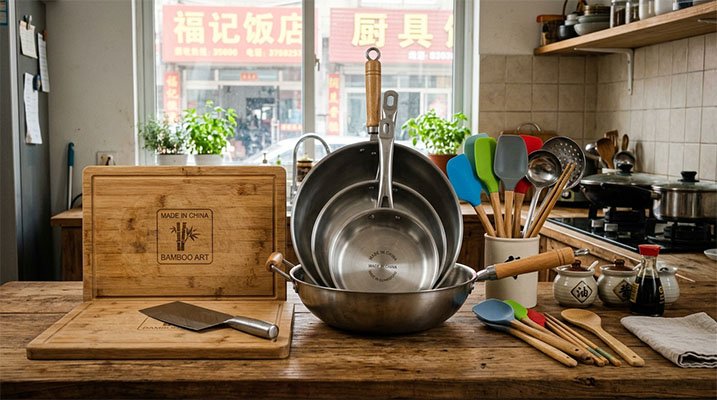
China remains the world's factory for kitchenware, but I've seen too many businesses fail because they relied on luck instead of a solid process. Success isn't about finding the single "best" factory; it's about building a system that delivers predictable results every time. In this guide, I'll walk you through the exact steps we use at Auro Sourcing to help our clients build stable and profitable supply chains. Let's get started.
Why is pre-sourcing planning so critical for kitchenware sourcing?
Jumping into sourcing without a clear plan is like sailing without a map. You'll end up with costly mistakes, frustrating delays, and products that don't meet your market's needs.
Pre-sourcing planning is essential because it forces you to clearly define your product specifications, budget, and compliance needs upfront. This detailed brief becomes your guide, preventing misunderstandings with suppliers, controlling costs, and ensuring the final product aligns perfectly with your business goals.
Before I even think about contacting a factory for a client, we build a comprehensive Product Requirements Document (PRD). This is your single source of truth. A vague request like "I want a stainless steel frying pan" is a recipe for disaster. A good plan, however, details everything.
Defining Your Product
First, get specific about what you're making. Is it high-end cookware for professional chefs or affordable utensils for everyday home cooks? This decision influences everything that follows.
| Category | Examples | Key Materials |
|---|---|---|
| Cookware | Frying pans, saucepans, stockpots | Stainless Steel (304/430), Cast Iron, Non-stick coatings (Teflon, Ceramic) |
| Bakeware | Baking sheets, muffin tins, cake pans | Carbon Steel, Silicone, Aluminum |
| Utensils & Gadgets | Spatulas, whisks, peelers, measuring cups | Silicone, Nylon, Stainless Steel, Wood, Bamboo |
| Food Storage | Glass containers, plastic boxes, vacuum bags | Borosilicate Glass, PP Plastic, PEVA |
Setting Key Specifications
Your PRD must be crystal clear. I always advise clients to include:
- Materials & Grade: Don't just say "stainless steel." Specify "Food Grade 304 Stainless Steel."
- Dimensions & Weight: Provide technical drawings with tolerances.
- Finishing & Color: Include Pantone codes for colors and describe the desired finish (e.g., "matte," "polished," "brushed").
- Packaging: Detail the retail box design, master carton requirements, and any FBA prep needed.
- Compliance: State the required certifications upfront, like FDA for the US or LFGB for the EU.
This planning phase isn't just paperwork; it's the foundation of a successful project. A solid plan empowers your China sourcing agent to find the right factory, get accurate quotes, and prevent quality problems before they start.
How do you find and verify reliable kitchenware suppliers in China?
Choosing the wrong supplier is the single most expensive mistake you can make. It can lead to production delays, unacceptable quality, communication breakdowns, and even a total loss of your investment.
To find reliable suppliers, you can use B2B platforms like Alibaba, attend trade shows like the Canton Fair, or partner with a sourcing agent. Verification is key: always check business licenses, confirm they are a factory (not just a trader), and evaluate samples before committing.
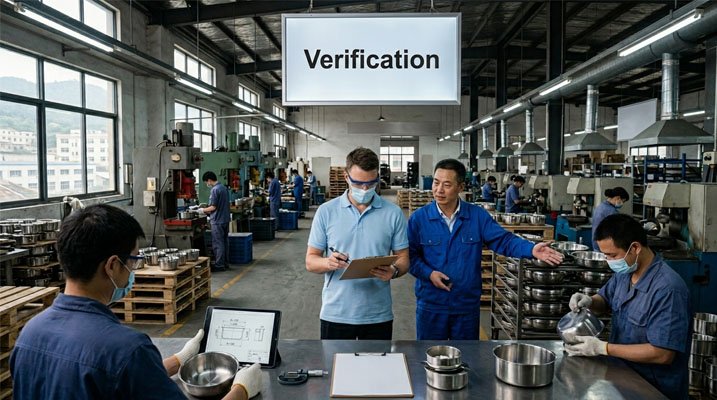
Finding suppliers is easy; finding good suppliers is hard. Based in Yongkang, the "Hardware Capital of China," I've seen firsthand what separates a great factory from a risky one. Many of the world's best cookware, vacuum flask, and metal utensil factories are right here in Zhejiang province. Here’s how we vet them.
Sourcing Channels
- B2B Platforms (Alibaba, Made-in-China): Great for initial research and creating a long list of potential suppliers. However, information can be misleading, and many listings are from trading companies, not direct factories.
- Trade Shows (Canton Fair): Excellent for meeting suppliers face-to-face and seeing the products yourself. It requires time and travel budget, but the direct interaction is invaluable.
- Sourcing Agents (like Auro Sourcing): This is the most efficient route. A good purchasing agent has an established, pre-vetted network of factories. We know which factories in Yongkang specialize in non-stick pans and which are experts in high-grade stainless steel.
The Verification Process
Once you have a shortlist, the real work begins. We don't just take their word for it. Our verification checklist includes:
- Business License & Export History: We check official records to confirm they are a legitimate manufacturer with experience exporting to your region.
- On-Site Factory Audit: This is non-negotiable. I or my team will visit the factory. We look at their production lines, their raw material storage, their in-house QC process, and their social compliance standards. A quick video call can't replace being on the factory floor.
- Technical Capability Assessment: Can they actually make your product to your required standard? We talk to their engineers, review similar products they've made, and assess their understanding of your specifications.
This rigorous vetting process, managed by a local Yongkang sourcing agent, filters out the 90% of suppliers who aren't a good fit, letting you focus on the top 10% who can truly become reliable partners.
How do you control quality during the manufacturing process?
Even a great, verified supplier can have a bad day. Without a proper quality control (QC) system, small issues can become massive problems, leading to a container full of unsellable goods.
Effective quality control is a continuous process, not a one-time event. It should involve inspections at key stages: pre-production (materials), during production (inline), and pre-shipment (final check). Using an AQL standard provides an objective measure of quality.
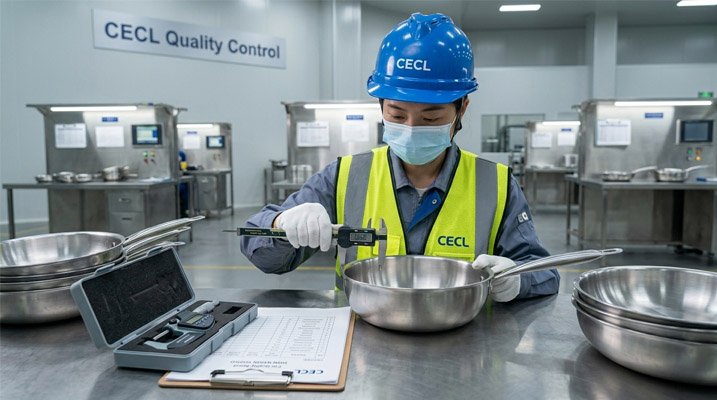
At Auro Sourcing, quality control is at the core of what we do. It’s not about blame; it’s about prevention and early detection. Relying solely on the factory's internal QC is a common mistake for new importers. You need your own eyes on the ground. We structure our QC process around several key inspections.
The Stages of QC Inspection
- Pre-Production Inspection (PPI): Once the raw materials arrive at the factory, we check them. Are they the correct grade of stainless steel? Is the non-stick coating from the specified brand? Catching a material issue here saves the entire production run.
- During Production Inspection (DPI or DUPRO): When about 20-30% of the order is complete, we go in and check the first units coming off the line. This helps us catch any systematic manufacturing or assembly errors early, before they affect the whole batch.
- Pre-Shipment Inspection (PSI): This is the final and most critical check. When 100% of the order is produced and at least 80% is packed, our inspector conducts a final random inspection based on the Acceptable Quality Limit (AQL) standard.
Using the AQL Standard
AQL isn't complicated. It's a statistical method that tells us how many units to inspect from a batch and the maximum number of defects allowed. We classify defects to help prioritize:
- Critical Defects: Unsafe issues (e.g., a sharp metal edge on a handle). A single critical defect means the entire batch fails inspection.
- Major Defects: Issues that affect usability or appearance (e.g., a deep scratch, a wobbly handle).
- Minor Defects: Small cosmetic flaws that don't impact function (e.g., a tiny scuff on the bottom).
By having a China purchasing agent manage this process, you get objective, actionable reports with photos and data, allowing you to decide whether to accept or reject a shipment with confidence.
How can a sourcing agent help manage shipping and logistics?
You’ve successfully manufactured thousands of high-quality kitchenware items. Now comes the final hurdle: getting them from the factory in China to your warehouse or customer, without delays or surprise costs.
A sourcing agent simplifies logistics by acting as your single point of coordination. We help you choose the right shipping method (sea/air), handle documentation, consolidate goods from multiple suppliers, and manage customs clearance, ensuring a smooth and cost-effective delivery.
Logistics can be a maze of acronyms, paperwork, and hidden fees. For many of our clients, this is where they feel most out of their depth. As your local partner, we streamline the entire process.
From Factory to Port (Incoterms)
First, we help you negotiate the right Incoterm. Most clients work with us on an FOB (Free On Board) basis. This means the factory is responsible for getting the goods to the designated Chinese port (like Ningbo or Shanghai). From there, we take over. This gives you control over your shipping costs, which is often cheaper than letting the factory arrange it.
Consolidation: The Unsung Hero of Cost Savings
Many of our clients, especially e-commerce sellers, don't just source one product. They might be buying pans from a factory in Yongkang, silicone utensils from a supplier in Ningbo, and bamboo cutting boards from another in Fujian. Shipping these separately would be incredibly expensive.
This is where our 10,000㎡+ warehouse becomes a huge asset. We arrange for all your goods to be sent to our facility. Here, we can:
- Consolidate: Combine all your orders into a single shipment (LCL or FCL) to drastically reduce freight costs.
- Perform Final Checks: We can do a final count and quick quality check as goods arrive.
- Add Value: We can handle final FNSKU labeling for Amazon FBA, insert marketing materials, or create custom bundles.
By managing everything under one roof, a sourcing agent like Auro Sourcing turns a complex, multi-supplier logistics puzzle into one simple, consolidated shipment, saving you time, money, and stress. We coordinate with the freight forwarder, prepare the Bill of Lading, Packing List, and Commercial Invoice, and make sure your inventory gets moving.
What are the key kitchenware sourcing trends?
Market trends are shifting quickly, and outdated products can lose competitiveness fast. Staying aware of what consumers want is crucial for long-term success in the kitchenware space.
Demand is rising for sustainable materials like bamboo and recycled steel, smart kitchen gadgets that offer convenience, and minimalist designs with eco-friendly packaging. Aligning your product development with these trends is key to staying relevant.
Staying ahead of market trends is not just for designers; it's a critical part of a smart sourcing strategy. By identifying what's next, you can work with your sourcing partner to find factories that have the right capabilities and materials. From what I see on the ground and in discussions with clients, here are the dominant trends shaping the market.
Major Sourcing Trends to Watch
| Trend | Description & Sourcing Insight |
|---|---|
| Sustainability | Consumers increasingly prefer products made from renewable or recycled materials. This includes bamboo utensils, recycled stainless steel cookware, and glass storage. When sourcing, it's vital to verify the supplier's claims about "eco-friendly" materials through certifications. |
| Smart Kitchens | The demand for connected devices continues to grow. This includes smart scales, temperature-controlled mugs, and app-integrated small appliances. Sourcing these products requires finding factories with strong electronic engineering and software integration capabilities, not just traditional manufacturing skills. |
| Minimalist & Multi-functional Design | Urban living and smaller kitchens drive demand for products that are space-saving, aesthetically clean, and serve multiple purposes. Think collapsible containers, nesting bowl sets, and tools that combine several functions into one. |
| Eco-Friendly Packaging | The focus on sustainability extends to packaging. Buyers are looking for reduced plastic, recyclable materials, and minimalist boxing. This is an easy win you can implement with almost any supplier by specifying your packaging requirements clearly in the PRD. |
By aligning your sourcing strategy with these trends, you position your brand for long-term growth and resonate more strongly with modern consumers. A good sourcing partner can help you find innovative suppliers who are already working with these new materials and technologies.
Conclusion
A structured sourcing system—from clear planning and supplier vetting to robust QC and streamlined logistics—is the key to building a stable, profitable kitchenware supply chain in China.
Ready to turn your kitchenware idea into delivered inventory? Contact us at Auro Sourcing. Share your product specs, and let our team in Yongkang build a reliable sourcing plan for you.