

Your packaging is your first impression, but the wrong choice can lead to damaged goods and a poor brand image. Getting the material and printing right is critical.
Sourcing the right packaging in China involves matching your product's needs—protection, branding, and compliance—with the correct paper, corrugated material, ink, and certifications. A good sourcing agent simplifies this by connecting you with validated suppliers who meet your exact specifications.
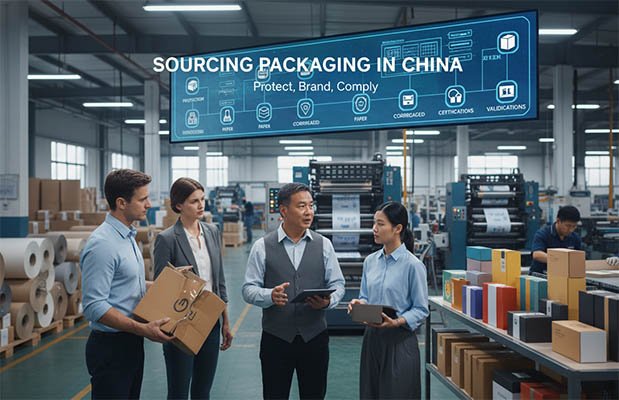
I've seen it all in my 13+ years as a sourcing agent here in Yongkang. A great product can be let down by poor packaging. On the other hand, the right box doesn't just protect; it sells. But navigating the world of paper, corrugated board, and inks can feel overwhelming for overseas buyers. Many factories specialize in just one or two material types, and getting a straight answer on what's best for your product can be difficult.
Let's break down the key elements so you can make confident, cost-effective decisions. My goal is to give you the practical knowledge I use every day to help clients get their packaging right from the start, avoiding costly mistakes and delays down the line.
What Are Your Best Paper Options for Product Packaging?
Confused by terms like GSM, kraft, and coated paper? Choosing the wrong one can ruin your print quality, compromise protection, or inflate costs unnecessarily. Let's clarify the key options.
For most products, your choice is between eco-friendly Kraft paper, versatile cardstock (200-400gsm), and vibrant coated paper (gloss/matte). Each offers a different balance of durability, print quality, and cost, making it crucial to match the paper to your brand's aesthetic and budget.
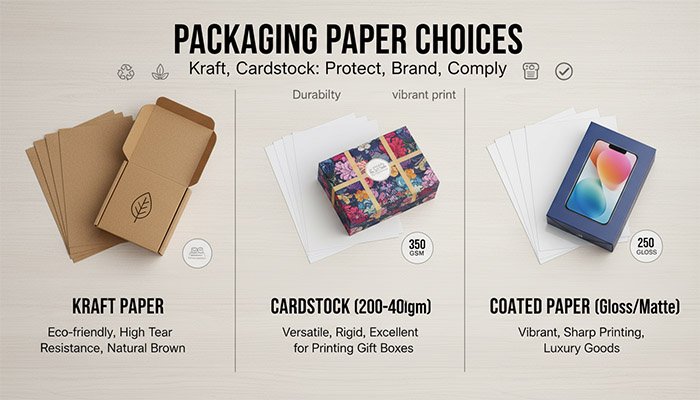
When I start a new project with a client, the packaging conversation begins with two questions: "What are you protecting?" and "What story is your brand telling?" The answers guide our paper selection. Getting this right is about more than just looks; it's about performance and cost. As your purchasing agent, my job is to find the sweet spot.
Understanding Paper Weight (GSM)
First, let's talk about GSM, or "Grams per Square Meter." This is the single most important metric for paper thickness and rigidity. A higher GSM means a heavier, thicker, and more durable paper. Standard office paper is about 80gsm, while a quality business card is often 350gsm or more. For product boxes, we typically work in the 200-400gsm range.
Common Paper Choices
Here’s a simple breakdown of the main paper types I source for clients from factories here in Zhejiang:
| Paper Type | Key Features | Best For |
|---|---|---|
| Kraft Paper | Eco-friendly, high tear resistance, natural brown or bleached white look. | Sturdy boxes, organic/natural product branding, e-commerce mailers. |
| Cardstock | Heavier and more rigid than standard paper, excellent for printing and holding shape. | Gift boxes, retail packaging, cosmetic boxes, custom inserts. |
| Coated Paper | Has a gloss, matte, or satin finish applied for vibrant, sharp printing. | High-end electronics, luxury goods, any product needing photo-quality images. |
| Specialty Papers | Includes embossed, textured, metallic, and foil-lined papers. | Premium gift sets, invitations, and luxury branding where touch is part of the experience. |
How Do You Choose the Right Corrugated Material for Shipping?
Tired of products arriving damaged due to crushed boxes? Customer returns and negative reviews hurt your bottom line. The solution lies in choosing the correct corrugated flute and wall configuration.
The key is understanding flute types (like B-flute for retail, C-flute for shipping) and wall configurations (single, double, or triple-wall). A double-wall BC-flute box offers excellent protection for most e-commerce shipments, balancing strength and cost.
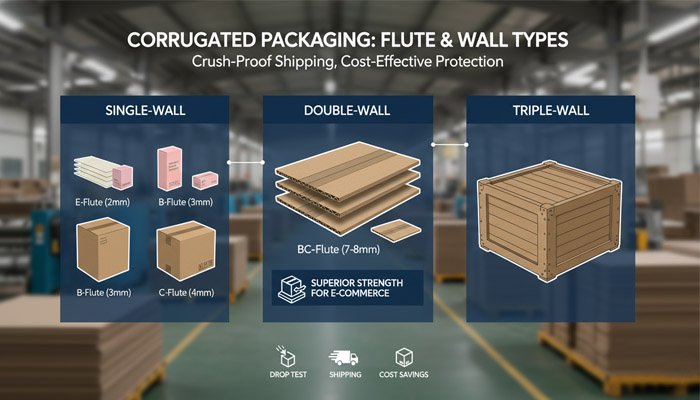
Your beautiful product box is for branding; the corrugated shipping carton is for war. It has to survive warehouse stacking, rough handling, and the entire international freight journey. I’ve seen clients lose thousands of dollars by trying to save a few cents on their shipping boxes. It’s a classic mistake. A good China sourcing agent will insist on getting this right. We specify not just the box dimensions, but the exact flute profile and wall structure needed to protect the contents.
Flute Profiles Explained
The "flute" is the wavy layer of paper sandwiched between the flat linerboards. Its shape determines the box's cushioning and stacking strength.
| Flute Type | Thickness (Approx.) | Characteristics & Common Uses |
|---|---|---|
| A-Flute | 5mm | Excellent cushioning. Good for wrapping fragile items or for stacking strength. |
| B-Flute | 3mm | Good crush resistance and printing surface. Common for retail packaging and inner cartons. |
| C-Flute | 4mm | The most common type for shipping cartons. A good all-around mix of strength and cushioning. |
| E-Flute | 2mm | Very thin with an excellent printing surface. Used for small retail boxes (e.g., pizza boxes, cosmetic mailers). |
| BC-Flute | 7-8mm | This is a double-wall combination of B and C flutes, offering superior strength and cushioning for shipping. |
Wall Configurations
- Single-wall: One flute layer between two linerboards. Standard for most shipments.
- Double-wall: Two flute layers (e.g., BC-flute) for enhanced strength. My default recommendation for most international e-commerce shipments.
- Triple-wall: Three flute layers. Reserved for extremely heavy or high-value industrial items.
For our e-commerce clients, I almost always recommend a drop test with their specific product in the proposed packaging. It’s a simple step we manage with the factory that saves thousands in potential damages later.
Which Ink Type is Best for Your Packaging Design?
Worried about your packaging colors fading or failing compliance tests? A poor ink choice can look unprofessional and even be unsafe for certain products. Let's pick the right one.
Your choice depends on your needs: water-based and soy-based inks are eco-friendly and food-safe, making them ideal for many consumer goods. UV inks offer supreme durability and a premium finish, while solvent-based inks are best for outdoor-use products.
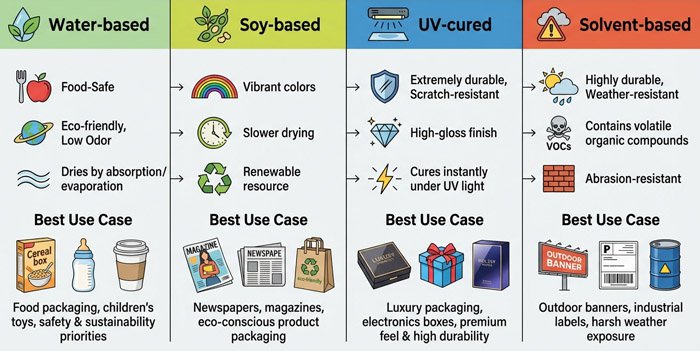
The printing factory will often default to the cheapest ink that gets the job done, but that may not align with your brand values or market requirements. For example, if you sell baby products or organic foods, using a standard solvent-based ink is a huge miss. As part of the sourcing process, we specify the ink type in the purchase order to ensure there are no surprises. It's a small detail that makes a big difference in final quality and compliance.
Here’s a comparison to help you decide:
| Ink Type | Key Features | Best Use Case |
|---|---|---|
| Water-based | Eco-friendly, low odor, safe for food packaging. Dries by absorption and evaporation. | Food packaging, children's toys, any application where safety and sustainability are priorities. |
| Soy-based | Made from a renewable resource. Can produce vibrant colors. Slower drying. | Newspapers, magazines, and eco-conscious product packaging where drying time isn't critical. |
| UV-cured | Cures instantly under UV light. Extremely durable, scratch-resistant, with a high-gloss finish. | Luxury packaging, electronics boxes, applications needing a premium feel and high durability. |
| Solvent-based | Highly durable and resistant to water, fading, and abrasion. Contains volatile organic compounds (VOCs). | Outdoor banners, industrial labels, packaging that will be exposed to harsh weather conditions. |
A common mistake I see is clients paying for durable UV inks when their product doesn't need it. We help them talk to the factory about using water-based inks to lower costs and improve their eco-credentials, especially for food-related items.
What Certifications Matter for Packaging and Printing?
Ever had a shipment rejected by customs due to non-compliant packaging? The delays and fines are a nightmare. Securing the right certifications from your supplier is non-negotiable.
Key certifications include FSC for sustainable paper sourcing, and food-contact grades like FDA (for the US) and the stricter LFGB (for the EU). Additionally, RoHS and REACH ensure your packaging is free from hazardous substances, which is crucial for market access in Europe.
Certifications are not just logos to put on a box; they are proof that your supplier meets international standards for safety, sustainability, and quality. A factory might claim they are "FSC certified," but can they produce the documentation to prove it? Verifying these claims is a critical part of our supplier audit process here at Auro Sourcing. We don't just take the supplier's word for it; we ask for the certificate, check the issuing body and expiry date. This simple due diligence is a core part of our job as your sourcing agent in China.
Key Packaging Certifications Explained
- FSC (Forest Stewardship Council): This is the gold standard for sustainable paper. It certifies that the paper comes from responsibly managed forests. If sustainability is part of your brand message, this is a must-have. There are different levels, like FSC Mix, FSC 100%, and FSC Recycled.
- FDA (Food and Drug Administration): This is a US requirement for any material that comes into direct contact with food. The packaging materials and inks must be proven safe for human consumption.
- LFGB (Lebensmittel-, Bedarfsgegenstände- und Futtermittelgesetzbuch): This is the German and broader European standard for food contact materials. It is generally considered stricter than FDA regulations, involving more comprehensive testing. If you sell to the EU, LFGB is your target.
- RoHS / REACH: These are EU regulations restricting the use of specific hazardous substances in products and their packaging. Compliance is mandatory for selling in the European Union and demonstrates a commitment to environmental safety.
Conclusion
Choosing the right paper, corrugate, ink, and certifications is vital. A knowledgeable China sourcing agent simplifies this process, ensuring your packaging is protective, compliant, and brand-aligned.