

Sourcing textiles seems simple, but getting the fabric wrong can ruin your entire order. You risk receiving a product that looks right but feels cheap, performs poorly, or fails after washing.
To source textiles successfully, you must control three core factors: fabric type (composition), GSM (weight), and finishing (treatments). These technical details, not just appearance, determine the final product's quality, durability, cost, and market acceptance. A professional China sourcing agent focuses on these specifications first.
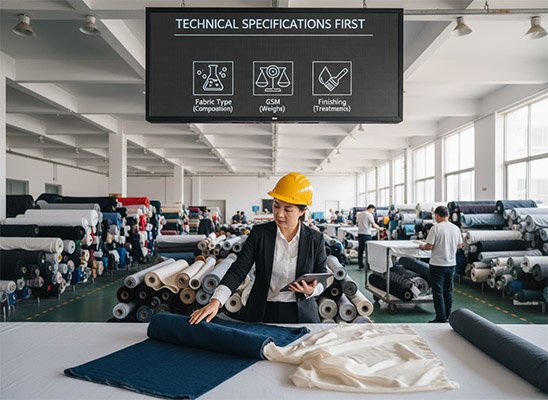
Many importers, e-commerce sellers, and wholesalers focus on color and price, assuming the fabric will match the sample. But at AuroSourcing, we've seen how this leads to costly problems. A fabric might look identical in a photo but have a different weight, feel, or shrinkage rate in reality. These aren't minor details; they are the foundation of your product's quality and your brand's reputation. To avoid disputes and ensure consistency, you must move beyond visual approvals and dig into the technical specifications that truly define the material. This guide will break down the three most critical areas—fabric type, GSM, and finishing—to help you make smarter, safer sourcing decisions.
How Do Fabric Types Affect Your Product Quality and Sourcing Risk?
Choosing a fabric based on looks alone is a huge risk. The material composition dictates everything, yet buyers often approve samples without confirming the exact fiber blend, leading to costly mismatches.
Fiber content directly impacts a product's comfort, durability, performance, and cost. Natural fibers like cotton offer breathability, while synthetics like polyester provide stability. A mismatch between the specified and delivered blend can completely alter the final product, creating quality disputes.
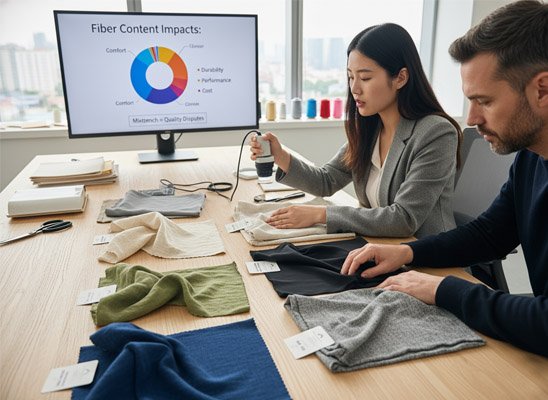
When sourcing textiles, the first step is to understand that "fabric" isn't a single material. Two fabrics can look very similar but behave differently. At our office in Zhejiang, a major textile hub, we guide clients through these choices every day. It's crucial to be precise about what you need.
Natural vs. Synthetic vs. Blended Fibers
The fiber composition is the DNA of your product. Getting it wrong is like building a house on the wrong foundation.
- Natural Fibers: Materials like cotton, linen, wool, and silk are chosen for comfort and their premium feel. For instance, a client sourcing high-end bedding will insist on 100% long-staple cotton for its softness and breathability. However, these fibers can also be prone to wrinkling and shrinkage if not finished correctly.
- Synthetic Fibers: Polyester, nylon, and spandex are workhorses known for durability, wrinkle resistance, and elasticity. We often recommend polyester for activewear or outdoor products because it's stable and cost-effective. But relying on it for a product meant to feel luxurious can backfire.
- Blended Fabrics: Most often, we work with blends. A cotton/polyester blend is a classic example, balancing cotton's comfort with polyester's stability and easy care. A small amount of spandex can transform the fit of a garment. The key is specifying the exact ratio. I once had a client approve a "cotton-blend" shirt that felt great in the sample, but the bulk order came in with a higher polyester content. It was cheaper for the factory, but the shirts felt slick and less breathable, leading to a major dispute we had to mediate. Don't rely on vague terms; always demand the exact percentage breakdown.
Why Does Fabric GSM Matter More Than You Think?
Many buyers approve a fabric swatch without ever considering its weight. This is a common mistake that can completely change your product's perceived value and lead to customer complaints about quality.
GSM (Grams per Square Meter) defines fabric weight. It directly impacts a product's thickness, durability, feel, and opacity. Ignoring GSM can result in a product that feels too flimsy or too bulky, failing to meet market expectations and affecting your brand's reputation.
I can't stress this enough: photos and even small swatches do not properly communicate fabric weight. A fabric's GSM is a critical specification that influences everything from the product's drape to its shipping cost. A low GSM fabric feels light and breathable, which is great for a summer shirt but terrible for a hoodie meant for winter. A high GSM fabric feels more substantial and premium, but it can also make a product feel too heavy or stiff if the choice is wrong.
The Real-World Impact of GSM
In our experience as a purchasing agent, GSM is a frequent point of contention. Here’s why it deserves your full attention:
- Perceived Quality: For many products, like t-shirts or towels, customers equate weight with quality. A client of ours was sourcing promotional t-shirts. The factory offered a 140 GSM option that was 15% cheaper than the 180 GSM we initially quoted. The client was tempted, but we insisted on sending samples of both. The 140 GSM shirt was so thin it was almost transparent. It would have damaged their brand image, making the "savings" incredibly costly in the long run.
- Cost and Consistency: Heavier fabrics use more raw material, so they cost more. Sometimes, a supplier might subtly reduce the GSM on a bulk order to cut their costs, hoping the buyer won't notice. Without a clear GSM specification and an on-site quality control check, you have no way to enforce this.
- Product Performance: The wrong GSM can affect how a product is made and how it performs. A fabric that's too heavy can cause needles to break during sewing, while one that's too light may not hold its shape. Always define a target GSM with an acceptable tolerance (e.g., 200 GSM +/- 5%).
What Fabric Finishing Processes Should You Pay Attention To?
You've specified the fiber and weight, but the fabric still feels wrong. The problem is likely the finishing—a step that is critical for performance but often overlooked by buyers during sourcing.
Finishing includes treatments applied after weaving or knitting that affect a fabric's final feel, appearance, and performance. Processes like softening, pre-shrinking, or water-resistance must be specified and tested, as inconsistency here is a common cause of quality failure in bulk production.
Finishing is what turns a raw textile into a commercially viable material. It’s where a fabric gets its soft hand-feel, its resistance to wrinkles, or its vibrant, lasting color. However, it's also a process where factories can cut corners. A beautiful sample doesn't guarantee the bulk order will perform the same way after a few washes if the finishing process is unstable. As a sourcing agent, we push our clients to test samples not just for looks, but for performance after washing.
Key Finishes and Their Sourcing Risks
You don't need to be a textile engineer, but you should know what to ask for.
- Basic Finishes: These include treatments like softening, which improves the hand-feel, and pre-shrinking (sanforization), which is critical for dimensional stability. If a supplier skips or poorly executes pre-shrinking, your garments could shrink several sizes after the first wash, leading to massive customer returns.
- Functional Finishes: These add specific performance features. Examples include water-repellent coatings for outerwear, anti-pilling treatments for sweaters, and moisture-wicking for activewear. These add cost and complexity. We once worked on an order for fleece blankets where the anti-pilling finish on the bulk production was far weaker than the approved sample. We caught it during an in-production inspection, forcing the factory to re-run the finishing process before the fabric was cut.
- Appearance Finishes: This covers everything from printing and embossing to special dye effects like a "washed" look. These are great for differentiation but require tight control. Color consistency, print alignment, and texture must be monitored from the first batch to the last.
How Can You Control Your Textile Sourcing Process More Safely?
Assuming a supplier will perfectly match your sample is a recipe for disaster. Vague approvals, poor communication, and a lack of on-site follow-up are the main reasons textile orders go wrong.
To control textile sourcing, create a detailed tech pack with fiber, GSM, and finishing specs. Always approve physical pre-production samples, conduct wash tests, and partner with a China sourcing agent for on-the-ground inspections to ensure your standards are met throughout production.
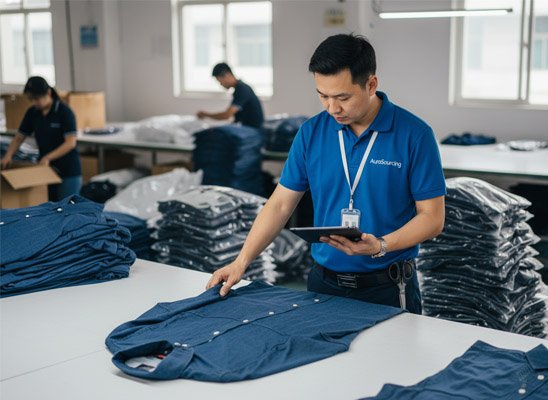
A structured sourcing process is your best defense against quality issues. It removes ambiguity and gives you clear checkpoints for approval. At AuroSourcing, we built our entire one-stop service around this principle. We help clients translate their product ideas into clear, executable specifications that factories understand. Here are the steps we follow to protect our clients' investments.
A 4-Step Process for Safer Sourcing
- Confirm the Full Material Specification: Before you even request a price, create a detailed specification sheet. It must include fiber composition (e.g., 95% Cotton / 5% Spandex), target GSM (e.g., 220 GSM +/- 5%), fabric width, color Pantone code, and all required finishing treatments (e.g., "pre-shrunk, anti-pilling finish"). This document becomes the basis of your contract.
- Work from Physical References: Never approve a textile from a photo. You must evaluate lab dips for color, fabric swatches for feel, and full pre-production samples for fit and construction. We manage this sampling process for our clients, ensuring that what they hold in their hands is what the factory is benchmarked against.
- Test for Real-World Performance: A good-looking fabric is useless if it fails in use. We always recommend performing basic tests on your samples: wash them multiple times to check for shrinkage and color bleeding, and rub them to check for pilling or crocking. For technical products, third-party lab testing may be necessary.
- Use On-the-Ground Follow-Up: This is where a reliable China sourcing agent is invaluable. Our team, based in Yongkang, Zhejiang, can visit suppliers to verify materials before cutting begins, monitor production, and perform final AQL-based inspections. This local presence is often the difference between catching a problem early and discovering it when a container of faulty goods arrives at your warehouse.
Conclusion
Mastering fabric type, GSM, and finishing is not optional. These three pillars dictate your product’s quality and are essential for turning a good idea into a reliable, scalable product.