

Struggling with unreliable suppliers, quality issues, and delays? A bad batch of cookware can damage your brand and cost far more than you saved by choosing the cheapest option.
To find reliable aluminum kitchenware suppliers in China, you must verify they are real manufacturers, evaluate product quality through rigorous sampling, conduct on-site factory audits, compare quotations carefully, and control production with scheduled inspections. This structured process minimizes risk and ensures predictable results.
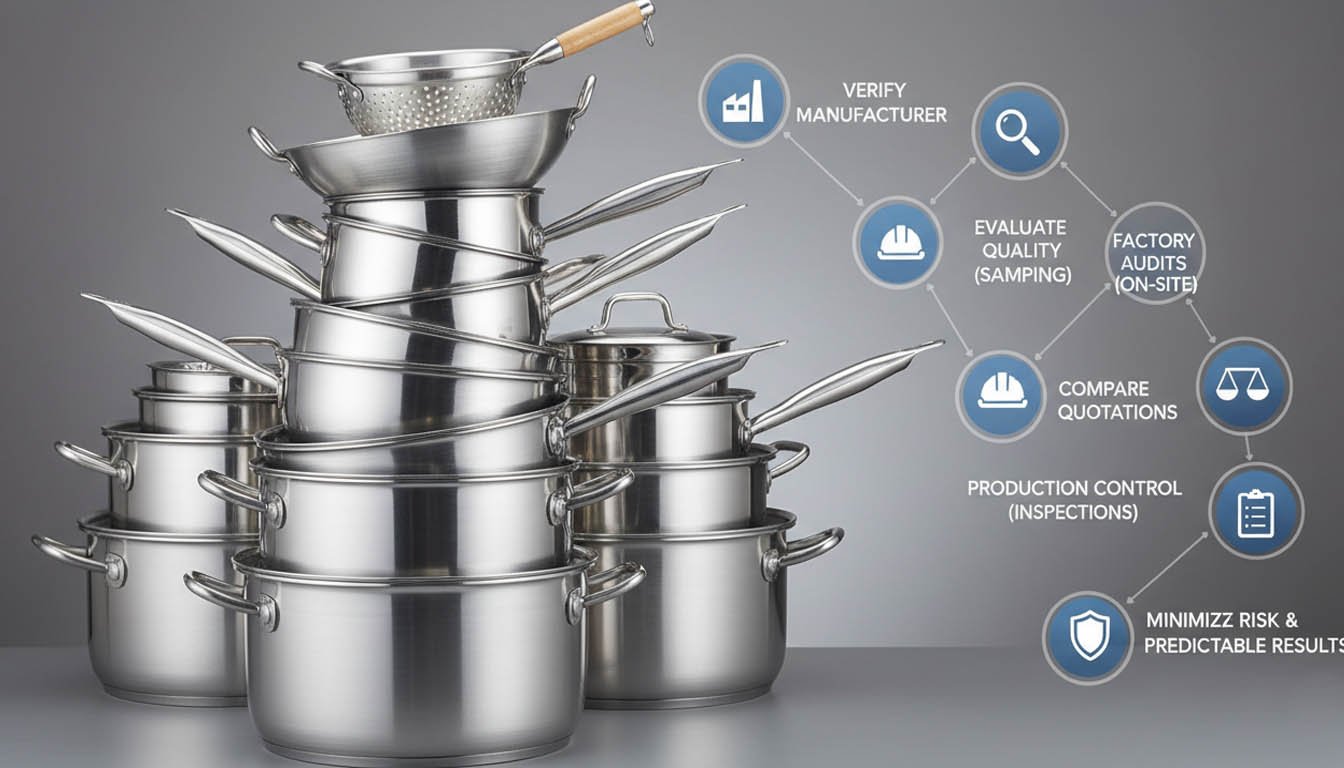
Sourcing from China isn't about luck; it's about having the right system. For over a decade, I've seen the difference a structured process makes. It turns a high-risk gamble into a predictable part of your business. Here’s a breakdown of the system I use to help clients build a reliable supply chain.
Why Source Aluminum Kitchenware From China?
Low prices attract buyers, but many end up facing quality issues. The real cost of fixing mistakes—returns, lost sales, and brand damage—often outweighs the initial savings.
China offers competitive pricing, massive manufacturing capacity, and a vast product range. However, buyers must actively manage risks like quality inconsistency and unclear supplier credibility to realize these benefits. Without a system, the risks can easily outweigh the rewards.
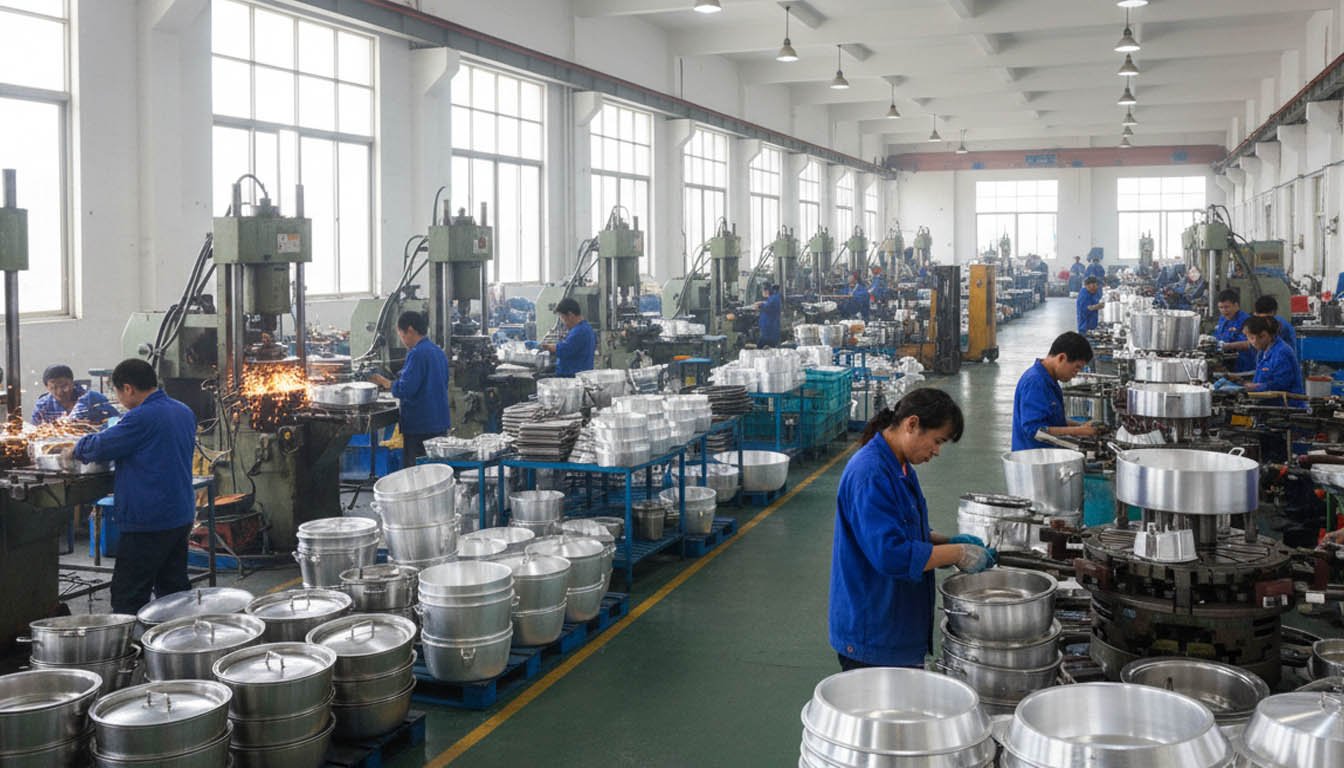
China’s advantage, especially in industrial hubs like Yongkang where my company is based, is its deeply integrated supply chain. Everything from raw aluminum to coating specialists is centralized, which lowers costs and lead times. However, this creates a crowded market where quality varies wildly. Many online listings are from trading companies with no control over production. The real risk isn't sourcing from China; it's choosing the wrong partner without proper due diligence.
Key Advantages vs. Real-World Risks
| Factor | Advantage | The Hidden Risk You Must Manage |
|---|---|---|
| Cost | Economies of scale lead to lower unit prices. | Suppliers cutting corners with inferior materials or thinner coatings to offer an artificially low price. |
| Variety | An unparalleled range of products and customization options. | Inconsistent quality standards. A supplier might make one product well but fail at another. |
| Experience | Many factories are export-ready and familiar with shipping. | Trading companies with professional websites posing as factories, who can disappear when problems arise. |
What Makes an Aluminum Kitchenware Supplier Reliable?
Many suppliers look professional online, but few can deliver consistent quality at scale. The real difference is in their systems and processes, not their website.
A reliable supplier is a verified manufacturer with stable production capacity, a documented quality control system, proven export experience, and transparent communication. Reliability is about predictable performance, not just low prices.
Reliability is about process, not promises. A trustworthy supplier operates with clear, repeatable systems. When we audit factories, we focus on operational reality: Do they inspect incoming raw materials? Do they have quality checkpoints on the production line? How do they handle defective units? The answers to these questions reveal their true capabilities.
Core Evaluation Criteria
| Criteria | What to Look For |
|---|---|
| Manufacturer Status | They own their factory, welcome an on-site audit, and their business license lists "manufacturing." |
| Production Capacity | They have stable production lines and don't secretly outsource key processes. |
| Quality System | They have a documented QC process (IQC, IPQC, OQC) and can share their internal standards. |
| Compliance | They can provide valid certifications for your market (e.g., FDA, LFGB) and understand your testing needs. |
| Communication | They are knowledgeable, responsive, and provide clear answers to technical questions. |
Red Flags to Avoid
- Prices significantly below the market average.
- Vagueness about factory address or refusal of an audit.
- Inconsistent answers about MOQs, lead times, or materials.
Where to Find Aluminum Kitchenware Suppliers?
Starting your search on B2B platforms is common, but it's easy to get lost in thousands of similar profiles, unable to tell the good from the bad.
You can find suppliers through B2B platforms, trade shows, or a sourcing agent. Each channel has different levels of reliability and risk, and a hybrid approach is the most effective strategy for serious buyers.
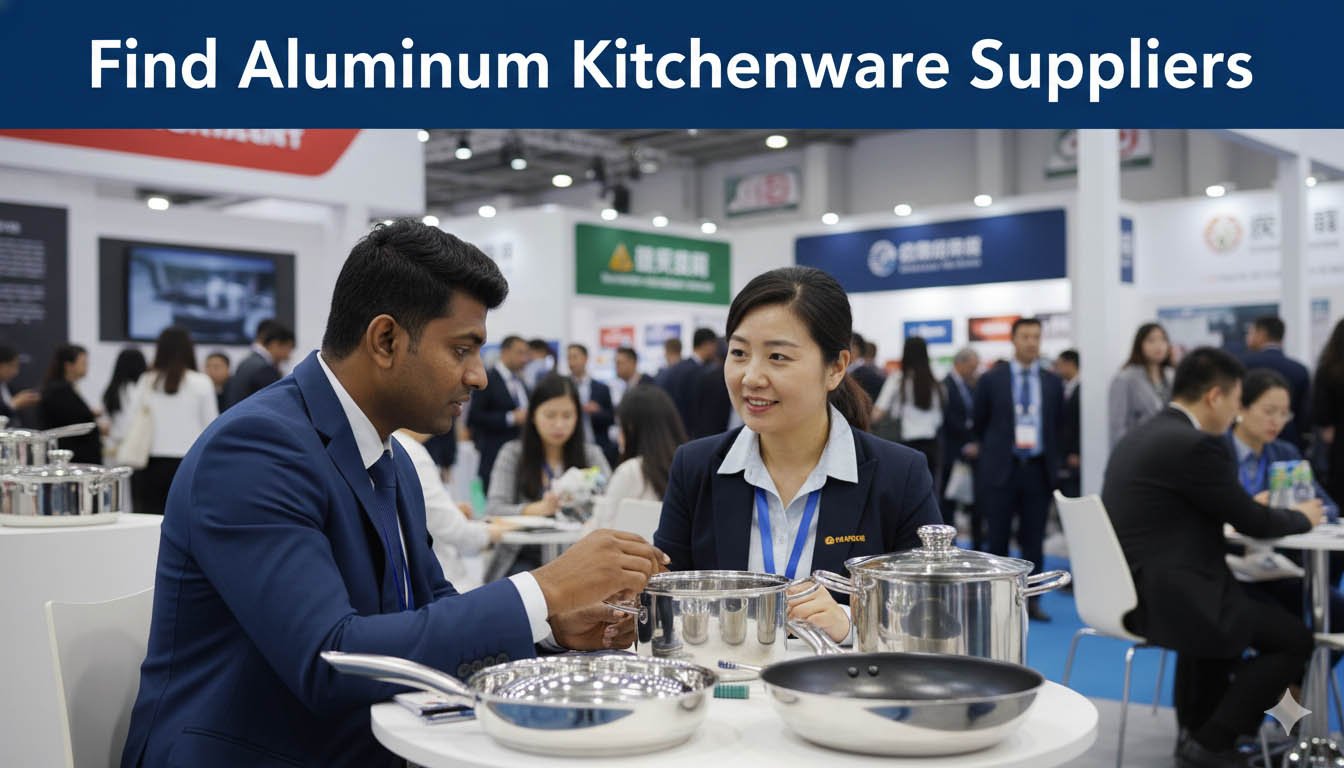
Your sourcing channel directly impacts the quality of your supplier pool. Relying on a single method creates blind spots. The smartest approach is a hybrid one:
- Use B2B platforms for initial market research and to create a long list of potential suppliers.
- Visit a trade show to meet top contenders face-to-face and validate their products.
- Partner with a local sourcing agent for deep, on-the-ground verification. We can audit factories and vet suppliers in ways that are impossible to do remotely.
Of course, the fastest and most reliable way is to work with AuroSourcing. Our team helps you identify verified aluminum kitchenware manufacturers, conduct factory audits, compare quotations, and control quality throughout production—so you avoid costly mistakes and build a stable supply chain from day one.
Sourcing Channels at a Glance
| Channel | Strength | Critical Limitation |
|---|---|---|
| B2B Platforms | Huge database, easy to search. | High risk of unverified information and trading companies. |
| Trade Shows | Direct verification, see products. | Time-consuming, expensive, and shows only a fraction of the market. |
| Sourcing Agents | Pre-vetted suppliers, local support. | A service fee is required. |
How to Verify Suppliers and Product Quality?
Skipping verification to save time is the most expensive mistake in sourcing. Problems almost always surface after you've paid the deposit and production has started.
Effective supplier verification involves checking their business license, conducting an on-site factory audit, validating certifications, and rigorously testing physical product samples before placing any bulk order. This is a non-negotiable process.
Verification is an active process of collecting evidence, not just trusting a sales pitch. It is the foundation of every successful sourcing project and what separates professional buyers from amateurs.
A Step-by-Step Verification Checklist
| Step | Key Action | Why It's Critical |
|---|---|---|
| 1. Business License Check | Verify their business scope says "manufacturing" (生产). | The fastest way to filter out most trading companies. |
| 2. On-Site Factory Audit | Audit their production lines, QC stations, and warehouse. | The only way to see their real capacity and quality systems. |
| 3. Certification Validation | Verify certificate numbers with the issuing authority. | Fake or expired certificates are common. |
| 4. Rigorous Sample Testing | Order and functionally test samples for durability and safety. | The sample is their best work. If it has flaws, mass production will be worse. |
How to Control Production and Avoid Costly Mistakes?
Even a good supplier can make mistakes. Without production oversight, you risk delays, defects, and unexpected costs that can ruin your project.
Effective production control requires clear technical specifications, a signed contract with quality standards, regular communication, and strategic quality inspections throughout the manufacturing process, not just at the end.
Production control is about creating a system of checks and balances to catch problems early when they are small and easy to fix. It is about prevention, not reaction.
Key Control Points in Production
| Stage | Control Action | Your Goal |
|---|---|---|
| Pre-Production | Sign off on a "Golden Sample" and a detailed Specification Sheet. | To create an undeniable quality standard. |
| During Production | Inspect the first 20-30% of finished goods against the Golden Sample. | To catch systemic problems before the entire batch is produced. |
| Pre-Shipment | Conduct a final AQL-based inspection when the order is 100% complete. | To verify quality, quantity, and packaging before you pay the final balance. |
Should You Work With a Sourcing Agent in China?
Many buyers try to manage sourcing remotely, only to find they lack the visibility and control needed to solve problems effectively, leading to costly errors.
A professional sourcing agent acts as your local team in China, helping you verify suppliers, manage production, control quality, and solve problems in real-time. For serious businesses, they are an essential partner for building a scalable and reliable supply chain.
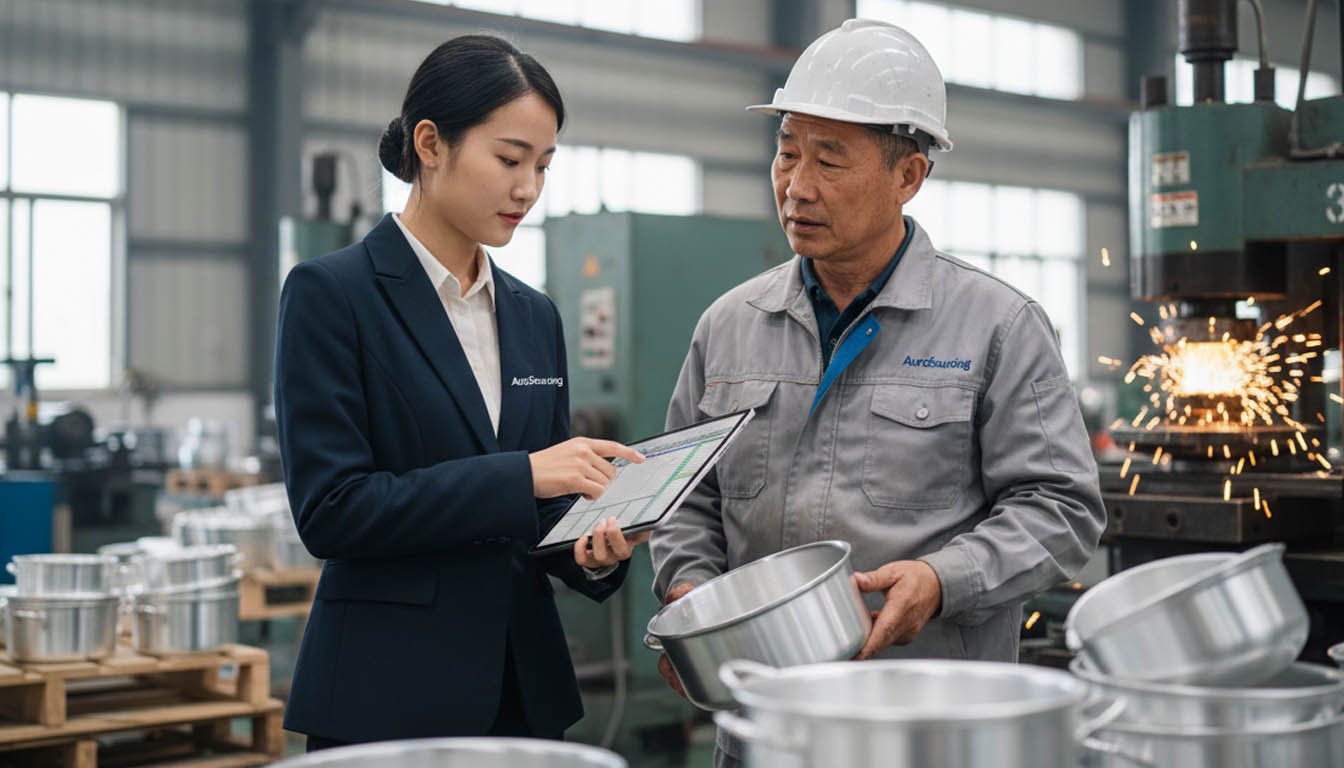
A good sourcing agent is your team on the ground. Being based in Yongkang, we can be at a factory in an hour to solve an issue that would take you days to handle via email. The cost of one bad shipment almost always exceeds an agent's service fee for an entire year.
The Value of a Sourcing Partner
| Area of Support | The DIY Reality | The Sourcing Agent Advantage |
|---|---|---|
| Verification | Guessing based on online profiles. | Professional on-site factory audits. |
| Negotiation | Limited leverage and communication barriers. | Better terms due to local expertise and volume. |
| Quality Control | Relying on the factory's own reports. | Independent, multi-stage inspections. |
| Problem-Solving | Trying to fix issues from 8,000 miles away. | On-the-ground intervention and coordination. |
Conclusion
Reliable sourcing is built on systems, not luck. The right process ensures stable suppliers, consistent quality, and long-term business growth, turning your ideas into profitable inventory.
Ready to build a more predictable supply chain for your aluminum kitchenware? Contact Auro Sourcing today to share your product specs and let our team in Yongkang show you how to source with confidence.