

Sourcing the wrong food containers leads to customer complaints, wasted inventory, and missed opportunities. You need a product that fits your market perfectly, but the options feel endless.
To choose the right food storage containers, you must first define your target market. Then, evaluate containers based on material (plastic, glass, steel), function (meal prep, pantry), lid style, and price point. This strategic approach ensures a better product-market fit.
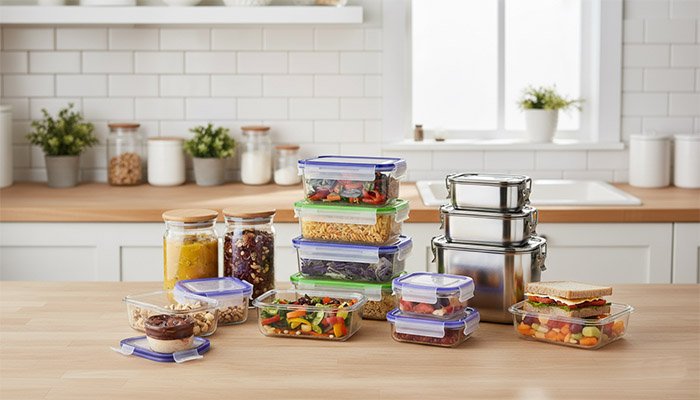
For an overseas kitchenware buyer, food storage containers are a high-volume category with broad demand. But the market is crowded. To succeed, you need a clear strategy built on understanding the main container types, their materials, ideal use cases, and critical sourcing considerations. In my experience as a sourcing agent, the most successful importers are the ones who do this homework first. This guide will break down the category so you can confidently evaluate which product lines will sell best for you.
Why Is It So Important to Understand Container Types Before Sourcing?
Many buyers focus only on the FOB price. They then realize too late that the product mix they ordered doesn't match their market’s actual needs, leading to slow sales.
Understanding food storage container types is crucial for building a targeted product assortment. It allows you to select the right materials and features for specific customer segments, avoiding investment in products with weak demand.

Before contacting suppliers, you need a clear sourcing plan. This starts with defining which container categories are most relevant to your customers. Are you selling to busy parents, fitness enthusiasts, or home organization experts? Each group has different priorities. Some demand microwave safety and leak-proof lids, while others prioritize a premium, plastic-free aesthetic for their pantries. A deep understanding of these segments prevents random product selection and helps you build a much stronger, more profitable assortment. This strategic thinking turns a simple product into a desirable solution for your customer, requiring you to analyze container types from several angles.
| Evaluation Factor | Why It's Critical for Your Business |
|---|---|
| Material | Directly impacts cost, durability, food safety, and brand perception. |
| Use Case | Defines your target audience, marketing message, and sales channel strategy. |
| Capacity & Sets | Affects bundle design, retail shelf appeal, and perceived value for money. |
| Lid Technology | A primary driver of customer satisfaction. A bad lid leads to bad reviews. |
| Price Tier | Must align with your brand positioning and sales channel expectations. |
This knowledge forms the foundation for smarter sourcing and gives you the confidence to negotiate effectively with factories.
What Are the Main Material-Based Types of Food Storage Containers?
A common mistake is treating all food containers as commodities. The material you choose fundamentally changes the product's performance, cost, and who it appeals to.
The primary material-based food storage containers are plastic, glass, stainless steel, and silicone. Plastic is cost-effective for mass markets, glass offers a premium feel, stainless steel provides durability, and silicone brings flexible, modern designs.
Material is the first and most important decision. At Auro Sourcing, we help clients navigate these choices daily. Plastic remains dominant due to its low cost and versatility. Glass is positioned as a healthier, more sustainable alternative. Stainless steel is the go-to for durability, while silicone has carved out a niche with its collapsible designs. It's also vital to understand material grades. Within plastics, common PP is affordable and microwave-safe, while premium Tritan offers glass-like clarity and durability at a higher cost. For glass, oven-safe products require high-borosilicate glass, not standard soda-lime glass—a key detail we verify during inspections.
| Material Type | Key Advantages | Key Limitations | Best for Which Market? |
|---|---|---|---|
| Plastic (PP) | Affordable, lightweight, versatile | Can stain or absorb odors | Mass retail, supermarkets |
| Glass | Premium feel, easy to clean, oven-safe | Heavy, more fragile, higher shipping cost | Mid-to-high-end retail, eco-conscious buyers |
| Stainless Steel | Extremely durable, 100% recyclable | Not microwave-safe, opaque | Lunch boxes, outdoor, zero-waste stores |
| Silicone | Collapsible, lightweight, flexible | Higher unit cost, can feel flimsy | Travel, compact kitchens, innovative lines |
Understanding these nuances helps you build a product line that truly stands out and performs as your customers expect.
What Are the Main Functional Types of Food Storage Containers?
A container can be made from the best material, but it will fail if its design doesn't solve a real-world problem for the customer.
The main functional types include general-purpose leftover containers, specialized meal prep containers, airtight dry food canisters, freezer-safe boxes, portable lunch containers, and advanced vacuum-sealed systems. Each is designed for a specific daily need.
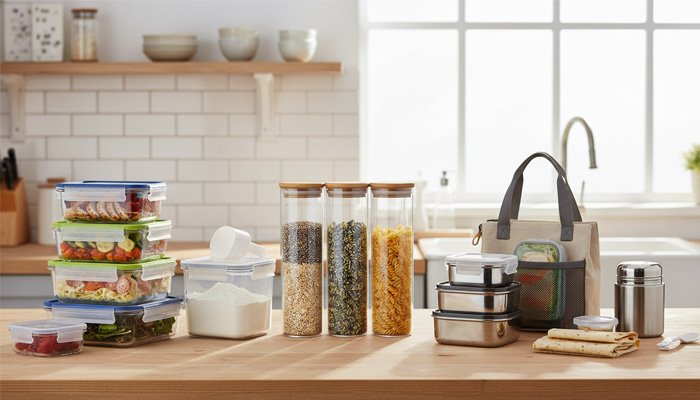
After choosing a material, your next focus should be the container's function. Customers shop for solutions, like "organizing my pantry" or "packing a leak-proof lunch." As a sourcing partner, I help clients align product features with these needs. General leftover containers are kitchen staples. Meal prep containers are all about portion control, often sold in sets. Dry food storage focuses on airtight seals and stackable designs. To differentiate, consider niches like bento boxes for lunches, small-portion baby food storage, or premium vacuum-seal systems that extend freshness. Focusing on a specific function allows you to create more targeted marketing and packaging, leading to better sales conversions.
| Functional Type | Key Features | Target Customer Segment |
|---|---|---|
| Leftover Containers | Stackable design, multi-size sets | General household, family shoppers |
| Meal Prep Containers | Multiple compartments, uniform size | Fitness enthusiasts, busy professionals |
| Pantry Organizers | Airtight seals, clear, modular shapes | Home organization followers |
| Lunch/Bento Boxes | Portable, leak-proof compartments | Office workers, students, travelers |
Focusing on a specific function allows you to create more targeted marketing and packaging, leading to better sales conversions.
Which Lid and Sealing Styles Matter Most for Customer Satisfaction?
Many product failures and negative reviews aren't about the container body. They're about a lid that leaks, breaks, or is hard to use.
The most common styles are snap-lock, press-on, screw-top, and vacuum-seal lids. Snap-lock lids are best for leak-proof performance, while press-on and screw-top lids are simpler and more economical for basic or dry storage.
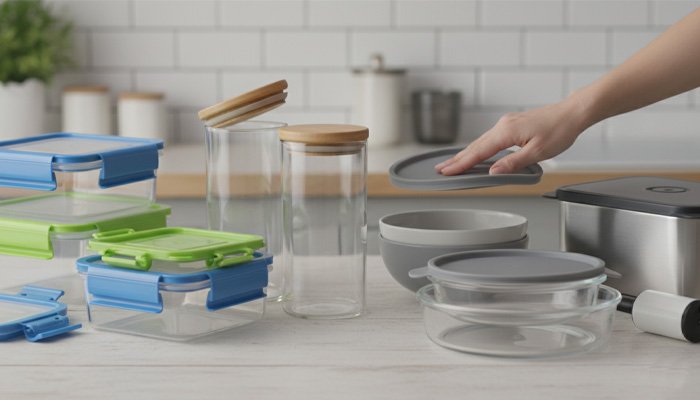
The lid is often the most critical component. It's the part the user interacts with constantly, and its failure is an instant source of frustration. Snap-lock lids with silicone gaskets offer the best leak-proof seal and are a must-have for meal prep and lunch containers. However, the plastic hinge quality is crucial—a cheap one will break. When we perform on-site quality control, we run specific tests for lids. This includes repeated open-and-close cycles to test hinge durability and water-fill tests to verify a leak-proof seal. We also check that the silicone gasket fits snugly and is made from food-grade material. Investing in a better lid and thorough QC is one of the smartest decisions an importer can make.
What Should Importers Check Before Committing to a Product Line?
A sample might look perfect, but hidden issues in production, compliance, or packaging can create major problems down the line.
Before selecting a container line, importers must verify material safety compliance (e.g., FDA/LFGB), test sealing performance, approve packaging design, and confirm the supplier's production consistency and capacity. This due diligence is essential.
Once you understand the product types, you must evaluate both the product and the supplier. A great product from an unreliable factory is a recipe for disaster. As a China sourcing agent, my job is to protect clients from these risks. Food-contact safety is our top priority. We request and review compliance documents and can arrange for third-party lab testing. We also assess packaging to ensure it not only looks good but also protects the product during shipping and meets retailer requirements (like Amazon's FBA prep rules). A methodical check of the supplier's capabilities and quality systems is the difference between a smooth sourcing experience and a series of costly surprises.
| Checkpoint | Key Questions to Ask the Supplier |
|---|---|
| Food-Contact Compliance | Can you provide current FDA or LFGB test reports for these materials? |
| Leakproof & Durability | What is your internal QC process for testing lid seals and hinge strength? |
| Packaging & Branding | Do you offer custom color box printing and private labeling options? |
| Production Capacity | What is your monthly capacity and typical lead time for a large order? |
Working through these questions methodically protects your investment and builds a more reliable supply chain.
Conclusion
Food storage containers are a detailed category. Understanding the main types by material and function helps you build a smarter product line, reduce sourcing risks, and enter the market with more confidence.