

A cheap quote can look like a win, until coating problems, late deliveries, or failed inspections turn your cookware order into a costly lesson.
The biggest mistakes in aluminum cookware sourcing are choosing suppliers by price alone, using unclear specifications, ignoring coating and compliance details, and failing to control production. Buyers who avoid these common mistakes get better quality, fewer delays, and more stable long-term supply.
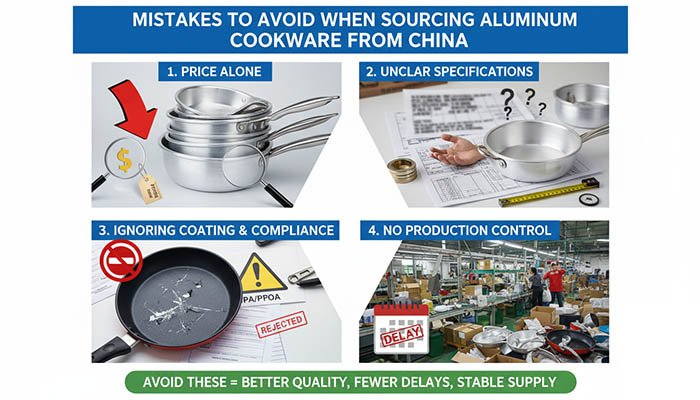
As a sourcing agent in Yongkang, the heart of China's cookware industry, I've seen countless sourcing projects succeed or fail based on a few key decisions. Success isn't about luck; it's about avoiding common, preventable mistakes. Here are the nine issues that cause the most damage.
Why Is Choosing a Supplier Based Only on Price So Risky?
The lowest quotation often hides the highest risk, because critical details on materials, coating, and quality are not aligned between you and the factory.
The cheapest supplier is rarely the best. In cookware sourcing, compare factories on technical specs, experience, and reliability—not just the unit price.
A lower price might mean thinner aluminum, a basic one-layer non-stick coating, or weaker handles. These details are hard to spot in a photo but create problems with durability and customer satisfaction later. Two pans can look identical, but one will outperform the other significantly. The only way to compare fairly is to create an "apples-to-apples" quotation sheet. Before you look at the price, make every supplier quote based on the exact same aluminum thickness, coating system, handle material, and packaging standards. This gives you a realistic view of value, not just a tempting number. As a professional purchasing agent, this is the first step I take for every client project.
| What to Compare | Why It Matters |
|---|---|
| Aluminum thickness | Affects durability and heat distribution. |
| Coating quality | Impacts non-stick performance and product life. |
| Handle & lid structure | Reduces complaints, returns, and safety issues. |
| Packaging standard | Prevents costly shipping damage. |
Why Do Buyers Get into Trouble When They Do Not Verify the Supplier Properly?
A professional-looking website is not proof of capability. Online profiles don't show you what a supplier can truly deliver on the factory floor.
Many buyers mistakenly assume every supplier is a qualified manufacturer. Proper verification must confirm their business license, factory capability, export experience, and actual specialization in aluminum cookware.
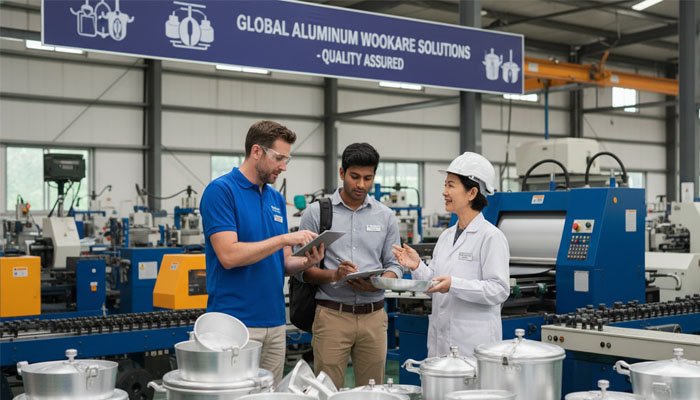
Not every supplier is a factory. Some are trading companies, and others outsource key processes. This directly impacts your risk profile for lead time and quality consistency. When my team at Auro Sourcing vets suppliers here in Zhejiang, we go far beyond their Alibaba page. We review their business license, check their production lines, and analyze their export history. For aluminum cookware, I always confirm which processes are done in-house—especially forming, coating, and assembly. A verified, cookware-focused factory provides clearer technical answers and more stable execution. This is a non-negotiable step for any serious importer.
| Verification Point | What I Confirm for Clients |
|---|---|
| Business Identity | Factory, trading company, or hybrid model. |
| Cookware Specialization | Real experience with pots and pans. |
| In-house Production | Which critical steps they control directly. |
| Capacity Stability | Ability to handle your bulk orders on time. |
Why Is It a Mistake to Leave Product Specifications Too Vague?
When your requirements are unclear, suppliers will fill in the gaps themselves. Their cost-saving assumptions will rarely match your market's quality expectations.
Unclear specifications are a top cause of sourcing disputes. You must define the aluminum type, thickness, coating, dimensions, packaging, and logo details before placing any order.
If you ask for a "good-quality aluminum pan," you might be expecting forged aluminum with a durable three-layer coating. The supplier, however, may quote for a simpler, cheaper pressed aluminum pan to win the order. The dimensions might match, but the performance and value won't. Your specification sheet is the technical foundation of your order. I help clients define the body construction, wall thickness, coating system, and packaging requirements down to the last detail. This document isn't just for pricing; it becomes the binding reference for sampling, production, and final inspection. It gives you the power to control consistency and hold the factory accountable.
| Key Spec Item | Why It Must Be Defined |
|---|---|
| Aluminum construction | Influences strength, weight, and heat performance. |
| Thickness tolerance | Protects consistency in quality and cost. |
| Coating details | Prevents hidden downgrades in bulk production. |
| Packaging requirements | Avoids transit damage and retail presentation issues. |
Why Is Ignoring Coating Quality an Overlooked Risk?
A pan may look great when new, but a poor non-stick coating quickly leads to sticking, peeling, negative reviews, and a damaged brand reputation.
Non-stick coating quality is more than appearance. Confirm the coating brand, number of layers, application process, and relevant test requirements before production.
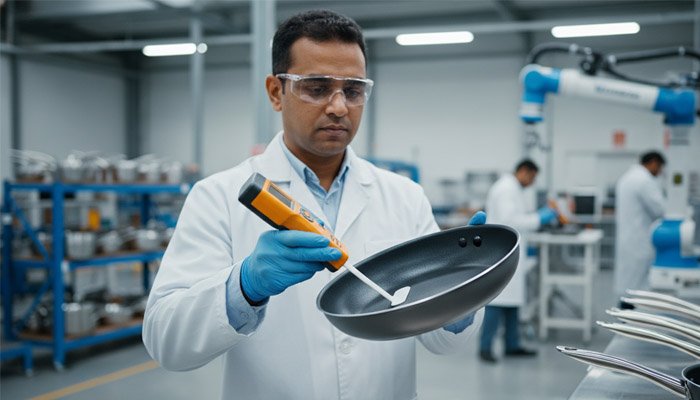
The coating directly shapes the customer experience, yet it’s one of the easiest areas for a factory to secretly cut costs. A supplier might use a premium coating for the sample but switch to a cheaper domestic alternative for mass production. Durability and food release performance will suffer. You cannot judge a coating by its smooth look. You must ask: What coating system is it? Who is the supplier (e.g., Whitford, Ilag)? How many layers are applied? What performance tests, like abrasion or adhesion tests, are conducted? Answering these questions protects your brand promise.
| Coating Checkpoint | Why It Matters |
|---|---|
| Coating supplier/brand | A key indicator of quality and consistency. |
| Layer structure | Directly influences durability and performance. |
| Sample-to-bulk consistency | Prevents hidden substitutions in production. |
| Test expectations | Supports your marketing claims and controls risk. |
Why Can a Good Sample Still Lead to a Bad Bulk Order?
A perfect sample creates confidence, but it is not a guarantee. Sample quality and mass production quality are two different things.
The biggest mistake is approving a sample without making it a "golden sample." This approved sample must become the absolute benchmark for bulk quality control.
Samples are often made with extra care by the most skilled workers. Mass production lines operate under different pressures. If you don't formally establish the approved sample as the non-negotiable production standard, quality gaps will appear. This is why the "golden sample" is so important. It's a sealed physical reference for appearance, materials, and finish that both you and the supplier keep. All future quality control inspections must be based on it. This simple step prevents major disputes about whether the bulk order "matches" what you approved.
| Sample Control Step | Its Purpose |
|---|---|
| Final sample approval | Confirms the target product standard. |
| Golden sample retention | Creates a shared, physical QC reference. |
| Written sample notes | Clarifies acceptable tolerances for minor issues. |
| Inspection against sample | Keeps production aligned with your expectations. |
Why Is Ignoring Compliance a Costly Mistake?
Your cookware can be finished and packed, but it's worthless if it's stopped at customs for failing to meet your market’s regulations.
Compliance is not optional. Verify food-contact requirements (e.g., LFGB, FDA), test report validity, and labeling rules for your specific destination market before mass production begins.
This mistake is expensive because it's discovered too late. A supplier saying "we have certificates" is not enough. As your sourcing agent, I verify if that report is for the exact product and material you are buying, or if it's an old, irrelevant document. For cookware, food-contact safety is paramount. We also manage packaging compliance—country-of-origin marking, warning labels, and barcodes. A professional buyer treats compliance as a key part of product development, not a last-minute checkbox before shipping.
| Compliance Area | Risk if Ignored |
|---|---|
| Food-contact safety | Customs holds, legal issues, or marketplace bans. |
| Report validity | False confidence based on irrelevant documents. |
| Product labeling | Delays, relabeling costs, or retailer penalties. |
| Market-specific rules | Complete disruption to your launch and sales. |
Why Do Buyers Run into Problems When They Ignore Total Landed Cost?
A factory's unit price is just one piece of the puzzle. The real project cost is often much higher after all expenses are included.
Evaluate the total landed cost, not just the ex-factory price. Tooling, packaging, testing, inspection, freight, and tariffs all affect the real profitability of your order.
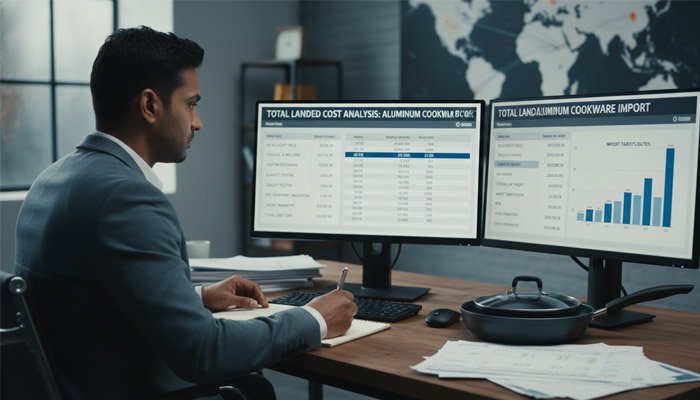
An attractive unit price can be deceiving. Cookware projects often have extra costs: mold fees for custom handles, upgraded color boxes, lab testing, and third-party inspections. If these aren't in your initial budget, your profit margin will shrink unexpectedly. Defect risk is also part of your landed cost; a low price is no good if it leads to high customer returns. At Auro Sourcing, our 10,000㎡ warehouse is a key asset for our clients. It allows us to consolidate shipments from different suppliers, optimizing container space and significantly reducing your freight costs per unit.
| Cost Item | Why It Should Be Counted |
|---|---|
| Tooling or mold fees | Common in customized cookware projects. |
| Packaging upgrades | Affects retail readiness and freight volume. |
| Testing & inspection | A necessary cost to protect your quality. |
| Freight & duties | Major expenses that determine your final margin. |
Why Is Skipping Production Follow-Up So Dangerous?
If you only rely on a final inspection, you will only find problems after they are too big and expensive to fix.
Final inspection is not enough. To truly control quality, you need pre-production alignment and in-line checks during production to catch issues early.
Many cookware defects—like poor coating adhesion or inconsistent wall thickness—happen early in the production process. If you wait until 10,000 units are fully packed to find a major flaw, you have no good options. It's too late to fix it without causing massive delays. This is where a local team is crucial. Our team performs in-line inspections on the factory floor to identify problems while they are still small and correctable. The final pre-shipment inspection then becomes a confirmation of quality, not a discovery of disaster. This proactive approach is the only way to get predictable results.
| Control Stage | Main Goal |
|---|---|
| Pre-production review | Align the factory before manufacturing starts. |
| In-line inspection | Catch problems while correction is still cheap and easy. |
| Pre-shipment inspection | Confirm final quality and quantity before payment. |
| Production follow-up | Protect your delivery deadlines. |
Why Do Buyers Lose Stability After One Good Order?
One successful shipment creates a false sense of security. A reliable supply chain requires continuous management, not a one-time transaction.
A good first order does not guarantee long-term consistency. Review supplier performance after every order and monitor for changes to protect your future business.
A supplier's situation can change. Key managers leave, material costs fluctuate, and production priorities shift. If you don't manage the relationship actively, the quality of your second or third order can drift downwards. Long-term stability requires a process. After each shipment, review the delivery performance, defect rates, and communication quality. Document any needed improvements before placing the next purchase order. This is the difference between simply buying a product and building a resilient supply chain. It's about ensuring your supplier can support your brand as you grow.
| Long-Term Management Step | Benefit for Your Business |
|---|---|
| Supplier performance review | Improves reliability on future orders. |
| Repeat-order quality tracking | Detects quality drift before it becomes serious. |
| Continuous spec updates | Keeps product changes controlled and documented. |
| On-the-ground communication | Solves problems faster when they appear. |
Conclusion
By verifying suppliers, defining clear specs, and managing production actively, you can avoid these costly mistakes and build a stable, profitable cookware supply chain from China.
Ready to source aluminum cookware the right way? Send us your RFQ, and my team at Auro Sourcing will help you build a reliable supply chain from our base here in Yongkang.