

Importing drinkware from China looks simple until low-quality samples, unclear compliance, and production delays start eating into your margins and threatening your launch.
To import drinkware from China successfully, beginners must define product specifications clearly, verify suppliers thoroughly, confirm market compliance, control quality before shipment, and calculate the total landed cost instead of focusing only on the unit price.
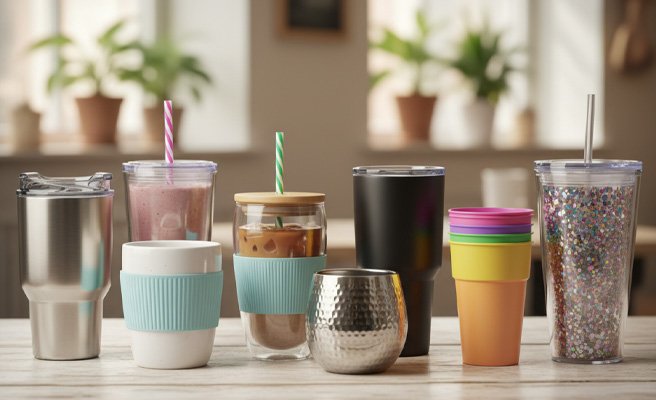
China offers strong manufacturing capacity, competitive pricing, and flexible customization, but good results require a structured process. As a sourcing agent, I've seen that success comes from understanding the product first, then methodically evaluating suppliers, costs, and quality. This guide provides that exact process, helping you make importing drinkware manageable and far less risky.
Why Import Drinkware from China?
Many first-time buyers worry that low prices mean low reliability, but the bigger issue is usually choosing the wrong supplier, not sourcing from the wrong country.
China remains a top source for drinkware because it combines cost efficiency, broad product variety, mature manufacturing ecosystems, and strong private label capabilities for both small and large importers.
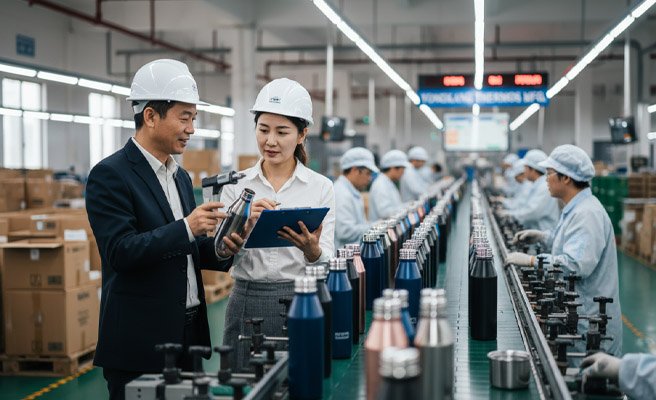
China’s drinkware supply chain offers both scale and flexibility. You can source anything from simple mugs to premium insulated bottles from specialized factories. The real advantage lies in its mature industrial clusters, like Yongkang for stainless steel goods. In these hubs, factories for main products, components, coatings, and packaging are all located near each other. This proximity reduces raw material lead times and production costs—a benefit passed on to you. Of course, a reliable sourcing decision must balance this cost advantage with quality consistency, export experience, and disciplined communication.
| Key Advantage | Why It Matters to Buyers |
|---|---|
| Competitive Pricing | Protects margins and allows for competitive positioning. |
| Wide Product Range | Easy to compare styles, materials, and find innovations. |
| OEM/Private Label | Strong capability for custom branding for e-commerce brands. |
| Scalable Production | Supports both small trial orders and large growth plans. |
What Types of Drinkware Can You Import from China?
Beginners often say they want to import “drinkware,” but that category is too broad to source effectively without narrowing down the exact product type first.
Drinkware imported from China includes stainless steel tumblers, insulated bottles, ceramic mugs, glass cups, plastic bottles, travel mugs, kids’ drinkware, and custom promotional items, each with unique production considerations.
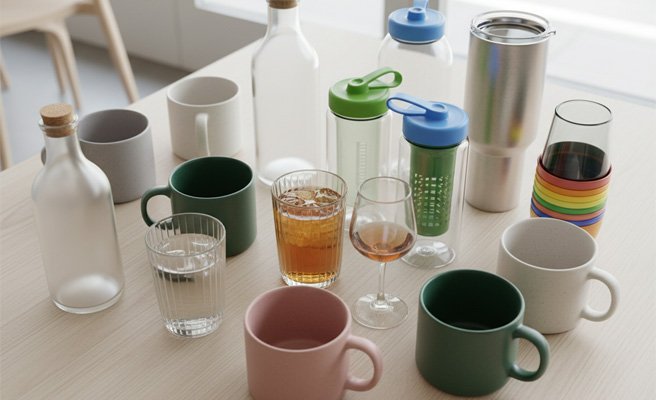
Before contacting suppliers, you must define your exact product category. A factory specializing in stainless steel tumblers is likely not the right choice for ceramic mugs. Your product's end-use—daily hydration, office coffee, or kids' lunches—will determine the best materials, features, and quality standards. For stainless steel, you must specify food-grade 304 steel, not cheaper 201 steel. For plastic, you must verify BPA-free claims with test reports. For ceramics, you must check for lead and cadmium compliance. A clear product direction helps you find the right specialist factory and compare quotes fairly.
| Drinkware Type | Typical Buyer Focus & Key Quality Points |
|---|---|
| Stainless Steel Tumblers | Insulation performance, coating durability, lid seal tightness. |
| Vacuum Bottles | Heat/cold retention, leak resistance, steel grade (304 vs 201). |
| Ceramic Mugs | Surface finish, print durability, lead/cadmium compliance. |
| Glass Drinkware | Clarity, thickness, packaging for transit. |
| Plastic Bottles | Material safety (BPA-free verification), mold quality, odor. |
What Should You Define Before Sourcing Drinkware?
Most sourcing problems begin long before production, usually when buyers ask for quotes without giving suppliers a clear, detailed product brief.
Before sourcing drinkware, define the material, capacity, structure, accessories, branding, packaging, compliance standards, and target price so suppliers can provide accurate quotes and produce consistently.
A vague inquiry gets a vague quote. A detailed Product Specification Sheet is your most critical tool. This document should leave no room for error, detailing everything from the material (e.g., "Inner wall: SUS 304") to the color (using Pantone codes) and logo method (e.g., "laser engraving, 40mm wide"). You must also specify the packaging requirements, like the cardboard thickness and master carton size. Providing this level of detail not only ensures you get accurate quotes but also signals to factories that you are a professional buyer. It becomes the blueprint for production and the basis for quality control, preventing costly misunderstandings about finish, color, or function.
| Product Detail | Why It Must Be Defined Early |
|---|---|
| Material | Affects safety, durability, cost, and compliance. |
| Capacity/Dimensions | Impacts tooling, carton size, and shipping cost. |
| Lid & Accessories | Changes usability, cost, and potential defect points. |
| Logo Method | Affects branding cost, durability, and production time. |
| Packaging | Influences retail appeal and freight damage risk. |
Where Can You Find Reliable Drinkware Suppliers in China?
The internet makes supplier discovery seem easy, but it also makes weak factories and pure trading companies look just as convincing as legitimate manufacturers.
Reliable drinkware suppliers can be found on B2B platforms, at trade shows, through referrals, and via sourcing agents, but you should use these channels to build a shortlist, not to make a final decision.
Finding a supplier is just step one; vetting them is what matters. B2B platforms like Alibaba are good for initial research, but you must filter for "Verified" suppliers with several years of history and a clear specialization in drinkware. Trade shows like the Canton Fair allow you to inspect products and meet staff in person, which helps gauge their professionalism. However, for beginners, a sourcing agent provides the most efficient path. An agent can leverage an existing network of vetted factories and conduct on-site verification, filtering out unsuitable candidates before they even reach your inbox. A hybrid approach often works best: use platforms for research, then use an agent for deep verification.
| Sourcing Channel | Main Benefit | Main Limitation |
|---|---|---|
| B2B Platforms | Fast, wide supplier discovery | Hard to judge real capability online. |
| Trade Shows | Face-to-face evaluation, sample review | Requires expensive travel and preparation. |
| Referrals | Higher initial trust and credibility | Limited supplier pool. |
| Sourcing Agent | Local verification, expert filtering | Requires choosing the right partner. |
How Can You Verify a Drinkware Supplier Before Ordering?
A professional website and quick email replies do not prove manufacturing capability, export experience, or readiness to meet your market’s compliance standards.
To verify a drinkware supplier, check their business license, factory experience, export history, production capacity, quality control systems, and relevant certifications for your target market.
Supplier verification is where you prevent most import risks. Start by requesting a business license and checking that its scope includes "manufacturing" or "production", not just "sales." Ask for quality system audits (like ISO 9001 or BSCI) and product-specific test reports (like FDA or LFGB). A professional factory will readily provide these. Inconsistent answers or an unwillingness to share documents are major red flags. For significant orders, an on-site factory audit is non-negotiable. It's the only way to confirm if their production lines, quality control stations, and warehouse management are as good as they claim.
| Verification Point | What to Check |
|---|---|
| Company Background | Business license, legal name, business scope. |
| Factory Capability | Specialization, equipment, real production capacity. |
| Export Experience | Main markets served, familiarity with your country's compliance. |
| Compliance Readiness | Valid test reports (FDA, LFGB), factory audits (BSCI, ISO9001). |
| Communication Quality | Accuracy, speed, professionalism, and problem-solving attitude. |
How Much Does It Cost to Import Drinkware from China?
The cheapest unit price often looks attractive at the start, but hidden costs can quietly turn a "good deal" into an expensive and unprofitable sourcing mistake.
The true cost to import drinkware includes the unit price plus tooling, customization, packaging, inspections, lab testing, freight, insurance, duties, and customs clearance fees.
Never compare suppliers based on unit price alone. You must calculate the total landed cost—the final cost per unit delivered to your warehouse. A low factory price can be misleading if it omits key costs. Always get quotes on an FOB (Free On Board) basis for easier comparison. Then, be sure to budget for all other expenses: mold fees for custom designs, logo printing, retail packaging, third-party quality inspections, lab testing for compliance, international freight, insurance, and finally, import duties and taxes in your country. Only by adding up all these components can you determine your true cost and potential profitability.
| Cost Element | Common Impact on Drinkware Projects |
|---|---|
| Unit Price | The base production cost (always compare based on FOB). |
| Mold/Tooling | A major one-time cost for fully custom designs. |
| Logo/Customization | Adds branding cost, either per unit or as a setup fee. |
| Inspection/Testing | Essential risk-reduction costs that protect your investment. |
| Freight & Duties | A major part of your final landed cost (often 20-40%). |
What Is MOQ and How Can Beginners Manage It?
Many new importers feel blocked by a high MOQ, but the issue is often not the number itself, but a lack of flexibility in the order structure.
MOQ, or Minimum Order Quantity, varies by material and customization. Beginners can often negotiate it by simplifying specifications, placing a trial order, or communicating their long-term plans.
MOQs exist because factories need production efficiency. Setting up machinery and purchasing raw materials is only cost-effective at certain volumes. Instead of just asking for a lower MOQ, try a strategic approach. You can often reduce it by choosing a factory's stock color instead of a custom one, using an existing product mold, or starting with standard packaging. Another effective tactic is to frame your small order as a "trial order" to test the market, while sharing your larger forecast for future business. A smart factory looking for a long-term partner will often be more flexible.
| MOQ Factor | How It Affects the Order |
|---|---|
| Custom Logo | Usually has a low MOQ or is manageable for small orders. |
| Custom Color | Often has a high MOQ (e.g., 2000-3000 units) due to material mixing. |
| New Mold | Requires a very large order commitment to justify the investment. |
| Retail Packaging | Can have a high MOQ from the printing factory (e.g., 1000+ boxes). |
How Do You Control Drinkware Quality Before Shipment?
Many buyers assume quality control starts when finished goods are packed, but by then, the most expensive mistakes are already permanently built into the order.
Effective drinkware quality control begins before production with clear specifications and an approved "golden sample," continues with in-process checks, and concludes with a mandatory pre-shipment inspection before final payment.

Quality control must be preventive, not reactive. Before mass production, approve a final pre-production sample—this is your "golden sample" and the standard against which the final order will be judged. Your last chance to catch issues is the pre-shipment inspection (PSI). A professional inspector will check for visual defects (scratches, dents), perform functional tests (leak tests, insulation performance), test logo adhesion, and verify that dimensions and packaging match your spec sheet exactly. Never release the final 70% payment to a supplier until you have received and approved a satisfactory inspection report.
| Quality Control Stage | Purpose |
|---|---|
| Specification Sheet | Aligns product requirements clearly between you and the factory. |
| Golden Sample Approval | Confirms the exact standard for mass production to follow. |
| Pre-Shipment Inspection | Verifies finished goods quality and quantity before final payment. |
| Packaging Check | Reduces transit damage and prevents labeling/barcode errors. |
What Risks Should Beginners Watch Out for When Importing Drinkware?
Importing becomes risky when buyers move too fast, trust too easily, or wrongly assume that a good sample guarantees a good bulk order.
Common drinkware import risks include choosing an unverified supplier, ignoring compliance requirements, underestimating hidden costs, accepting weak quality control, and suffering from poor communication and documentation.
The biggest sourcing mistakes often start as small shortcuts. Be wary of prices that are "too good to be true"—they often indicate the use of inferior, non-food-grade materials. Always document everything in writing, especially details like Pantone colors, to avoid communication breakdowns. Another major risk is paying the final balance before a satisfactory pre-shipment inspection is complete; once the supplier has your money, you lose all leverage to fix problems. Finally, never skip supplier verification. A slick website doesn't guarantee a reliable factory, and skipping this step is the fastest way to a failed order.
| Common Risk | Likely Consequence |
|---|---|
| Unverified Supplier | High risk of fraud, poor execution, or unstable quality. |
| Missing Compliance Checks | Goods being seized by customs or rejected by marketplaces. |
| Ignoring Landed Costs | Unexpected fees erasing your profit margin. |
| Weak Quality Control | Receiving a shipment of defective products you can't sell. |
| Poor Communication | Production errors, misunderstandings, and costly delays. |
Should You Use a China Sourcing Agent for Drinkware?
Many beginners try to manage everything alone to save money, only to lose far more through avoidable supplier mistakes, quality disasters, and communication problems.
A China sourcing agent helps buyers find vetted suppliers, manage sampling, monitor production, control quality with on-site inspections, and navigate logistics, effectively acting as your local team on the ground.

A good sourcing agent is your project manager in China. At Auro Sourcing, we don't just find suppliers; we manage the entire process. We leverage our local presence in Yongkang—the heart of China's drinkware industry—to connect you with vetted, reliable factories. Our team handles everything from getting competitive quotes and managing samples to performing on-site quality inspections before you make the final payment. This integrated approach saves you time, reduces your risk of costly errors, and ensures your project is executed correctly from start to finish. For beginners or anyone launching a custom product, this on-the-ground support is invaluable.
| When an Agent Helps Most | Why It Matters |
|---|---|
| First-Time Importing | Provides a structured process and prevents common beginner mistakes. |
| Custom/Private Label Drinkware | Ensures every detail of your unique design is executed correctly. |
| No Local Team in China | Acts as your on-the-ground eyes, ears, and hands. |
| Tight Quality Requirements | Strengthens inspection rigor and factory accountability. |
Conclusion
Importing drinkware from China offers huge potential, but success relies on a structured process. Clear product definition, supplier verification, and disciplined quality control make the process safer and more profitable.
Ready to turn your drinkware idea into delivered inventory? Send us your product specifications, and let our team at Auro Sourcing help you build it right.